
Home / Services / New Lock Installation
Lock installation
New Lock Installation: Matching the Right Lock to the Right Door
A new lock is only as good as its fit with the door it lives on. Here is a plain guide to deadbolts, handles, keypads and smart locks, and how to choose among them.
Lock installation
Start with the door, not the lock
When people shop for a lock, they usually start with the lock. They look at finishes, features and shapes, and imagine how it will look on the front of the house. The door itself comes second, if at all. But an experienced locksmith starts the other way around, because a lock is installed into a door, and the door decides what is possible.
A solid wood door, a hollow core interior door, a steel door and a fiberglass door all hold hardware differently. The thickness matters. The holes already drilled matter. The condition of the frame and the strike matters most of all, because a strong deadbolt set into a weak frame is like a strong chain tied to a weak post.
Before you decide anything, look at your door. Is it solid? Is the frame sound? Is the existing hole pattern standard? Note the answers. Measure the thickness if you can, and snap a photo of the edge of the door where the latch sits. A tape measure and a phone camera tell a locksmith more than a long description ever could. Those details will guide the conversation and keep you from falling in love with a lock that does not suit your door.
The deadbolt: the plain workhorse
A deadbolt is a thick metal bolt that slides from the door into the frame, and it only moves when a key or a thumb turn tells it to. Unlike a spring latch, it cannot be pushed back by force on the door edge, which is why it is the main line of defense on an exterior door. Most front and back doors benefit from one.
There are single cylinder deadbolts, which use a key outside and a thumb turn inside, and double cylinder ones, which need a key on both sides. The single cylinder is the more common choice for houses, because in an emergency you can step out without searching for a key. Double cylinder locks have a place in particular situations, but they come with safety tradeoffs, and codes and rules vary, so ask what applies in your situation.
Depth matters too. A bolt that reaches deeply into the frame, with a strike plate fixed by long screws into the solid framing behind it, resists force far better than one held only by the thin trim. Our guide on whether every exterior door should have a deadbolt looks at where they matter most.
Handle sets, knobs and levers
The handle on your front door does a different job from the deadbolt. It holds the door shut against wind and gives you something to grip. A knob or lever contains a spring latch, which clicks into the frame and keeps the door closed until you turn the handle.
Knobs are the old standby. Levers, which you push down instead of twisting, are easier on arthritic hands, easier when you are carrying groceries, and increasingly popular for that reason. Both can include a key lock in the handle, but the handle lock alone is not considered enough protection on an exterior door, which is why it is paired with a deadbolt.
Entry handle sets with a matching deadbolt are common because they look neat, though you can mix pieces from different families. Think about who will use it every day. A busy family door gets slammed, bumped by bags and handled with wet hands, so a finish that resists wear and a handle that feels good matter more than a fashionable shape. Ask about the finish, how it holds up in sun and weather, and whether the backset, the distance from the door edge to the center of the hole, fits your door.
- Knobs are simple and familiar and take a twist.
- Levers take a push and suit hands that struggle with a grip.
- A handle lock alone is not enough for an exterior door.
- Check the backset and hole size before buying anything.
Keypad locks: no key to lose
A keypad lock lets you open the door by pressing a code, so there is no key to leave on the kitchen counter or lose at a trailhead. For some households that is a revelation. Teenagers, house sitters, cleaners and relatives can be given a code without a key being copied, and codes can be changed when circumstances change.
Keypads run on batteries, so they need attention. Most warn you when power runs low, and most keep a backup key cylinder in case the batteries die entirely. That backup is worth keeping. It is also a reason to ask whether the cylinder in your keypad lock is a decent one, since the mechanical part still matters.
Think about how the code will be shared. A code that is too simple or shared too widely turns into a weak point. Think of a keypad lock as a good fit for a household that shares a door among many people or a rental where guests come and go. Choose a code that is not your birthday or address, avoid giving it out casually, and change it when someone no longer needs it. For shops, our guide on keypad or key for a small shop adds the business view.
Smart locks and what they really do
A smart lock connects to your phone or a home system and lets you lock, unlock and share access from a screen. Some report when the door opens, some lock automatically after a delay, and some work with voice assistants. They can be wonderful for rentals, for families with many comings and goings, and for people who like to check a door from a distance.
They also bring new things to think about. Batteries need replacing. Software needs updating. Your home network becomes part of your door security, so a weak password matters. And the mechanical parts, the bolt and the strike, still need to be strong, because a smart lock is only smart in its control, not in its strength.
Our guide on what a smart lock is and who needs one goes into the benefits and limits, and our note on whether smart locks can be rekeyed explains what happens to the key side of the device.
Matching hardware to different doors
The front door usually deserves the strongest combination: a quality deadbolt, a handle set, and a reinforced strike plate. It is the door most people watch, and the one that faces the street, so it carries both security and appearance.
Picture a house in the mountain towns, where snow and ice sit against the door for weeks. A finish and a latch that tolerate damp and cold earn their keep there, while a valley house with a sun baked west door needs hardware that does not fade or warp. Back doors are often neglected and are where trouble tends to come in. A solid door with a good deadbolt is a sensible baseline, and a keypad can be welcome if the back door is where family comes and goes. Side doors and garage entry doors deserve the same attention, since a thin garage entry door with a weak latch is a favorite weak point.
Sliding glass doors are a special case. They use a different style of latch and often need an added bar or pin lock. Our guide on sliding door security questions covers that. For materials, see metal, wood or fiberglass doors and how locks fit them.
What lock grade means
Locks are sorted into grades according to how much punishment they take in testing. Higher grades survive more cycles of locking and unlocking, and stand up to harder blows. Lower grades are made for lighter use and cost less, and some are built mainly for show.
For an exterior door, a higher grade is worth considering. It is not about being paranoid. It is about knowing that a front door lock will be used thousands of times and tested by weather. A lock that was never built for that will wear out sooner, and a worn lock is a failing lock.
Grade also tells you something about the parts. Heavier internal components, thicker bolts and better finishes usually go together with higher grades, which is why a well made lock feels solid in the hand and operates with a smooth, confident motion. You do not need to memorize standards. Ask what grade the lock is and what that means in practice. A locksmith can explain it in plain terms. Our guide on what lock grade means offers a longer explanation.
How installation really goes
Installing a lock sounds simple, and with a standard door it can be. The old hardware comes off. The holes are checked for size and condition. The new latch and bolt are fitted, the strike plate on the frame is lined up and fastened, and the handle and thumb turn are attached. The key is tested, the bolt is thrown, and the door is closed to make sure everything meets cleanly.
Where things get interesting is when the door is not standard. A hole that is too big may need a reinforcing plate. A frame that has split near the strike may need repair before a new bolt will hold. A door that has been drilled in the wrong place may need a patch. These are the moments when an experienced hand matters.
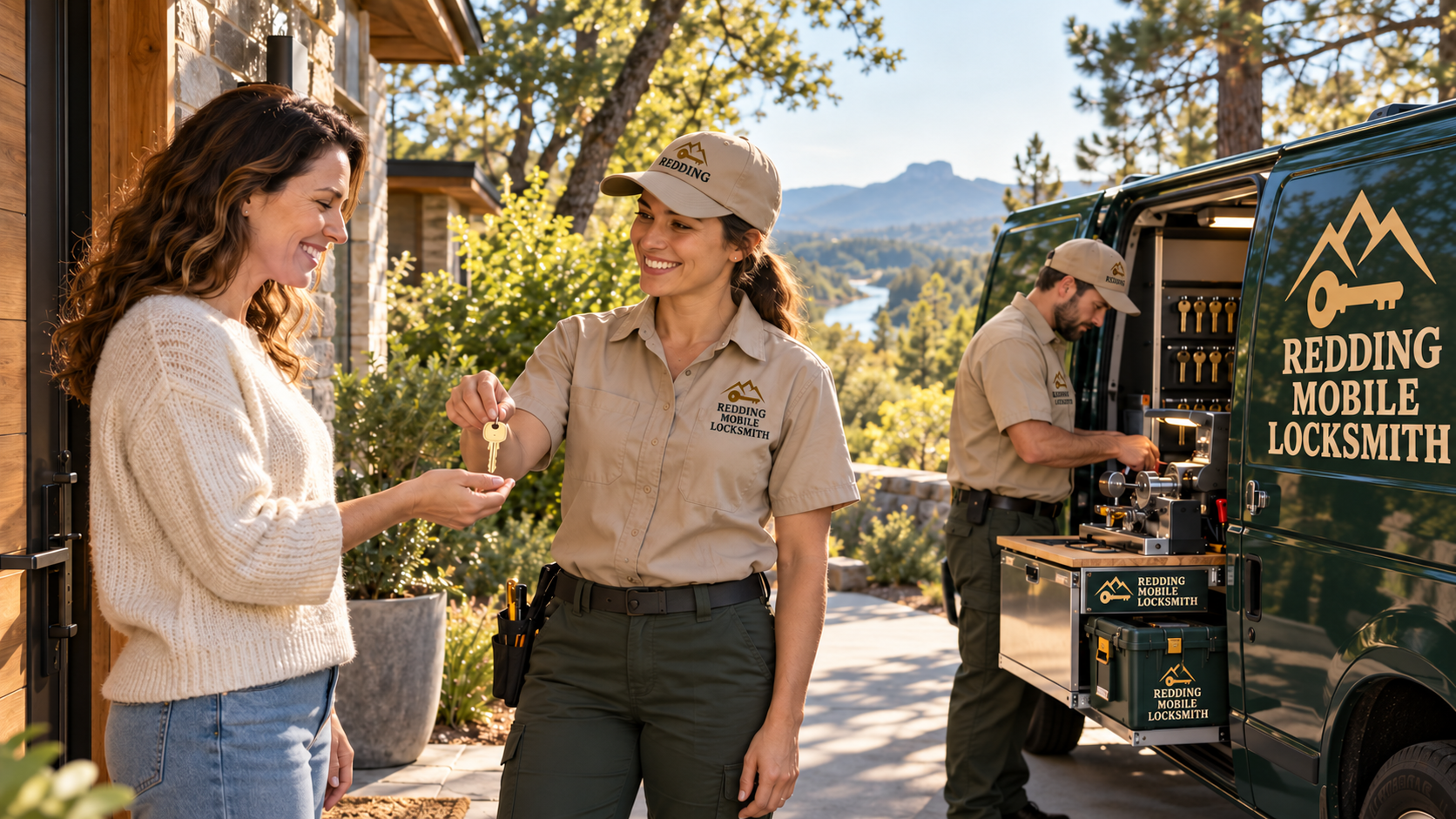
The van carries professional tools and common hardware, so many installations finish in one visit. Ask about the work before it starts: what is being installed, how it fits your door, and what will be done about the strike and frame. Our page on lock repair and adjustment explains what happens when an existing lock needs work instead.
Should you change it yourself?
Many homeowners ask whether they can swap a lock themselves. The answer is often yes, for a like for like replacement in a standard door. A new knob or handle can sometimes be changed with a screwdriver. Our note on whether you need a locksmith to change a door handle goes through when it is simple.
The trouble starts when things do not match. A new deadbolt that sits slightly off, a strike plate fixed with short screws, or a bolt that binds will give a false sense of security. A lock that looks installed but is not set properly may fail the first time someone pushes on it.
Think too about what you will do with the old lock. Keep the screws and the strike if the new one needs them, and do not leave an unused lock lying around with its keys. A locksmith brings experience with the unexpected, along with tools for drilling, fitting and adjusting. If you try it yourself, work slowly, keep the old parts until the new ones are proven, and test the door from both sides with it open and closed. Check that the bolt moves freely with the door closed, that the strike has long screws into the framing, and that the key turns smoothly. If anything feels wrong, stop and ask for help.
New lock or rekey?
Sometimes you do not need a new lock at all. If the hardware is sound and you simply want different keys, rekeying changes the inside of the cylinder and keeps everything else. Our page on rekeying your home explains how that works, and it often suits people who have just moved in.
A new lock makes sense when the old one is worn, damaged or low grade, when you want a different style or function, or when you want a keypad or smart feature. Combining the two is common. A homeowner may replace the front door set and rekey the rest to match.
Cost matters to everyone, and a fair locksmith will talk through the choices before work starts. A modest rekey may be all you need, while a new set may be a better long term choice for a door that has been through a lot. If you are unsure, describe what you have and what you want. A good locksmith will walk you through the options and tell you honestly when the simplest answer is enough. Our wider page on home lock service shows how these jobs fit together.
Installation across our service area
We serve 17 communities across Shasta and Siskiyou counties, from the valley around Redding and Anderson to the mountain towns around Mount Shasta and Yreka. Homes differ across that range, from older houses with original hardware to newer builds with modern frames and rural properties with long gates and outbuildings.
See our pages on Redding and Palo Cedro for the kinds of homes common there, or the Redding new lock installation page for a closer look. For commercial doors, our page on door hardware for business covers a different set of needs.
When you are ready, use the request form to describe your door, the lock you want, and any problems with the current one. The phone line is coming soon. A photo of the door and the existing hardware is especially useful.
Good to know
Common questions
Do I need a deadbolt if my handle already has a lock?
On an exterior door, yes, usually. The lock in a handle holds a spring latch, which is easier to defeat than a solid bolt. A deadbolt adds a separate bolt that reaches deep into the frame. Ask a locksmith how it would fit your particular door and what rules apply where you live.
Are keypad locks reliable?
They can be, when well made and maintained. Keep an eye on the batteries, keep a backup key, and choose a code that is not obvious. The mechanical bolt and strike still matter as much as the keypad does, so ask about the build quality as well as the features.
Can a smart lock be hacked?
Any connected device has some risk. Reduce it by using a strong password on your home network, keeping the lock software current, and sharing access carefully. The mechanical strength of the bolt and frame also matters, since a smart lock only controls access, not the sturdiness of the door.
What if my door has the wrong sized hole?
A hole that is too large can be fitted with a reinforcing plate or adapter, and one that is too small can be enlarged. A damaged or split door may need a repair first. A locksmith can examine the door and tell you what is needed before ordering or installing hardware.
Will a new lock work with my old key?
It can, if the lock is keyed to match your existing key. Many people choose to have the new lock keyed alike to their other locks so one key opens everything. Others prefer a fresh key. Say which you want when you ask for the work.
How do I describe my door when I request installation?
Mention the door material, the kind of lock now on it, and what you want instead. Note any damage, sticking or odd holes. If you can, include a photo of the door and the current hardware. The more detail you give, the better prepared the visit will be.