
Home / Shasta Lake / New Lock Installation in Shasta Lake
Shasta Lake new locks
Which Lock Suits Which Door: A Shasta Lake Guide
Choosing a lock is easier once you stop thinking about locks and start thinking about doors and the people who use them. This guide goes door by door, with a quiet household in Shasta Lake as the example.
Shasta Lake new locks
Meet a household of one
Imagine a retiree in Shasta Lake who lives alone in a tidy house not far from the water. The kids are grown and far away. The neighbors are friendly but not constantly around. Mornings begin with a walk and a cup of coffee on the back step, and evenings end early. Nothing alarming has happened, and that is exactly the point: this person would like it to stay that way.
Such a person has a handful of reasonable wishes about locks. They want doors that close and lock without a struggle, because arthritis does not suit stiff hardware. They want keys that are easy to find and hold. They want to feel safe at night and welcome visitors in the day. And they want to avoid being talked into anything fancy that they will never use.
Their wishes are a good guide for everyone. This page follows that household from door to door and shows what a thoughtful choice looks like at each one. If your home is bigger, noisier or fuller than theirs, the logic still applies. You just have more doors to consider, and perhaps more people with opinions about them.
Before anyone shops for hardware, it helps to decide what the household is actually afraid of. For some it is a break in. For others it is a lockout, a lost key, or the day a helper forgets to lock up. Each worry points to a different kind of lock, and naming the worry first keeps you from buying a solution to a problem you do not have.
Start with the front door
The front door is where visitors arrive, packages land and most of the daily traffic flows. It deserves a deadbolt and a handle set that work well together. A lever handle is gentler on the hands than a round knob, and a deadbolt with a thumb turn inside means no key is needed to lock up from within.
The retiree might choose a lever on the door, a standard deadbolt above it, and a key that comes in a color or on a tag that is easy to spot. If the household sometimes has helpers such as a cleaner, a gardener or a family member who comes by, a keypad deadbolt can let them in with a code that can be changed or removed later.
Think too about lighting and visibility. The finest lock in the world does not help much if the porch is dark and the keyhole cannot be found. A technician can mention these things, though the lighting itself may be work for someone else. A small, sensible detail like a well placed porch light often matters as much as the hardware.
Also look at the frame and the door. A deadbolt is only as strong as the wood that holds it. If the frame is cracked or the door has been patched around the old lock, mention it. Reinforcing the strike area with a longer screw and a sturdier plate is a modest job that makes an ordinary lock behave like a better one.
The back door and the garage entry
Back doors are used less and watched less, which makes them worth attention. A solid deadbolt with a strong strike plate secured by long screws is the minimum worth having. If the back door is glass or has glass panels, a double cylinder deadbolt may be mentioned, though it has tradeoffs, since it needs a key on both sides and can be a problem in a fire. Ask the technician about alternatives.
The door from the garage into the house is often overlooked. It tends to be a lighter door, fitted with a basic latch, and it faces a space where someone could work unseen if the garage door is open. A sturdy deadbolt there is sensible. So is the habit of keeping the door locked even when you are home.
Our guide on what to do when the lock on a garage entry door fails explains the common trouble spots. And on whether every door needs a bolt, should every exterior door have a deadbolt offers a calm answer.
- Front door: a lever handle with a deadbolt above it suits most households.
- Back door: a solid deadbolt and a reinforced strike plate matter most.
- Garage entry: treat it like an exterior door, because it is one.
- Side gate or shed: a sturdy padlock or hasp often does the job.
- Sliding door: a secondary bar or pin adds strength to the factory latch.
Handles, levers and hands that tire
Anyone who has tried to turn a round knob with a sore wrist knows the difference a lever makes. Levers work with a push or pull of the hand or arm, with no grip needed. They suit people with arthritis, people carrying groceries, and children. They are also easier to operate in the dark.
There is more variety in handle sets than most people expect. Some have a lock built in, some have a separate deadbolt, and some are just passage handles for doors that do not need locking. Choosing the right type for each door keeps you from paying for features you will not use.
Pay attention to how the handle feels in your hand. A well made lever is solid and returns smoothly when released. A flimsy one rattles and sags over time. A technician with a selection in the van can let you try a few, and that simple test often settles the matter better than reading specifications.
Keypads: a code instead of a key
A keypad lock replaces the keyhole with a set of buttons. You enter a code, and the bolt retracts. For a person living alone, a keypad has real advantages. There is no key to lose in the garden or to fumble with in the dark, and you can give a trusted helper a code without handing over a key.
There are tradeoffs. Keypads run on batteries, and a dead battery at a bad moment is a real problem. Most have a warning, and many have a backup way in, such as a physical key or a way to power the lock from outside. Choose a model with a backup, and put the battery change on your calendar.
Think about the code itself. Avoid birthdays, house numbers or simple sequences. Change the code from time to time, and always after a helper stops coming. Keep a written record of the code somewhere secure, in case you forget it. Our guide on keypad or key for a small shop covers a business version of the same choice.
Smart locks: who actually benefits
A smart lock adds wireless features such as locking and unlocking from a phone, sending a notice when the door opens, and giving temporary access to a guest. These can be valuable. A family member far away can check that the door is locked, or let in a repair person without being there.
They are not for everybody. They depend on a phone, a connection and a certain comfort with apps. If the retiree dislikes technology, a smart lock is a source of stress rather than comfort. A simple mechanical deadbolt or a plain keypad will serve better. There is no virtue in complexity for its own sake.
If you do choose a smart lock, plan for the ordinary failures: the phone dies, the home network drops, an update changes how a screen looks. A sensible installation keeps a plain key or a keypad as a second way in, and a trusted person who knows how to use it. Technology that works only when everything else works is a poor fit for a door you depend on.
Read our guide on what a smart lock is and who needs one for the honest picture, and the related question can smart locks be rekeyed if you wonder what happens when keys go astray. A good technician will not oversell a gadget. They will ask what you want to accomplish and fit the tool to the goal.
Sliding doors, windows and the places people forget
Many Shasta Lake homes have sliding glass doors that open onto a deck, a yard or a view of the water. The factory latch on these doors is often modest. A simple secondary device, such as a pin or a bar, can add strength. Our guide on sliding door security walks through the options.
Windows deserve a thought too, particularly on older homes where the latches have loosened or the paint has glued them shut. A locksmith can discuss window hardware, though a window specialist may be better for major repairs. The point is to treat the house as a whole and not just a row of front doors.
For a person living alone, one more thing matters: a spare key plan. Give a trusted neighbor or relative a key, and make sure they know where yours lives. If you are ever unwell or locked out, someone nearby can help. It is a quiet arrangement that costs nothing and has real value.
A lockbox is another idea some households consider, but it adds a new thing to guard, and the placement matters. Our guide on lockboxes and showings discusses the general questions. For most people living alone, a trusted neighbor with a key is simpler and safer than any box on the wall.
How the installation visit goes
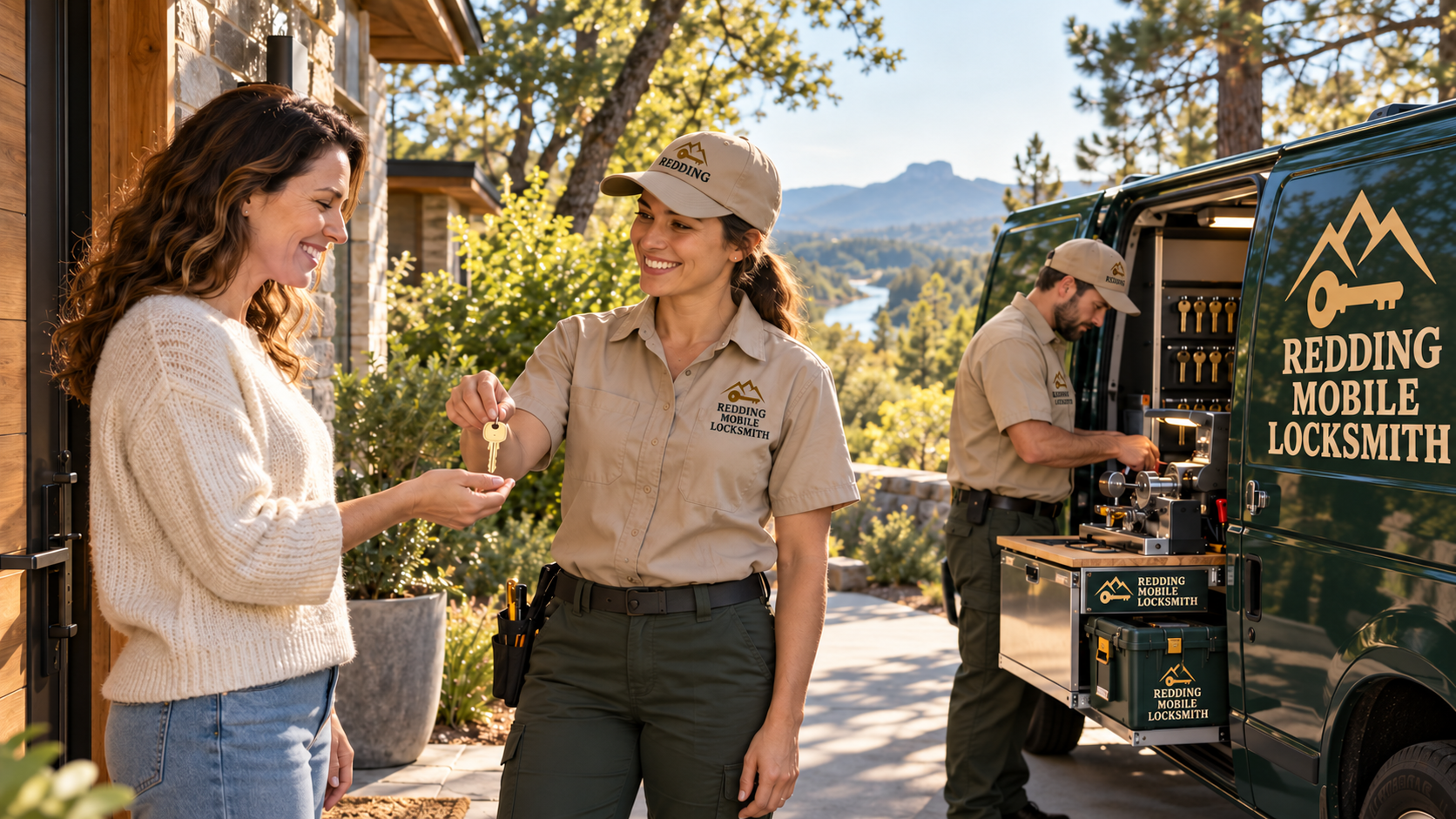
A technician arrives in a marked van with tools and a stock of common hardware. They look at each door you want to address, check its condition, measure what needs measuring, and discuss the options. Nothing should be installed until you understand what you are getting and why. If a price is quoted, ask what it includes: the hardware, the labor, the keys, and any adjustments to the door. Ask, too, what happens if the lock does not fit as expected once the old one is out.
The work itself involves removing old hardware, checking or adjusting the holes in the door, fitting the new lock and aligning the strike plate in the frame. The technician tests the lock repeatedly, with the door open and closed. If a keypad or smart lock is involved, they set the code and show you how it works.
At the end, operate everything yourself while the technician is still there. Turn the key. Press the buttons. Use the thumb turn. If anything feels awkward, say so. It is far easier to adjust things on the spot than to arrange another visit. Our service page on new lock installation covers the process in more detail.
If someone else is helping you decide, such as a son, a daughter or a friend, invite them to be present or on the phone. Two sets of ears catch more of what the technician says, and a lock that everyone in the circle understands is one that gets used properly. Ask for a short written note of anything the technician changed, so the household has a record.
When rekeying or repair is the better answer
Some of what looks like a need for new locks is really a need for something simpler. If the locks are sound and the worry is who holds keys, rekeying changes the inside of the lock so old keys stop working. If a lock sticks or a door binds, repair or adjustment may be all that is needed.
A frank technician says so. It would be easy to sell new hardware, but a good one starts from what the door needs. In practice that often means a short conversation at the door, a look at how the bolt meets the frame, and an honest sentence such as, this one just needs adjusting. Our guide on rekeying versus replacing explains how to think about it, and the page on rekeying your home describes the process.
For household locks that are failing, our local page on home lock service in Shasta Lake is a useful companion. It deals with repairs, spare keys and moves, all of which tend to come up when someone starts thinking about new hardware.
Next steps and the wider neighborhood
When you are ready, send a request through the form on the contact page. List the doors you want to address, what you use them for and any trouble you have noticed. The phone line is coming soon, and the team handles requests around the clock. If you are choosing for a parent or an older neighbor, our guide on lock choices for an older relative living alone is written for exactly that conversation and may save you an afternoon of guessing.
If your vehicle keys need attention as well, see key programming and fobs in Shasta Lake and cars and trucks in Shasta Lake. For a bigger picture of the area, visit the Shasta Lake overview.
Neighbors in Redding and Anderson are served by the same team. Whatever the size of the household, from one person to a houseful, the right lock is the one that suits the door and the hand that turns it, and that fits quietly into daily life. Take your time, write down your doors, and ask every question you can think of before work begins.
Good to know
Common questions
What kind of lock is easiest for someone with sore hands?
Lever handles and keypad deadbolts are usually the gentlest. Levers need only a push or pull, and keypads remove the need to turn a small key. Ask the technician to let you test a few in your own hand before you decide.
Is a keypad lock safe to rely on?
A well made keypad lock is a sound choice for many doors. Choose one with a backup way in, use a code that is not obvious, change it from time to time, and replace the batteries on a schedule. Treat the battery warning as real.
Do I need a smart lock?
Only if its features solve a problem you have. If you like checking your door from a phone or sharing access with others, it may suit you. If you prefer simplicity, a plain deadbolt or keypad will serve well, with fewer things to maintain.
Can new locks be keyed to match my old key?
Often yes. Locks can be keyed to a key you already use or to a new one, and several doors can share a key. Tell the technician which doors should match and which should be separate, and they can plan it before the work starts.
What should I do about my sliding glass door?
Consider adding a secondary device such as a bar or pin to the factory latch, and check that the door and track are in good order. A technician can suggest what suits your door and how to fit it.
Can I have locks installed at night or on a weekend?
Requests are accepted around the clock. For planned installations, you can describe the work and discuss timing. For an urgent problem such as a failed lock on an exterior door, say so in the request, and the team will take that into account.