
Home / Service areas / Lakehead
Lakehead, Shasta County
Cabins, marinas and lake homes: locks in Lakehead
Lakehead sits at the northern end of Lake Shasta, where full time residents share the shoreline with vacation homes, cabins and seasonal visitors, and where a lock can go months without being touched.
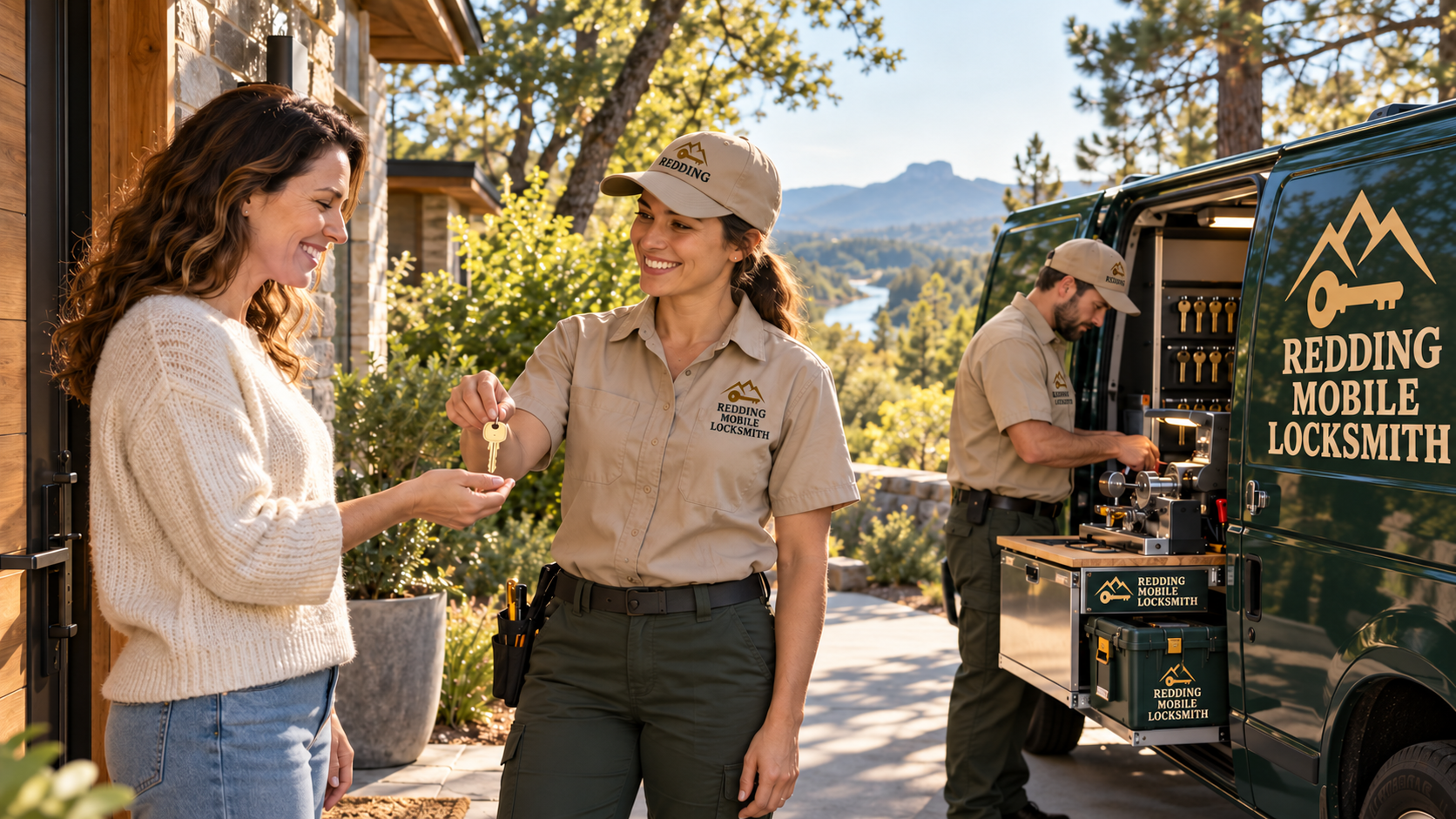
Lakehead, Shasta County
A lake town with two lives
Lakehead has two lives, and they overlap. In one, it is a home town for people who live here all year, shop locally, plow their own driveways when snow comes and know their neighbors by their trucks. In the other, it is a getaway, with visitors filling cabins, launching boats and enjoying the water in the warm months, then vanishing as autumn arrives.
Both lives rely on locks, and they strain them in different ways. A full time home uses its doors daily and wears them steadily. A seasonal cabin sits untouched for weeks or months and then is used hard for a weekend. Neither pattern is kind to hardware, and the lock trouble that arises is often a surprise to the owner.
This page, written for ZIPs 96051 and 96070, looks at what a locksmith can do for each kind of place. It covers the home, the cabin, the vehicle, the dock or marina door and the long quiet stretches between visits. When you are ready for help, the request form is open, because our telephone line is coming soon.
Full time homes in a mountain setting
For people who live in Lakehead year round, the mountain setting shapes everything. Winters bring cold, and sometimes snow, which affects how doors swell, how locks behave and how easily anyone can reach a property. Summers are hot and dry, and the dust and heat have their own effects on hardware.
A year round home should have solid, consistent locks on every exterior door. That means deadbolts that extend into good framing, strike plates fixed with long screws, and a main entry set that is easy to use with cold or gloved hands. If the household has grown or the keys have drifted, a rekey is a sensible reset. See home lock service and rekeying your home.
Winter adds a particular hazard: the lock that freezes. Moisture inside a cylinder turns to ice, and a key forced into it can break. Keep a bottle of the right lubricant, avoid pouring hot water over a frozen lock, and warm the key gently instead. If it snaps, stop pushing and call for help, because a broken key is a job for the right extraction tools.
Wood doors move with the seasons, and in a mountain setting the movement can be large. A door that closes smoothly in the dry heat of August may stick in the damp of February, and the temptation is to lean on the lock to pull it shut. Resist that. A latch that has to be forced is wearing itself out, and a small adjustment to the strike or hinges usually restores an easy fit.
- Use a lubricant made for lock cylinders, not a heavy household oil.
- Never force a key into a frozen lock.
- Warm the key gently before trying again.
- Keep a spare key somewhere that does not depend on the house.
- Stop at once if a key bends and ask for help.
Cabins and the long quiet months
The classic Lakehead cabin may be locked for weeks at a time, then opened for a weekend, then locked again. Between visits, no one is watching it, and the lock is the only thing that speaks for the owner. A cabin lock must therefore be solid, sheltered from the weather and simple enough for a family member to use after a long drive.
The most common cabin trouble is the seasonal surprise: arriving to find a lock stiff with a winter's moisture, a key that no longer turns, or a door that has swelled and will not latch. A short visit from a technician in spring, before opening the cabin for the year, can sort these out. Replacement locks, adjustments to the strike and fresh lubrication are all part of the routine.
Our guide on seasonal closing and reopening of a cabin goes through the steps in order, and managing locks for vacation homes adds advice on keys, codes and who should hold a spare.
Think also about what a cabin tells passers by. A heap of unopened mail, an empty driveway and a dark window say that no one is home. A neighbor who checks in, a light on a timer and a lock that looks sturdy all send a different message. You do not need an elaborate system, only a few honest signals that the place is looked after.
Keys for guests, family and renters
A lake property usually has more people attached to it than an ordinary home. Family members, friends, renters, cleaners and caretakers all need a way in at some point, and the tendency is to hand out keys and forget about them. Years later, no one can say how many copies exist.
The kinder, safer approach is to plan access. A keypad lock allows you to give guests a code, then change it after they leave, without copying a single key. A lockbox can hold a spare for a caretaker. Rekeying between rental seasons, or after any change of caretaker, resets everything cleanly. Read how to manage keys at a rental with many guests for the practical side.
We cannot tell you what your rental platform, insurer or local rules require, because those vary. What we can do is explain the hardware choices and install them once you have decided. The page on new lock installation describes how fittings are made.
If you do hand out codes, treat them like keys. Choose codes that are not obvious dates, change them between guests, and remember to change the one you gave to a contractor or cleaner when the work is finished. A keypad that nobody ever resets is just a key that nobody can count, and the whole point of the device is to give you control that a metal key cannot.
Marinas, docks and lake side doors
Doors near the water face harsher conditions than almost any others. Marina offices, storage lockers, boathouses, dock boxes and utility rooms live in moist air, with spray and humidity that attack metal. A lock that lasts a decade inland may fail in a few seasons here.
Material matters. Brass and stainless steel cope with moisture better than plain steel, and sealed or covered keyways keep out water and grit. Padlocks should have shackles that resist corrosion, and hasps should be bolted through. Even so, treat any lock near water as a consumable: check it each season and replace it before it fails.
For businesses that serve boaters, such as those with rental equipment or fuel, key control is crucial. A lost master key is expensive and awkward. Our pages on business lock service and door hardware for business describe how doors, closers and panic hardware are chosen, and the guide on what a master key system is helps with larger sets.
Seasonal staff are another consideration. A business that hires help for the summer will hand out keys in June and want them back in September. Getting every key returned is rarely perfect, and a rekey at the end of the season costs far less than the loss it prevents. A written sign out sheet helps, and so does a habit of counting keys before anyone leaves for the winter.
Vehicles, trailers and the drive up Interstate 5
Visitors reach Lakehead by Interstate 5, often with a boat or a camper in tow. The vehicles bring their own keys, and so do the trailers, hitches and storage compartments. A lockout with the trailer attached and a car full of gear is a particular kind of trouble, and so is a key that fell into the lake.
If a modern key is lost or damaged, the replacement must be cut and also coded to the car, which is why a hardware counter cannot help. A mobile technician with the right equipment can create a new key where the vehicle sits. Details are on the pages for replacement car keys and key programming and fobs.
Water and electronics do not mix. A fob that has been dunked may work after it dries, or it may not, and a dead battery can look just like a dead fob. Our guide on what to do when a key fob stops working walks through the simple checks first.
Snow, ice and getting there
Mountain weather changes how help reaches a property. Snow on Interstate 5 or on side roads, ice on a driveway, a fallen tree across a lane: any of these can alter a trip. We do not promise arrival times, because honest planning depends on what the road is doing that day.
What you can do is help us prepare. Tell us the state of your road in the request form, whether the drive is plowed, and whether there is anything we should know about getting to the door. If you can, clear a safe path to the lock so that work can begin when the team arrives.
Cold also affects the work itself. Frozen locks, stiff latches and brittle plastic parts behave differently in low temperatures. A technician who knows mountain conditions will plan accordingly, and the van carries tools suited to the work. Our page on emergency help at any hour covers how urgent requests are handled.
Be realistic about a late winter call too. In heavy weather, the safest decision may be to wait for conditions to improve, and a responsible technician will say so instead of taking a risk. If you can stay somewhere warm and safe while the road clears, do that, and let us know when the way is open. Nobody gains from a hurried trip on an icy road, and a short wait is a small price for arriving safely.
After a storm or a break in
Storms can damage doors, and so can a forced entry. If a door has been kicked, a frame split or a lock broken, the first concern is safety and the second is making the building secure again. A temporary fix is better than an open door, and a permanent one should follow.
If there has been a break in, avoid touching what might be evidence, and contact the proper authorities before you repair anything. After they have finished, a technician can assess the damage, rekey or replace the locks, and reinforce the frame. Our guide on what to do about locks after a break in sets out the sequence.
Reinforcement is often the most valuable part. A bent strike, a split jamb or short screws are what let a door fail in the first place. A long strike plate and proper screws turn a weak point into a strong one. The guide on what makes a good strike plate explains why.
Insurance and police reports are matters for you and the proper authorities, and we do not offer advice on claims. What we can offer is a clear written description of what was done to the door and lock, which many owners find useful when they speak to their insurer. Keep any old hardware that was removed until the matter is settled, since it may be asked for.
Six pages for Lakehead
Each page below approaches one service from a Lakehead point of view. Home lock service in Lakehead covers year round homes and cabins, and cars and trucks in Lakehead covers vehicles and trailers.
Chip keys are explained in key programming and fobs in Lakehead. For upgrades, see new lock installation in Lakehead, and for marina and shop doors door hardware for business in Lakehead.
When help cannot wait, read emergency help any hour in Lakehead. We are a 24 hour service with branded vans and uniformed technicians, and the request form is the way to reach us now.
Safe habits when you are locked out
If a child or pet is inside a locked vehicle, call emergency services first. Do not wait, and do not try to open it yourself in a way that could hurt anyone. After everyone is safe, think about the lock.
For a cabin, check whether any window or door was left unlatched, and whether a caretaker or neighbor holds a spare. Avoid breaking glass or forcing a frame; a gentle professional opening is almost always possible and repairs are far smaller. Be ready to show that the property is yours, because a responsible technician will ask.
For a boat or trailer lock, note the type and the make of the lock if you can, since that affects the tools. Our guide on what a lockout is and what to try first is worth reading beforehand, and so is the one on staying safe when locked out at night.
Neighbors around the lake
Lakehead is a short way up Interstate 5 from Shasta Lake and the dam, and a little south of Sims in the Sacramento River canyon. Redding lies further south, where many residents shop and work.
To see everything we do, visit our full list of help, and for answers to everyday questions, Neighbors Ask collects our guides.
Good to know
Common questions
Do you serve both Lakehead ZIP codes?
Yes. We serve Lakehead in both ZIP codes, 96051 and 96070, as part of our coverage of seventeen communities in Shasta and Siskiyou counties. Mention your ZIP, your road and the condition of the drive in the request form so we can plan the visit sensibly.
My cabin lock is stiff after the winter. Is it dead?
Not necessarily. Moisture, cold and dust cause stiffness that cleaning and the right lubricant can cure. If the key still binds, the cylinder may be worn or the door may have swelled and be pressing on the latch. A technician can tell which, and fix the right thing.
How can I let guests into a cabin without copying keys?
A keypad lock lets you give guests a code and change it afterward, with no keys to track. Another option is a lockbox holding a spare for a caretaker. Whichever you choose, rekey or reset the code whenever the set of people with access changes.
What should I do about a lock that is corroded by lake air?
Replace it before it fails. Corroded locks tend to seize at the worst moment. Choose a model with brass or stainless parts and a covered keyway, bolt hasps through the door, and check it each season. A technician can suggest hardware suited to damp conditions.
Can you cut a car key if mine went into the water?
Often yes. If the key is a chipped one, a mobile technician can cut a new blade and program the chip to the vehicle on site. Tell us the make, approximate year and the type of key you had. If you have a spare that still works, bring it out.
Is there a number to phone in Lakehead?
Not yet. The call line is coming soon, so the request form on our contact page is the way to ask for help. It works for urgent and planned jobs. Describe your location, the problem, and the state of the road, and a real person will read it.