
Home / Neighbors ask / Seasonal closing and reopening of a cabin, lock questions
Cabin season
Seasonal closing and reopening of a cabin: lock questions
A cabin spends months alone, and its locks feel every freeze and thaw. These are the questions owners ask when closing up for the season or opening the door again in spring.
Cabin season
What a long quiet winter does to a cabin's locks
A cabin is a house that lives two lives. In the busy months, doors open and close, keys come and go, and everything gets a little exercise. In the quiet months, nothing moves, and the locks sit through cold, damp and darkness with no one to notice a problem. When you come back in spring, the first thing you ask of that lock is to work perfectly, usually after a long drive and with a car full of groceries.
The trouble is that locks like to be used. Dry lubricant settles. Moisture creeps in. Metal contracts in the cold and expands as it warms, and tiny bits of grit work into the keyway. Wood doors swell and shrink. The latch and strike drift out of line by a hair, and a door that closed smoothly in September sticks in May.
None of that is dramatic, and most of it is easy to head off with a little attention at both ends of the season. This guide walks through what to do when you close the cabin, what to check when you reopen it, how to handle keys and spares, and when a locksmith can save you a long, cold afternoon at the door. The advice applies whether your cabin is in the pines near Lakehead, up on the slopes around Mount Shasta, or tucked beside a river in Siskiyou County.
Closing up: a lock checklist before you leave
Start with a calm walk around the cabin before you pack the car. Try every exterior door and window lock. Turn each key in each lock, and note any that feel stiff or gritty. A lock that is sticky today will be worse in the spring. If something feels off, it is easier to deal with now, while you can still get to a hardware store, than after the road is snowed in.
Clean and lubricate the locks with a dry lubricant made for locks, such as graphite or a dry spray. Skip heavy oil, which thickens in the cold and attracts dust. Work the key a few times after applying it. Wipe the key clean and tighten any loose screws on the hardware. Check the hinges and strike plates, since loose screws are the usual culprits for sagging doors.
Lock everything, test it, and then double check from the outside. Walk around and try each door once more. Make sure windows are latched. If you have a garage, shed or gate, handle those, too. Our guides on shed and garage padlocks and gate locks for country driveways cover the outbuildings that often go with a cabin.
Take a few photos of each lock and door as you leave, closed and latched, and keep them on your phone. In spring they give you a record of how things looked when you walked away, which is handy if a door seems different or if you ever need to describe a problem to someone who cannot see it. Photos of the bare key ring, with each key labeled, also help if a key goes missing during the winter.
- Turn every key in every lock and note any that feel stiff.
- Use a dry lubricant, not heavy oil, in keyways and on bolts.
- Check hinge screws and strike plates for looseness.
- Test each door and window from the outside before leaving.
Where the spare key lives, and where it should not
Every cabin owner has pondered the spare key. The classic hiding places, under the mat, above the door frame, inside a fake rock, are the first spots anyone checks. A cabin that sits empty for months is a patient target, and a hidden key is an open invitation. Think of the hidden key as a gift you are leaving for whoever finds it first.
A better approach is to give a spare to a trusted person who lives nearby, such as a neighbor, a caretaker or a friend, and write down who holds each key. Or use a lockbox with a code that you change after each guest or season. Keep in mind that a lockbox is only as strong as its mounting and its code. Our guide on lockboxes and showings explains how these work.
If you rent the cabin, or share it with family, the number of keys can grow without anyone noticing. At the end of the season, count them. If one is missing, consider rekeying. It is far easier to change the lock than to wonder who has a copy. We describe the idea in managing locks for vacation homes, which fits cabins well.
Should you rekey when you close up?
Not every year, but there are good moments for it. If you have had guests, renters, contractors or a caretaker with keys, the end of the season is a natural time to reset. Rekeying changes the inside of the lock so old keys no longer work, without replacing the hardware. It takes little time and gives you a clean slate.
Also rekey if you bought the cabin recently, if a key went missing, or if you cannot account for every copy. Cabins often pass through families and friends, with keys scattered over many years. A fresh set of keys, labeled and counted, is a simple way to regain control. Our page on rekeying your home describes the process, and it applies equally to cabins.
If you prefer not to carry keys at all, a keypad lock may suit a seasonal property. Codes can be changed for each stay with a few button presses, and there is no key to lose. The trade offs are batteries, weather and trust in the code. Choose a model built for cold and moisture, and keep a mechanical backup. See our guide on smart locks and who needs one for more.
Reopening: what to check on arrival
When you return in spring, resist the urge to charge in. Look at the door first. Is the frame swollen? Are there new scratches, pry marks or damage that was not there before? A cabin can be tested by a visitor over the winter, and a calm look at the entry can tell you whether anyone has been there. If something looks wrong, do not go in alone. Call local authorities, and let them check first.
If all looks normal, try the key gently. A lock that has sat for months may resist at first. Do not force the key. Apply a little dry lubricant, work the key in and out, and try again. Warm the key in your hand if it is cold. If the key turns but the bolt feels stiff, the issue may be the door, not the lock.
Inside, test every lock again. Open and close each door several times. Check that deadbolts extend fully and that latches catch. Look at the hinges. If a door has shifted, our guide on why doors sag and what it does to locks explains the cause, and the note on doors that will not close covers the repairs.
Do not forget the less obvious entries. Crawl space hatches, basement doors, pet doors and old window latches are all part of the cabin's security, and they sit unused longer than the front door. Check that each one still latches and that nothing has been disturbed. A squirrel or a bear that found a loose latch over the winter can do more damage than a person, and the evidence is easy to spot if you look before you unpack.
Frozen locks, swollen doors and mountain weather
Mountain cabins have a particular set of problems. Snow and ice pile against doors. Meltwater seeps into keyways. Temperatures swing from freezing at night to warm by afternoon, and the cycle makes locks sweat and freeze. A lock that freezes overnight can be frustrating on a good day, and on a bad one can leave you outside in the cold.
If a lock freezes, do not use hot water. It can refreeze within seconds and make things worse. Warm the key gently, or use a de icer made for locks. Be patient. If the key snaps off, stop and call for help. Forcing a frozen lock is how keys break, and a broken key in a cold lock is a long afternoon.
Swollen doors are the other winter surprise. Wood absorbs moisture and expands, pressing against the frame. A door that sticks should be eased, not forced. A bit of rubbing wax on the edge can help, and in some cases a small plane or sander is needed. Our note on weather and seasons describes the cycle in more detail.
Door hardware that stands up to cabin life
If you are replacing locks on a cabin, think about the conditions. Cold, damp and unattended months are hard on thin, poorly made parts. Look for hardware with a weather resistant finish, sealed keyways and sturdy internal parts. Brass, stainless and coated steel resist corrosion better than plain steel. Heavy duty deadbolts and strong strike plates are worth it for rural locations.
Think about the doors themselves. Many cabins have wood doors with large glass panels, or sliding doors to a deck. Sliding doors can be secured with a bar or a pin in the track. Glass panels near the lock are a weakness, so consider a double cylinder deadbolt or an alternative. Our guide on sliding door security questions covers the common weak spots.
Finally, think about how you will use the cabin. A family cabin where kids come and go needs different hardware than a quiet retreat used by two adults. If you want the same key for the front door, back door and storage shed, ask about keyed alike options. Our page on new lock installation describes how we approach it.
Caretakers, guests and contractors
Cabins attract a parade of people. A caretaker checks the heat and clears snow. A contractor fixes the roof. Friends borrow the place for a weekend. Each person who gets a key becomes part of your security. Keep a simple list of who has which key, when they got it, and when they returned it.
Be clear about expectations. Ask that keys not be copied. Ask that they be returned or handed over in person. If someone leaves your circle, change the lock. A reasonable owner does not need to feel awkward about this. It is routine, and most people understand.
If the cabin is rented out, consider a different system for guests, such as a keypad code that changes each stay. Rules about short term rentals and lock changes vary by area and lease, so check with whoever sets the rules where you live. We can help with the hardware, and we will not tell you what the rules are.
Locked out of your own cabin
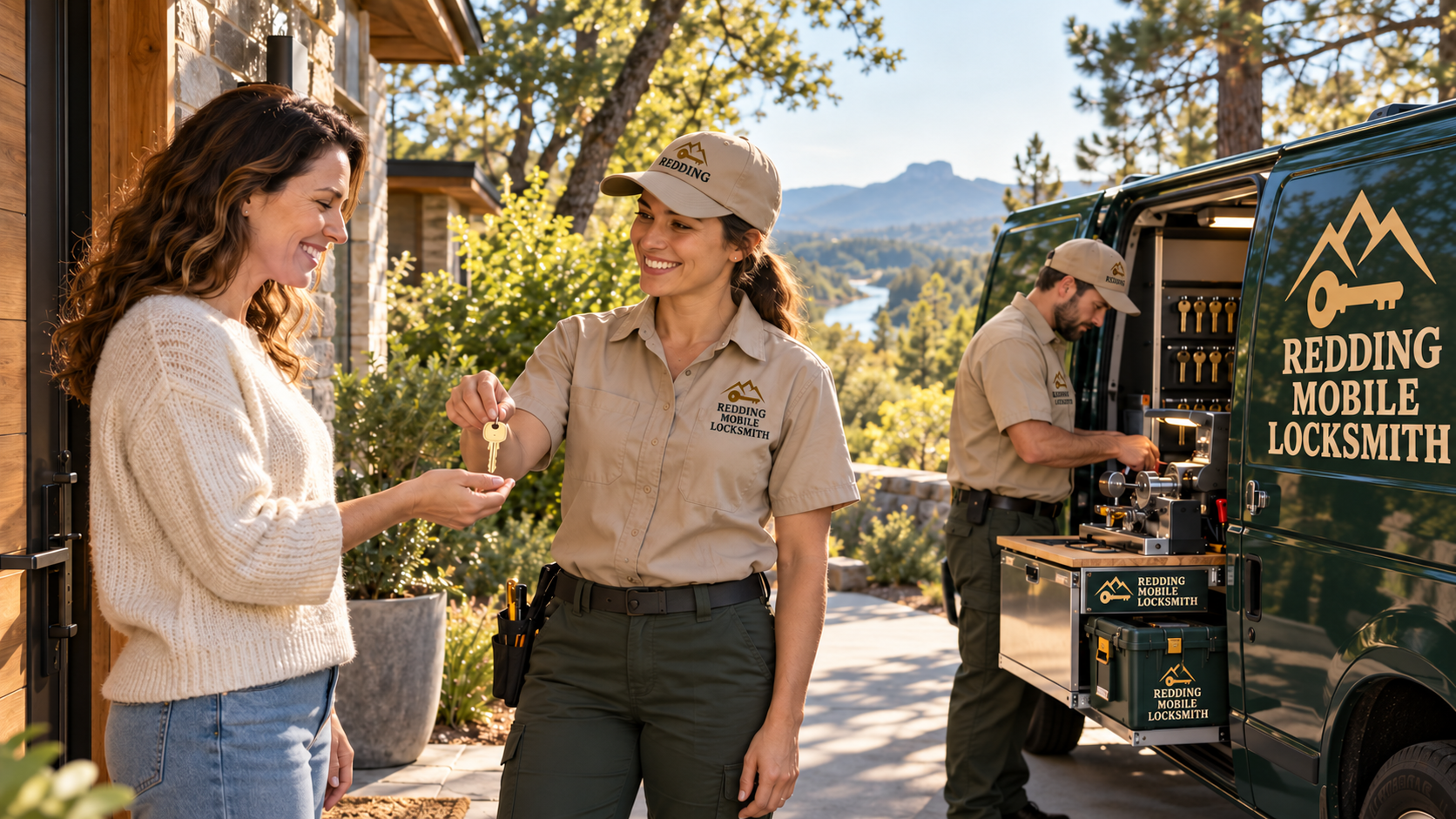
It happens more than owners admit. The only key is in a coat at home. The caretaker is away. The lock freezes. You arrive after dark to a door that will not open, and the nearest town is far away. This is where a mobile locksmith earns trust. A technician arrives in a service van with professional tools, key cutting equipment and common hardware, and can open the door without damage in most cases.
Be prepared to show that the cabin is yours. A reasonable locksmith will ask for some proof, such as identification or a document that ties you to the property, before opening a door. That protects you and the neighbors. If you cannot show it, the technician may ask for help from someone who can.
Our locked out of your home page and emergency help any hour page describe how we handle those calls. Because we serve Shasta and Siskiyou counties, including mountain communities like Dunsmuir, McCloud and Lakehead, we are used to cabins and long driveways. You can describe your situation through the request form.
A simple yearly rhythm
The easiest way to keep cabin locks happy is to give them a rhythm. In fall, close up with a checklist: test, clean, lubricate, count keys, and decide who holds spares. In spring, reopen with a calm check: look, test, lubricate again, and fix anything that changed over the winter. Each step takes minutes, and the routine builds into habit.
Write the checklist down and keep a copy at the cabin. Add notes each year about what you found. After a few seasons you will see patterns, such as which door always sticks or which lock needs attention first. That record is valuable if you ever sell or pass the cabin on.
If something seems beyond a simple fix, ask for help. A locksmith can look at the whole set of doors and tell you which locks have years left and which are near the end. Our guide to telling if your locks are worn out is a good place to start. And our home lock service page explains what we do at houses of all kinds, cabins included.
Good to know
Common questions
Should I rekey my cabin every year?
Not necessarily. Rekey when keys go missing, when you have had renters, caretakers or contractors with copies, or when you buy the property. Rekeying changes the inside of the lock so old keys stop working, and it is a simple way to regain control without replacing hardware.
What is the safest way to leave a spare key for guests?
Avoid hidden keys, which are the first places anyone looks. A trusted neighbor or caretaker is a better choice, or a code based lockbox or keypad where you can change the code after each stay. Keep a list of who has access and update it regularly.
My cabin lock is frozen. What should I do?
Warm the key gently and use a lock de icer. Do not use hot water, which can refreeze. Do not force the key, since keys break in cold locks. Once the door opens, apply a dry lubricant to the keyway and bolt. If it keeps freezing, consider hardware with a covered keyway.
What lubricant should I use on cabin locks?
Use a dry lubricant made for locks, such as graphite or a dry spray. Heavy oils thicken in the cold and attract dust, which makes locks stiffer. Apply a small amount, work the key several times, and wipe off any extra. Do it at both closing and reopening.
Can I use a keypad lock on a seasonal cabin?
Yes, many owners do. Codes can be changed for each stay, and there is no key to lose. Choose a model made for cold and moisture, change the batteries on schedule, and keep a mechanical backup key in a safe place. Make sure the door itself is in good shape.
What if I am locked out of my own cabin?
Call a mobile locksmith. A technician can usually open the door without damage, after asking for some proof that you own or have rights to the property. Describe the lock, the weather and how far you are from town when you reach out, so they can plan for the visit.