
Home / Neighbors ask / Shed and garage padlock questions
Outbuilding locks
Shed and garage padlock questions, answered plainly
A padlock is only as good as the hasp, the door and the habits around it. Here are the questions neighbors ask about locking sheds, garages and workshops, and what actually helps.
Outbuilding locks
Start with the whole picture, not just the padlock
When someone asks which padlock to buy for a shed, we like to answer with a question of our own: what is it attached to? A padlock is a small part of a locking arrangement that also includes a hasp, the screws that hold the hasp, the door, the hinges and the frame. If any of those is weak, the padlock is decoration.
Picture a shed behind a house on a quiet road outside Redding. It holds a lawn mower, a chainsaw, ladders, paint and the family bikes. The door is thin plywood. The hasp is held by four short screws into soft wood. The padlock is a shiny brass one that looks substantial. Anyone with a pry bar can pull the hasp off the door in seconds, and the padlock never has to be defeated at all. The owner comes out in the morning to find the lock still hanging on the hasp, still closed, and the mower gone. It is a sad little scene, and an avoidable one.
That picture is why we spend time on the whole system. A lock is a decision about what you are willing to lose, how much hassle you want, and what the outbuilding is made of. We will cover the padlock itself, the hasp and mounting, the weather, the keys, and what to do when something goes wrong, in plain language.
Anatomy of a padlock, in neighborly terms
A padlock has a body and a shackle. The shackle is the U shaped bar that passes through the hasp. Inside the body there is a locking mechanism that grabs the shackle and holds it. Most keyed padlocks use a pin tumbler cylinder, the same idea as a door lock, with small spring loaded pins that must line up for the key to turn. Combination locks use rotating wheels or dials instead.
The shackle matters a lot. A thick shackle made of hardened steel is much harder to cut than a thin one. A short shackle leaves less room for tools to get in. A shackle that is fully enclosed by the body of the lock, sometimes called a shrouded design, makes it harder to attack with bolt cutters. A long, thin shackle on a plain brass body is a design for convenience, not for protection.
The body can be laminated steel, solid steel, brass or a cast alloy. Brass is popular because it resists rust, but it is softer. Laminated steel is made of stacked plates, which makes it tough for the price. Hardened steel with a protective coating is a favorite for outdoor use. The right choice depends on what you are guarding and how the weather treats it.
- The shackle is the U shaped bar and is often the first target.
- A thicker, hardened shackle resists cutting better than a thin one.
- A shrouded shackle is partly covered by the lock body.
- The body material affects rust, strength and how the lock feels.
The hasp is the quiet hero
A hasp is the hinged metal strap that folds over a staple and takes the padlock. It should be thick, made of steel, and mounted so the screws are hidden when the lock is closed. If the screws are exposed, someone can simply remove them and open the door without touching the padlock at all.
A good hasp uses carriage bolts that pass through the door, with nuts on the inside, or through bolts with washers, rather than short wood screws. On metal doors, the hasp should be welded or bolted to the frame. A hasp with a large flat plate spreads the load, and one that is hidden behind a cover is even better.
If your shed already has a worn out hasp, replacing it is among the wisest upgrades you can make. A good hasp with a mediocre padlock beats a mediocre hasp with an excellent padlock. The same goes for the hinge side. Exposed hinge pins can be driven out so the door lifts off, which a padlock cannot prevent. Use security hinges or peen the pins so they cannot be removed.
Keyed, combination, or keyed alike
Keyed padlocks are the most common. They are simple, reliable and easy to use if your hands are full. The downside is keys. You must keep track of them, and anyone who finds a key can use it. Spare keys that live on a nail inside the garage are a classic mistake, since the lock protects what is behind it, and the key sits right there.
Combination padlocks eliminate the key, which is handy for shared spaces or rental properties. The downside is code management. A code is easy to share, hard to take back, and can be guessed if you pick something obvious. Change it whenever someone should no longer have access.
If you have several outbuildings, a gate and a toolbox, a set of keyed alike padlocks lets one key open all of them. That is a great convenience on a rural property with a shed, a barn door and a gate. The downside is that losing the key affects everything. A locksmith can help you set up a keyed alike system with a clear plan for spares. Our guide on how many keys a household should keep is a good companion.
Whichever style you pick, think about how often you will use it. A shed that is opened daily wants a lock that works smoothly with cold or gloved hands, so a large key head or a lock that is easy to grip is worth having. A seldom opened storage building can use a heavier lock that is a little awkward, since you will not be fussing with it often. Be honest about your routine, because a lock that annoys you tends to get left open.
Weather, rust and the stuck padlock
Outdoor padlocks live a hard life. Here in the northern Sacramento Valley, hot dry summers bake the metal, and dust works into every opening. In the mountain towns around Mount Shasta, Weed and McCloud, snow and freezing nights bring moisture into the keyway and the shackle channel. A padlock that worked in October may refuse to open in January.
The most common problems are rust, dirt and ice. A bit of dry lubricant in the keyway and on the shackle keeps things moving. Heavy oil seems helpful but attracts dust and thickens in the cold. Use a lubricant labeled for locks, apply it sparingly, and work the key a few times. Our note on what lubricant belongs in a lock goes into the details.
If a padlock is frozen, resist the urge to hammer it. Warm the lock gently, use a de icer made for locks, and wait. If it is rusted solid, it may be time for a new one. Hanging the padlock so the keyway faces down, or covering it with a small plastic cap, keeps water out. Some owners also hang the lock closed, with the shackle through the hasp, to keep spiders and dirt from nesting inside.
Garage doors, side doors and what needs a padlock
Garages come in more varieties than people think. A roll up overhead door may have a built in lock, a slide bolt on the inside, or a hasp on the side. Many of those built in locks are weak and easy to defeat. A detached garage often has a side service door as well, usually the easiest way in and the one that deserves a proper deadbolt.
On a sectional overhead door, a padlock through the track is a common trick when you are away for a long time. It prevents the door from rolling up. It is not a daily solution, because it means you must walk to the door and remove it. For daily use, an electric opener with rolling code security is typical, and the door can be locked from the inside by disabling the opener.
For side doors, a padlock and hasp can work, but a deadbolt is usually a better fit for an everyday door. We discuss garage entry doors in more detail in our guide on what to do if the lock on a garage entry door fails. Keep tools such as ladders and bolt cutters inside, not leaned against the outside wall.
Windows deserve a glance too. A shed or garage with a ground level window and a heavy padlock on the door has an obvious alternative entrance. A simple window lock, a security film or a bar on the inside can close that gap. The point is not to make the building a fortress. It is to make sure no single weak spot makes the strong parts pointless.
Matching the lock to what is inside
Think about the value and the replaceability of what you keep. A mower and some paint can be replaced. A set of professional tools or a work trailer might be needed to earn a living. A shed with outdoor furniture cushions needs only a modest lock. A workshop with power tools deserves a stronger one.
Higher value contents deserve layers. A solid hasp, a hardened padlock, a decent door and a light on a sensor go a long way. A flimsy padlock on a flimsy hasp is a weak chain. A good lock on a sturdy hasp pushes a casual thief to look somewhere else. Noise, time and visibility all work in your favor.
If you store anything dangerous, like fuel, pesticides or sharp tools, locks also help keep children and visitors safe. A padlock that kids cannot open is a small piece of peace of mind. Do not rely on a lock alone. Keep dangerous items out of reach and ask a professional if you have questions about secure storage.
Lost the key, forgot the code, or broke the padlock?
It happens. For a lost key, a locksmith can often open the padlock without destroying it, or cut the shackle and replace it with a new one. For a forgotten combination, some can be reset or opened with care. Which approach makes sense depends on the type of lock, its condition, and how much you value it.
In many cases, cutting a worn out padlock is the simplest answer. A technician carries professional tools and can open it with minimal damage to the hasp and door. Afterwards, you can replace it with a better one and get keys cut. If you have a keyed alike set, that is the moment to restore the system.
Please do not force a padlock with a hammer or a pry bar on your own. You can bend the hasp, crack the door, or hurt yourself. If you prefer to handle it yourself, a pair of bolt cutters will cut most basic shackles, but that approach is hard on the lock and will not work on hardened ones. A call or request can save a lot of effort. The request form is the place to start.
Lights, habits and the rest of the system
Locks work with the rest of your property. A motion light on the shed, a clear view from the house, and a tidy yard all discourage trouble. Thieves like dark corners and cluttered edges. Trimming back brush near the shed helps in fire country too.
Habits matter. Lock the shed when you finish, not when you remember. Do not leave the padlock open on the hasp, since it can be swapped for a copy. Keep the key somewhere not obvious. Take photos of your tools and write down serial numbers, which makes recovery easier if something is taken.
If you are building a new shed or reworking an old one, plan the door and frame to take a good hasp. Think about whether a deadbolt makes more sense than a padlock. Our team can help with new lock installation and with lock repair and adjustment when something wears out.
Finally, give the whole arrangement a seasonal checkup. When the clocks change, walk out to the shed and test each lock with the key. Look at the hasp screws for rust or loosening, wiggle the hinges, and check that the door still closes squarely. Ten minutes twice a year catches a failing lock before it fails on a rainy night when the key will not turn and the mower is needed first thing.
Where Redding Mobile Locksmith fits in
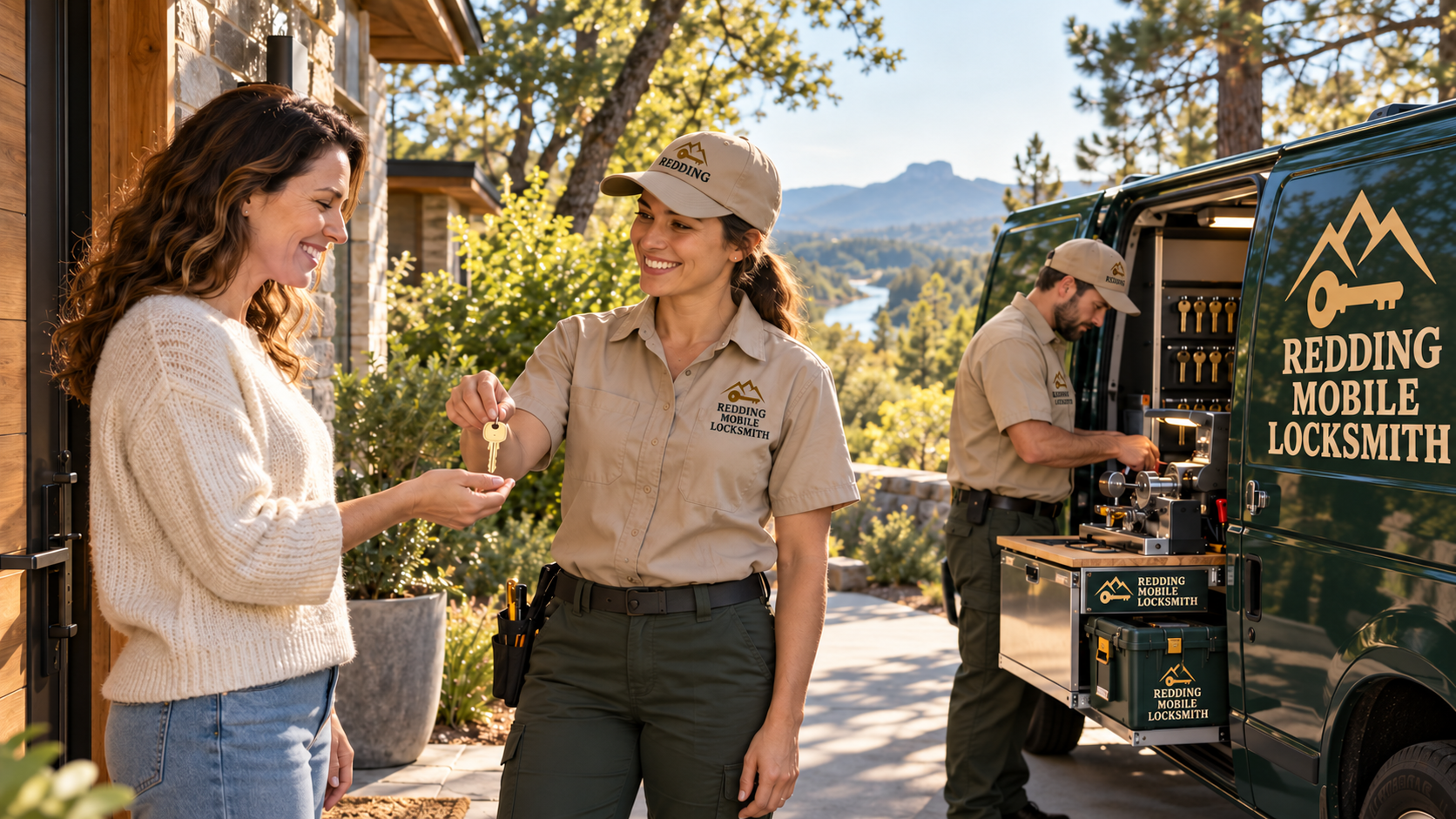
Redding Mobile Locksmith serves homes and properties across Shasta and Siskiyou counties, including rural lanes and outbuildings. A technician arrives in a branded service van with professional tools and common hardware, including padlocks, hasps and key cutting equipment. That means many of these jobs can be handled in a single visit.
Typical requests include opening a padlock when the key is lost, cutting and replacing a worn lock, adding a hasp or deadbolt to a shed or garage side door, and setting up keyed alike locks for several outbuildings. We keep recommendations plain and tell you when a simpler fix will do the job. Our home lock service page describes how a visit works.
If you live outside town, you may have a long driveway and a few outbuildings. Look at the page for your community, such as Cottonwood, Millville or Fort Jones, for notes on the area. And if you are curious about the gates that guard country drives, see our guide on gate lock questions for country driveways.
Good to know
Common questions
What kind of padlock suits a shed?
There is no single answer, but look for a hardened steel shackle, a solid body, and a weather resistant finish. Pair it with a thick steel hasp mounted with hidden fasteners. A strong padlock on a weak hasp or thin door will not protect much, so think about the whole arrangement.
Why do my padlocks keep rusting?
Moisture gets into the keyway and shackle, and thin plating wears off. Choose a weather resistant lock, keep the keyway facing down or covered, and apply a dry lock lubricant once or twice a year. Hanging the lock closed on the hasp keeps dirt out between uses.
Can one key open all my padlocks?
Yes, with keyed alike padlocks, which are made or rekeyed to share the same key. It is convenient for several outbuildings or a gate. The trade off is that losing the key affects every lock, so plan for secure spares and keep track of who has copies.
My padlock is frozen. What should I do?
Warm it gently and use a de icer made for locks. Do not pour hot water, which can refreeze, and do not hammer the lock. Once it opens, apply a dry lubricant to the keyway and shackle channel. If it keeps freezing, consider a lock with a cover or a different style.
Is a padlock enough for a garage door?
For an overhead door, a padlock through the track can stop it from rolling up while you are away, but it is not an everyday solution. Garage side doors are better served by a proper deadbolt. Think about the opener, the side door and the windows as a set.
Can a locksmith open a padlock without breaking it?
Often, yes. Depending on the lock type and its condition, a technician may be able to open it without damage or may recommend cutting a worn shackle. They will explain the options and the cost of replacing the lock before they begin.