
Home / Lakehead / Cars and Trucks in Lakehead
Lakehead cars and trucks
Cars and Trucks in Lakehead: Is It Really a Key Problem?
A vehicle that will not start is not always a vehicle problem. Sometimes the key, the chip inside it, or the fob battery is to blame. Here is how to tell the difference around Lakehead.
Lakehead cars and trucks
The student, the shared rental and the car that will not start
Imagine a college student spending a season near Lake Shasta, sharing a rental with two friends and one old car. One morning the car refuses to start. The dashboard shows a small light shaped like a key or a lock, the engine either cranks and stops or does nothing, and everyone has an opinion. One says it is the battery, one says the starter, and one says to try a different key.
All three could be right, and that is the difficulty. Modern vehicles rely on several systems to start, and a failure in any of them looks similar from the driver's seat. The trick is to read the signs. A few simple observations will usually tell you whether the key is involved, and that saves time, towing and guesswork.
This page is about that diagnosis. We are not mechanics and we do not repair engines, so we will point out where the key side ends and the engine side begins. If your story ends up on the engine side, you will at least have saved yourself a wasted visit and can go straight to the right kind of help. For the broader service, see our page on cars and trucks, and for the specific case of keys that need to be taught to a car, see key programming and fobs.
What the key does when you start a modern vehicle
When you turn the key or press the start button, three separate things need to happen. The vehicle battery must supply power. The starter motor must turn the engine. And the immobilizer, a small security computer, must recognize the key before it releases the engine. If the third step fails, the first two may work perfectly and the engine still will not run.
The recognition step uses a chip in the key head or inside a smart fob. The car sends a short signal, the chip answers, and the car compares the answer with its list. A chip that is damaged, unprogrammed or the wrong type will not answer correctly, so the car holds back. That is why a key can look perfect, turn the ignition and still do nothing.
Our plain words guide on what a transponder chip is explains the idea more fully. The point for now is that the key is a part of the starting system, not just a way to turn a lock, and so a key can be the reason a vehicle will not start.
Signs that point toward the key
Not every clue is conclusive, but together they paint a picture. The most telling is the spare. If a second key starts the vehicle without trouble, the vehicle is probably fine and the first key is the problem. If no key works, the cause is more likely the vehicle or the immobilizer.
Pay attention to what the engine does. A car with a flat battery usually does nothing, or clicks, and the lights are dim. A car that cranks strongly but will not fire is either missing fuel or spark or is being held off by the immobilizer. A car that starts for a second and dies points toward the immobilizer more often than the battery. These are general patterns, not rules, and a technician will check.
It also helps to notice when the trouble started. A vehicle that ran perfectly last night and refuses this morning, with no new warning lights beyond the key symbol, makes a key or immobilizer cause more likely than a slow decline that built over weeks. Trouble that began right after a battery change, a jump start or an electrical repair is worth mentioning, because some vehicles need a short relearn procedure after the power has been interrupted.
For a hands on look at one common version of the problem, see our guide on when a car will not start because of the key.
- A security or key shaped light stays on or flashes when you try to start.
- The engine cranks normally but never catches, or catches and cuts out at once.
- The spare key starts the vehicle but the main key does not.
- The doors lock and unlock but the engine will not run, or the other way around.
- The key was recently dropped, chewed, soaked or had its case replaced.
Signs that point away from the key
Equally important is knowing when the key is innocent. Dim headlights, a slow crank, a clicking sound or a dead dash all suggest a weak or dead vehicle battery. Lake country can be hard on batteries, with cold mornings that thicken oil and demand more power, and hot afternoons that wear a battery down over seasons. A battery is a far more common cause of a no start than a failed key.
If the engine cranks briskly and the key light is off, the immobilizer is probably happy and the problem lies in fuel, spark or air. A vehicle that runs fine and then dies while driving is not a key issue. A vehicle that smells of fuel or overheats is a mechanical issue. In these cases, the key is not the thing to fix, and a mechanic or tow service is the next call.
If you are unsure, try the simple checks first. Does the dome light come on? Do the headlights stay bright when you try to start? Is the key light on? These three observations separate battery trouble from key trouble in many cases. If your conclusion is that it is a mechanical problem, we cannot help with it, but at least you will know where to turn.
The fob battery and the simple fixes
Before assuming anything serious, consider the fob battery. Remote head keys and smart fobs contain a small coin battery. As it weakens, the buttons work less reliably, the range shrinks and, on push button start vehicles, the car may not detect the fob at all. Many vehicles show a message on the dash when the fob battery is low, though not all do.
If the battery is weak, replacing it is usually a simple job. The case opens with a small slot or screw, the old battery comes out and the new one goes in, taking care to match the type and the direction. Be gentle, because fob cases are made to snap together and the contacts bend. If you are not comfortable, a technician can do it.
Many push button vehicles also have a backup way to start with a dead fob, such as holding the fob against a marked spot on the steering column or console. The owner's manual describes it for your vehicle. Our guide on what to do when a key fob stops working walks through the usual steps in order.
Roommates, shared vehicles and who has which key
A shared rental with a shared vehicle is a recipe for key confusion. Keys travel in pockets, on hooks, in backpacks and in the glove box. Someone takes the good key, someone is left with the worn spare, and the spare is the one that stops working. The first sign of trouble may be the day it matters most.
If several people use the same vehicle, agree on a system. Decide who owns the vehicle and who may approve work on it. Keep one key in a known place, test the spare, and note any wear. Avoid leaving a key in the vehicle, since a key left inside is a common cause of lockouts, and avoid hiding a key outside the car, where it can be found by anyone.
Who approves work matters too. If the car belongs to one person and others borrow it, it is that person who needs to authorize a new key. A technician will reasonably ask for proof that the person asking is the owner or has the owner's permission. Our guide on teen drivers and spare keys touches on the same issue of sharing keys safely.
Water, wear and the life of a key
Lakes mean water, and water is hard on keys. A key dropped off a boat, forgotten in a pocket in the wash, or splashed at the ramp can fail even if it appears fine afterward. Water can corrode contacts in a fob and damage the chip or the circuit board. A fob that has been wet may work for a time and then fail, or work only when it is dry.
If a key has been soaked, remove the battery, let it dry thoroughly, and do not try to start the car with it until you are sure. Do not use heat to dry it, since that can damage the electronics. If it still does not work, it likely needs replacement, and a technician can test the chip and tell you.
Everyday wear counts too. Keys on a heavy ring wear the ignition and can bend. Plastic heads crack, rubber buttons wear through, and the blade can lose its sharp edges so that it no longer reads the lock correctly. Keep your key ring light. If your key is visibly worn, make a spare before it fails. Our page on replacement car keys explains how.
Cold plays a part up here as well. Winter nights in the mountain country can be hard on small batteries, and a fob that works in the afternoon may sulk at dawn. If a fob acts up only when it is cold, a fresh battery is the first thing to try, and carrying the fob in an inside pocket rather than leaving it in a cold vehicle helps on frosty mornings.
When the key is stuck, bent or broken
Sometimes the problem is mechanical, but it is still a key problem. A key that sticks in the ignition, will not turn, or has snapped off in the lock needs different treatment from one that is simply not recognized. A stuck ignition key can be a worn key, a worn ignition, a locked steering wheel or a vehicle that is not fully in park.
If your key will not turn, try gently turning the steering wheel while you turn the key, since the steering lock can bind. Do not force the key. Excess force breaks keys and damages ignitions. If a key breaks, keep both pieces, and do not try to extract the broken piece with improvised tools.
Our guide on a key stuck in the ignition explains the causes and what to try. If the key has broken off, a technician has tools to remove the fragment and cut a new key.
Lockouts, lost keys and when you are not sure which you have
A lockout and a lost key are different problems with different fixes, though they often arrive together. A lockout means the key exists but is inaccessible, perhaps inside the vehicle. A lost key means it is gone for good, or at least for now. A lockout is usually solved by opening the vehicle. A lost key requires a new key.
If a child or pet is inside the locked vehicle, call emergency services first, before anything else. Heat in a closed vehicle can be dangerous, and they are equipped to act immediately. Once everyone is safe, the lockout can be dealt with calmly.
If you are unsure which situation you have, describe what you know. Our page on getting back into a locked car explains the lockout side, and the guide on what to do when locked out of a borrowed car will help if the vehicle is not yours.
Buying a used vehicle and the key question
Students and seasonal workers often buy older used vehicles, and used cars come with key surprises. The seller may have only one key, the spare may be a plain copy that does not start the car, or a previous owner may have lost a key that could still start it. It is smart to ask how many keys come with the vehicle and to test each one.
If only one key exists, consider making a spare right away, while the original still works. If the vehicle has an unknown history, ask about having the car forget any keys that are not in your hands. Our guides on the extra key question when buying a used car and how many keys come with a used car cover it.
Also confirm that the key you receive matches the paperwork and the vehicle. A key that opens the doors but does not start the car, or the other way around, is a sign of a partial copy. Better to learn that on day one than on a cold morning.
How to ask for help from Lakehead
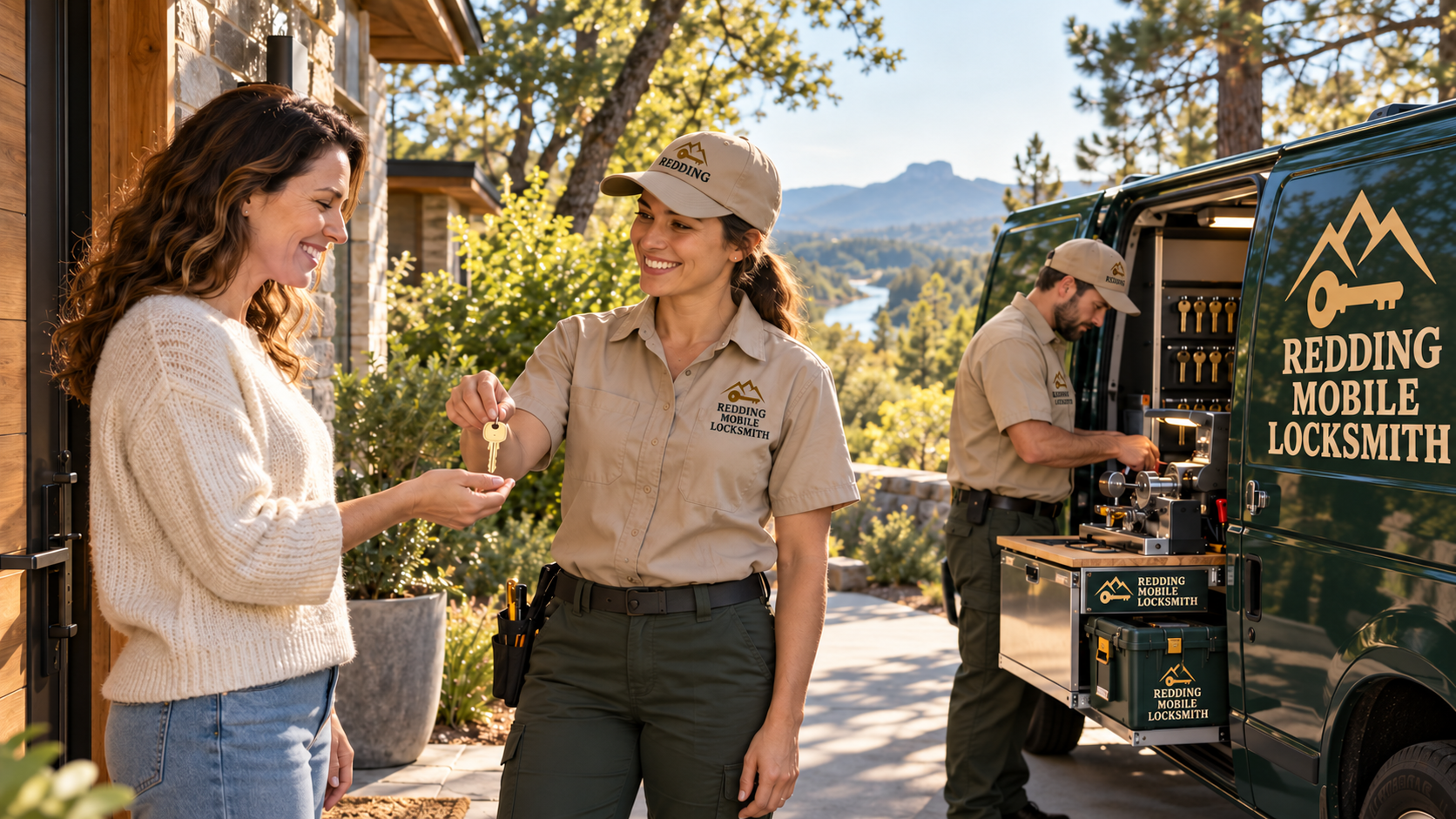
When you ask for a visit, tell us what the vehicle is, where it is parked, and what happens when you try to start it. Mention the dash lights, the sounds, and whether a spare key behaves differently. Say whether the vehicle is yours and whether you can show it. Because the service van carries equipment for cutting and programming keys, much of the work can happen right where the vehicle sits, which is useful on a lake road or at a marina lot.
Send the details through the request form, since the phone line is coming soon. If you are not sure whether the problem is the key, say so. We would rather talk it through than have you pay for a visit that does not help.
For neighbors elsewhere, key programming in Millville shows the same service from a foothill setting, and the Lakehead page gathers all local services in one place.
Good to know
Common questions
How can I tell if my car problem is the key or the battery?
A weak battery usually shows as dim lights, slow cranking or clicking. A key problem often shows as a lit security light, an engine that cranks but never catches, or a spare key that works when the main key does not. The dome light and headlights are a useful first check.
Can a worn key stop a car from starting?
Yes, in two ways. A worn blade may not turn the ignition properly, and a damaged chip inside the head may not answer the car's security check. In either case a spare often works, which is a strong sign the first key is the issue. Replacement is usually the answer.
My key fob got wet at the lake. Is it ruined?
Not necessarily, but do not rely on it. Take out the battery, let it dry completely, and avoid heat. If it still fails or works unevenly, corrosion may have damaged the circuit. A technician can test it and tell you whether a new fob is needed.
What should I do if my spare key does not start the car?
The spare may be a plain copy without a programmed chip, or the chip may have failed. Do not keep forcing it. A technician can test the spare, program it if it is the right type, or cut and program a new one so you have a dependable backup.
Do you repair engines or starters?
No. Our work is on the key side: keys, fobs, chips, programming, ignition and lock problems, and lockouts. If the key checks out and the trouble lies in the battery, starter or fuel system, a mechanic is the right call. We can help you tell which side it is.
Who can approve a new key for a shared vehicle?
Generally the owner, or someone with the owner's clear permission. A technician will ask for some proof, such as registration or ID that matches. Roommates sharing a car should agree in advance on who owns it and who can approve work, so a missing key does not turn into a dispute.