
Home / Neighbors ask / What to do when locked out of a borrowed car
Neighbors ask
What to do when you are locked out of a borrowed car
Call the owner first. Before anyone touches the doors, the person whose name is on the car needs to know, and in most cases they need to say yes. Then you can sort out the practical part together.
Neighbors ask
Start by calling the owner
The first move is not a locksmith. It is a phone call or a text to the person who lent you the car. They may have a spare key at home, they may know about a hidden compartment or a roadside plan, and, most importantly, they have the right to decide what happens to their vehicle.
It also changes the whole tone of the afternoon. Telling someone straight away that you locked their keys in their car, and that you are handling it, is a far better start than having them find out from a bill or a scratch. Most people respond better to a short honest message than to a surprise.
So before you stand around in the parking lot rattling door handles, send the message. Say where you are, say that the car is locked with the key inside, and ask whether they have a spare or any coverage that helps. Then wait a moment for their answer before doing anything else.
Why the owner matters so much
A responsible locksmith wants to know that the person asking for help is allowed to ask. When you stand beside a car that is not yours, we cannot see that from the outside. The owner's say so is what turns a worrying situation into a normal service call.
That is not suspicion aimed at you, it is just how careful work is done. The same steps that protect a stranger's car from a thief also protect your friend's car from a mix up. Rules about what proof is needed can vary, so a locksmith will tell you what they need when you call rather than leave you guessing.
If the owner can be reached, the easiest path is often a short three way conversation or a forwarded message that confirms they authorize the work. If the owner cannot be reached for a while, it may be wiser to wait, find somewhere safe to be, and try again than to push ahead without anyone's approval.
There is a friendly side to this too. Owners are usually relieved to be asked, because it shows you take their property seriously. The few who grumble at first are almost always the ones who have been through a worse lockout themselves, and a clear plan from you tends to settle their nerves sooner than any apology could.
What proof you may be asked for
Typically a locksmith will ask for the vehicle's make, model and year, a photo ID for the person present, and some sign that the car belongs to the person who authorizes the job. Registration or an insurance card in the glove box is the usual example, which is awkward when the glove box is locked in the car you cannot open.
Here is where the owner can help. They may be able to text a photo of the registration, or they can confirm details over the phone while you read the plate number aloud. Having them on the line for a couple of minutes frequently solves the whole puzzle.
Please be patient with these questions. They are asked on every call, not just yours. Our guide on how to know a locksmith is the real thing flips the idea around and lists what you should expect to see from us in return, so the trust runs both ways.
Check the easy things before calling anyone
Before reaching for the phone book, walk around the car once. Test each door, including the rear ones and the hatch or trunk, because a single unlocked door ends the problem on the spot. People get so fixed on the driver's door that they forget the rest.
Look through the windows. Is the key actually inside, or could it be in a pocket of the jacket you are wearing, in your bag, or back where you were visiting? Many lockouts turn out to be a key that is simply elsewhere. Retrace your steps first.
If the car has a keypad on the door pillar, or a phone app the owner uses to unlock it, ask about that. Some vehicles also let the owner unlock them remotely through a connected service, which can resolve everything in a moment. Do not force a door or pry at a window, because that can damage seals and wiring that cost far more to put right than the original problem.
Push button cars deserve a special mention. Sometimes the fob is sitting in a bag on the back seat and the doors locked because the car decided you had walked away. The fob inside the car is no help to you outside it, so the answer is still to open a door, and the owner or a professional should be the one to do it, and it should be done with care for the paint, the seals and the wiring. Once a door is open, the fob in the bag is all you need, and nothing else has to be repaired. If the owner has a second fob stored at home, a friend or relative may be able to bring it to you, which is sometimes the neatest solution of all, though a mobile locksmith can also come to wherever the car is parked.
If a child or pet is inside
This is the one situation that overrides everything else on this page. If a child or an animal is inside a locked vehicle, call emergency services right away, before the owner and before a locksmith. Cars heat up and cool down dangerously, and the people trained for those moments should be the first to be called.
Do not wait to find out whether someone has a spare. Do not spend time on the proof questions above. Give the emergency dispatcher your location and what you see, and follow their instructions.
Once everyone is safe, the rest of the story can be worked out calmly, including who to tell and how to fix the lock. That order matters, and nobody will think less of you for following it. A lock can be repaired, a door can be opened, and a key can be made again, but the minutes spent on the right phone call cannot be taken back. The key, the paperwork and the friendly phone call can all wait.
Roadside plans and who might already be covered
Many car owners carry some form of roadside help, either through an insurance policy, a membership or a perk that came with the vehicle. Whether lockout service is included varies a great deal from plan to plan, so it is worth asking the owner rather than assuming either way.
If there is a plan, the owner usually has to be the one to start the request, or at least to give the account details. That is another reason the first phone call is so useful. Sometimes the help arrives through that channel, and sometimes it is simply easier to book a local mobile locksmith directly.
Either route is fine. The important thing is that the owner chooses it. Whoever ends up doing the work, ask what the arrangement is before it starts, who pays, and what the owner expects from you. A short conversation now keeps a favor from becoming an argument.
It also helps to remember that a locked car with a key inside is a nuisance, not an emergency, as long as nobody is trapped and nobody is in danger. That gives you room to make the call in the right order: owner first, plan second, local help third. Rushing through the list tends to cost more patience than it saves, and a calm hour of sorting things out usually ends better than a panicked ten minutes of guessing.
Rental cars, work loaners and cars from a dealer
Not every borrowed car comes from a friend. A rental, a courtesy car from a repair shop, or a car shared through a membership has a company behind it, and the company usually has its own instructions for lockouts. Check the paperwork or the sticker inside the door jamb you can still reach, and look for a number to call for help.
These businesses often prefer that you contact them before anyone else does anything to the vehicle, and some have terms about who may service it. That is not an obstacle so much as a reminder that the owner in this case is a company, and the company decides. A locksmith can usually still help if the company approves, but they need to say so.
If the vehicle is a loaner from a shop in town, a phone call to the service desk is a friendly first step. They sometimes keep a spare key on a hook behind the counter, and the person who answers can often tell you in one sentence whether that is the case. It is a small errand that can spare you a service call entirely.
How a professional opens a car without damage
When a locksmith opens a locked car, the goal is to do it without leaving a mark. Modern doors have rubber seals, wiring for windows and side airbags, and electronics that are easy to disturb, so brute force is the wrong idea. Trained technicians use purpose made tools that are designed to work with a particular lock or door design.
We will not describe the specifics of getting past a lock, since the same information would help the wrong person, but the overall idea is simple: gain access gently, make sure the key is retrieved or the door is unlocked, and leave the car as it was. Our page on how a car is opened without the key offers the friendly, general version.
If the car has side airbags in the doors or a sophisticated alarm, tell the technician. It can change how the work is approached. Also mention anything unusual, like aftermarket accessories or a recently replaced window, so nothing comes as a surprise.
What it looks like when we help
Picture a friend who borrowed a family member's sedan to run an errand and stepped out at a trailhead with the keys on the driver's seat. They send a message to the owner, the owner texts back a photo of the registration, and the friend then asks for local help through the request form.
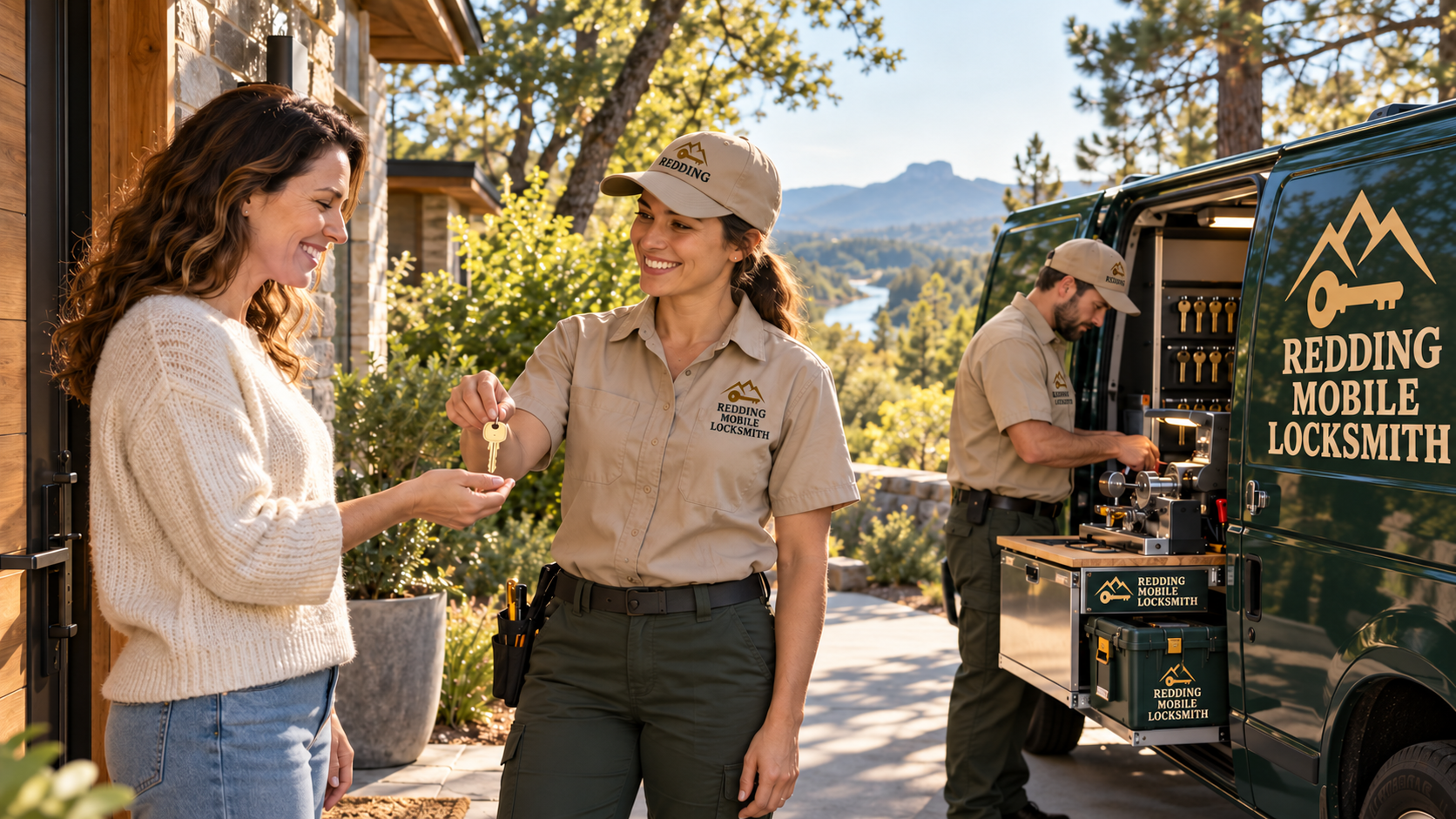
Our technician, wearing a uniform and arriving in a branded service van, confirms the vehicle details, checks the identification and the owner's go ahead, and then opens the car with the right tools. The key comes out, the doors are tested, and nothing is damaged. That is the shape of a good lockout call.
The details differ for every vehicle, and we will always tell you plainly what we see before we begin. Our page on locked out of your car explains the service in full, and you can read about emergency help at any hour if the timing is awkward.
Smoothing things over with the owner
Once the car is open, give the owner a short update. Tell them it is done, that nothing was damaged, and where the key is. If there was any cost, offer to cover it, or at least talk about it openly, so nobody is left wondering.
If the lockout revealed a weakness, like only one key existing for the car, mention that kindly. The owner may want a spare made so this situation, or a much worse one, is easier to handle next time. Our guide on how many keys come with a used car and which ones matter helps with that conversation.
And if you borrow the car again, make a small habit of checking for the key before closing the door. It sounds almost silly, but the habit of touching your pocket and saying the word keys out loud has saved plenty of people from a long wait on a cold evening.
If you are borrowing the car for a trip, such as a day out on one of the highways or a drive up to the mountains, make a point of telling the owner where you will be. That way, if something goes sideways far from home, they already know the situation and can help you decide whether to wait for a spare or book a mobile technician where you are.
Habits that prevent the next one
The simplest prevention is to keep the key on you, not in the cup holder, not on the seat, not on the roof while you load groceries. A key clipped to a belt loop or tucked into a zipped pocket cannot be left in a car that locks itself.
Cars that lock automatically after a few moments, or that lock when you walk away with the fob, are convenient but also a common cause of lockouts. If you are borrowing a vehicle, ask the owner how the locking behaves before you drive away, since each model has its own habits.
Finally, ask for a second key when you borrow a car for a long stretch, and agree before you leave on where the spare lives and who is allowed to use it. Writing it in a text message is enough, and it leaves a record that both of you can find later. It is a reasonable request, and it leaves the owner with the original in their hands. If a spare does not exist, our replacement car keys page explains how one can be made.
Good to know
Common questions
Can I call a locksmith for a car that belongs to someone else?
Usually yes, as long as the owner agrees. A locksmith will want confirmation that the owner authorizes the work, such as a call or a photo of the registration. Contact the owner first, then arrange the visit so everyone is comfortable with what will happen.
What if I cannot reach the owner at all?
Wait a little and keep trying through other family members or friends who might know them. If it is safe to wait, that is the better choice. If someone is in danger, such as a child or pet inside, call emergency services immediately and let them lead.
Will the locksmith need to see my ID?
Most likely, along with some proof that the vehicle belongs to the person who gave permission. Exact requirements can differ, so the locksmith will tell you what they need when you call. It is a normal step that protects both you and the owner.
Could opening the car damage it?
A trained technician uses tools made to open vehicles gently, so damage is not expected. Forcing a window or door yourself is far riskier, because seals, wiring and airbag parts are easy to disturb. Letting a professional handle it is the safer choice.
Who pays when I locked a friend's car?
That is something for you and the owner to agree on openly, ideally before the work begins. Many people simply offer to cover it since the mistake was theirs. Some owners have roadside plans that help. A short, honest conversation avoids hard feelings later.
Should the owner make a spare key after this?
It is a sensible idea, especially if the car has only one key. A spare in a safe place at home turns the next lockout into a short errand instead of a service call. We can explain which type of key suits the vehicle.