
Home / Shasta Lake / Cars and Trucks in Shasta Lake
Shasta Lake vehicles
Cars and Trucks in Shasta Lake: The Whole Mix of Key Trouble
Vehicle problems rarely arrive one at a time. A lockout may hide a lost key, and a lost key may hide a worn ignition. Here is how a mobile locksmith sorts out the whole mix where your vehicle sits.
Shasta Lake vehicles
A property with more locks than pockets
Imagine someone who owns a few acres on the edge of Shasta Lake. There is a gate at the road, another at the back pasture, a barn, a workshop, a utility trailer with its own padlock, and, scattered among all of that, a pickup, a small car and perhaps a work truck that belongs to somebody's cousin. The key ring on the kitchen hook has grown to a size that would embarrass a janitor.
On a property like that, the vehicle keys are one more bunch among many. They get mixed up, borrowed, left in a shirt pocket, and lost in the straw. When the pickup will not start, or the car door locks with the key inside, the owner has to work out which problem they have before they can fix it. Often the answer is that they have two or three at once.
This page walks through the mix of problems that a mobile locksmith handles on cars and trucks: getting into a locked vehicle, replacing keys, programming fobs and chips, and dealing with ignitions that no longer do their job. It is written for Shasta Lake drivers, but the principles hold wherever your vehicle happens to be parked.
Getting into a locked vehicle
A lockout is the problem most people think of first. The keys are on the seat, on the counter at home, or in the pocket of a different jacket, and the doors are locked. The technician uses specialized tools to open the vehicle without the key, and does so in a way meant to protect the paint, the weatherstripping and the electronics inside the door.
This is more delicate than it used to be. Modern doors hold wiring for windows, speakers, locks and sometimes side airbags. A careless approach can damage a harness or trigger a sensor. That is why it matters who you call. A trained technician knows which methods suit which vehicles and which to avoid.
We have a short explainer on how a car is opened without the key that describes the general idea without teaching anyone to break in. If a child or a pet is locked inside a hot vehicle, call emergency services first. In the Shasta Lake summer, heat inside a closed car becomes dangerous, so do not wait.
Lost, broken and worn keys
Keys are physical objects, and they wear. A key that has been used daily for many years may still turn the door but begin to stick in the ignition. A key that has been bent, chewed by a dog or dropped in the lake may snap without warning. The wise approach is to replace a failing key before it fails completely.
When a key is lost, the technician can usually make a new one on site, cutting the blade and programming the chip if the vehicle has one. When every key is lost, the work is more involved, but it is often still possible. The vehicle's make, model and year decide how. Our page on replacement car keys covers the process from beginning to end.
If your vehicle is older, with no chip in the key, the job can be simpler: a plain cut may do. If it is newer, the key is a small electronic device as well as a piece of metal. Tell the dispatcher what you drive and the year, since that single detail changes the equipment the technician needs to bring.
It is worth asking, while you are at it, whether a spare should be made now. A technician who is already on site with the equipment out can cut and program a second key with little extra effort, and the owner ends the visit with a working pair instead of a single point of failure. Test both keys before the van leaves.
Fobs, chips and the cars that listen for them
Many vehicles use a transponder chip in the key head, which the car reads through an antenna near the ignition. Others use a proximity fob that talks to the car by radio, allowing push button starting. Both rely on a code stored in the vehicle, and both must be introduced to the car when a new one is added.
A fob also controls remote functions such as locking, unlocking and opening a liftgate or trunk. Those functions are sometimes programmed separately from the engine start code. That is why a fob can unlock the doors but fail to start the engine, or the other way around. A technician can test both parts and tell you which one is off.
We go into the details in our local page on key programming and fobs in Shasta Lake, and in the service page on key programming and fobs. If you are unsure whether your key has a chip, a short guide on transponder chips explains how to tell.
Ignitions that stick, spin or refuse the key
The ignition cylinder is a lock like any other, with pins or wafers that must line up for the key to turn. After years of use it wears, and the symptoms are familiar: the key goes in hard, the cylinder turns only after wiggling, or the key will not come out. Sometimes the steering lock binds and makes things worse.
Do not force a key that refuses to turn. Forcing can break the key in the cylinder, which turns a small problem into a larger one. Try turning the steering wheel gently from side to side while turning the key, which frees the steering lock in many cases. If that does not help, call a technician before you damage anything.
A technician can often repair or replace a worn ignition cylinder on site and cut a key to match. Our short guide on a key stuck in the ignition explains what is going on inside and what you can safely try first. Ignition work depends on the vehicle, so describe yours carefully.
One more sign to watch: a car that sometimes starts and sometimes does not, with no pattern, may have a worn ignition switch behind the cylinder rather than a bad key. The technician can tell the difference by testing, and will say honestly when the repair belongs to a mechanic rather than a locksmith.
Work trucks, shared vehicles and farm use
Trucks on a property tend to be shared. A cousin borrows one, a neighbor uses another for a weekend job, and a worker takes a third home. Keys wander, and sometimes nobody remembers who had the last one. If this sounds familiar, consider writing down who holds each key and keeping one properly programmed spare for each vehicle.
Work vehicles are also locked and unlocked many times a day, with dirty hands, in all weather. Door locks gum up with dust and straw. Fobs get knocked about. Plain, durable keys sometimes serve better than elaborate fobs. Ask the technician what suits the way you use the vehicle, and what to do when a vehicle is shared by several people.
Our guide on a work vehicle lockout and who to tell covers the human side, such as informing the owner of the vehicle when it is not yours. The technician will want to confirm that you have the right to open it, which protects everyone involved.
If the truck is registered to a business or a family member, bring whatever shows your connection to it. A simple note from the owner with a phone number is sometimes enough to start a conversation. What the technician cannot do is open a vehicle for a stranger who offers no explanation, and you would not want them to.
Gates, padlocks and the other locks on the property
A property with acreage has locks that are not on cars at all. Gates on the road, padlocks on outbuildings, and barn doors all need keys. A mobile locksmith can often help with those while on site for a vehicle, and it saves a second trip. Mention them when you call.
A sensible plan is to keep vehicle keys separate from property keys, so that a lost key ring does not give someone access to both. Use clear tags or color coding so you can tell what opens what without trial and error. And do not label the keys with your address, since a lost ring then tells a stranger where to go.
For a wider look, see our guide on gate lock questions for country driveways, which addresses the questions rural owners ask most. For a home on the property, home lock service in Shasta Lake covers the house itself.
Lakeside days and the keys that go for a swim
Shasta Lake is a place where people spend time on the water, and keys go with them. A fob dropped in the lake, a key left on a boat seat, a ring lost at a launch ramp: these are the sort of things that happen on a good weekend. Water is hard on electronics, and a soaked fob often stops working even after it dries.
If your fob has been underwater, take out the battery if you can, let it dry fully, and do not try to use it until it is dry. Even then it may fail. Plan to have a spare ready. A spare key kept at home, and tested, turns a ruined weekend into an inconvenience.
Also think about where you leave the key while you swim or fish. Leaving it in a truck bed, a cup holder or a visible spot invites trouble. Some people put a key in a waterproof pouch clipped to a swimsuit. Whatever you do, avoid hiding a spare in a magnetic box under the vehicle, which thieves know about.
If a boat trailer is part of your weekend, remember that trailer hitches and lights have their own locks and couplers, and the tow vehicle has to be reachable at the ramp. A lockout at a launch, with a trailer half in the water and a line of people waiting, is a good reason to carry a spare key on someone else, such as a passenger who is staying ashore.
Commutes, highways and breakdowns that are really key problems
Many Shasta Lake residents drive to Redding for work, along Interstate 5. A car that fails to start on a weekday morning is not just an annoyance. It can mean a missed shift. Before calling a mechanic, consider whether the key is the cause. A flashing key light on the dash, or a car that cranks but does not start, often points to the key system.
If the key itself seems to be the problem, try your spare. If the spare works, the first key has likely failed. If neither works, the car may have a problem with its immobilizer system, and a technician can diagnose it. Our guide on when a car will not start because of the key gives a more detailed checklist.
Keep in mind that a locksmith does not replace a mechanic. If the battery is dead or the engine is failing, the key will not fix it. But a good technician can rule out the key early, and that saves you from paying for repairs you do not need.
What to tell the dispatcher about your vehicle
Whatever the problem, the call goes better with the right details. The year, make and model matter, because they determine the key type and the programming approach. Say whether the vehicle uses a traditional key or a push button start. Say how many keys work, and whether any have been lost.
Also say where the vehicle is and how to reach it. On a property with several gates, mention which is open and which is locked, and where the vehicle is parked relative to them. Technicians appreciate directions that save a wrong turn, and a gate left open can save a long wait.
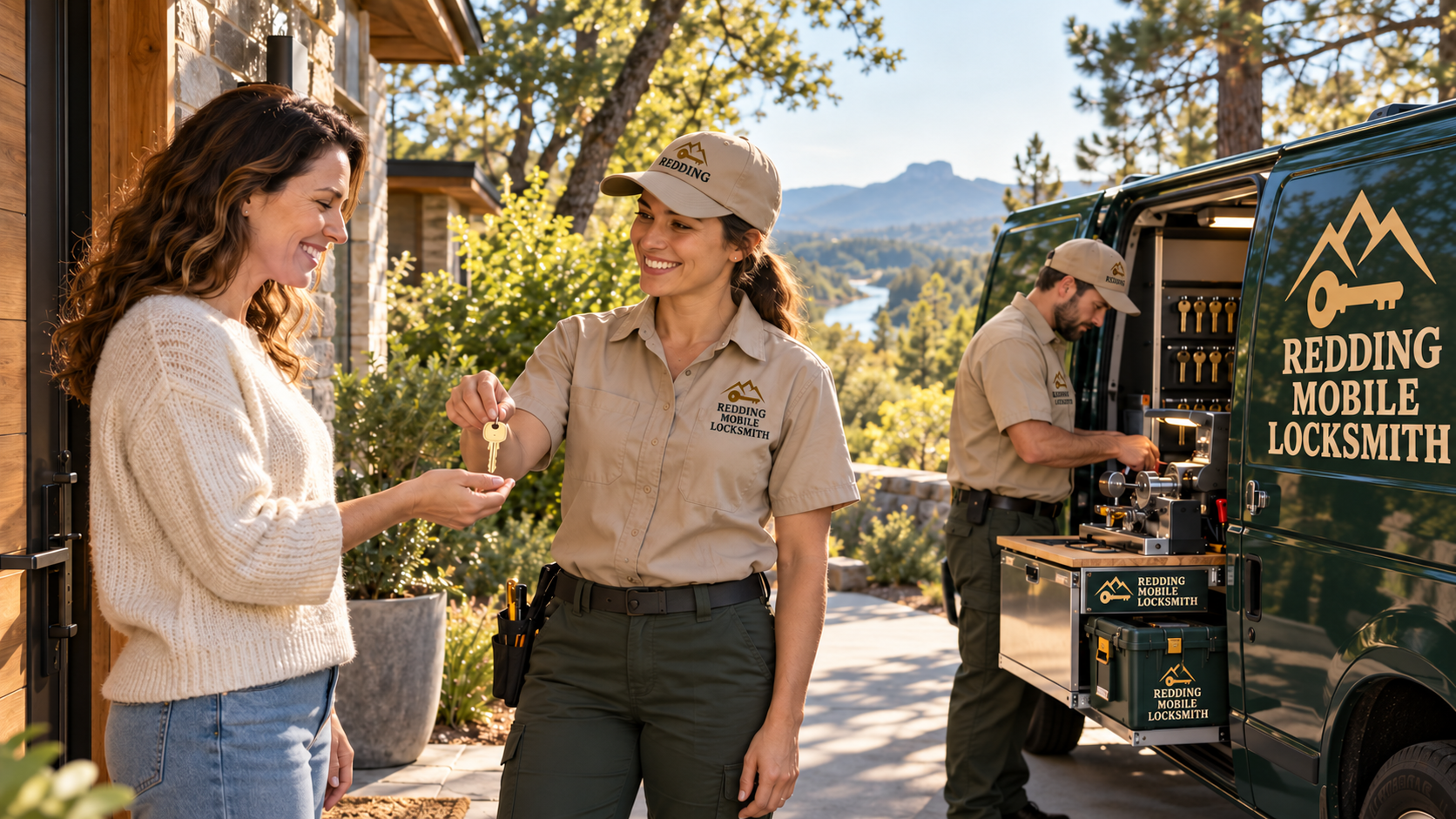
If you have a dog on the property, mention it. If the driveway is steep, narrow or muddy after rain, mention that as well. A branded service van is a normal vehicle with tools and hardware aboard, and it needs room to park and a safe place to work beside your car.
Be ready to show proof that the vehicle is yours or that you may open it. Registration and identification are the usual items. This is a normal part of the process, and it protects owners. Our guide on what to have ready when you call lists the items in more detail.
Nearby places and next steps
If you are ready to ask for help, use the request form on the contact page. Describe the vehicle and the problem as clearly as you can. The phone line is coming soon, and the team answers requests at every hour.
For more on the area, see our Shasta Lake overview. Related local pages include new lock installation in Shasta Lake for gates and outbuildings that need better locks. The wider service page on cars and trucks covers the topic across the region.
The same team also serves Anderson, Redding and Cottonwood, so a vehicle problem on your commute is covered too. Whatever mix of trouble you have, start by describing it plainly, and let the technician sort out which parts are the key and which are not. That honest sorting, more than any single repair, is what a good mobile visit provides.
Good to know
Common questions
Can you open my truck without damaging it?
Technicians use tools designed to open vehicles without harming paint, seals or electronics. Methods vary by vehicle, and the technician chooses the one that suits yours. If a particular vehicle carries a risk of damage, a careful technician says so before beginning.
What if I have lost every key to my car?
It is often still possible to cut and program a new key from the vehicle itself. How involved the work is depends on the make, model and year. Tell the dispatcher what you drive and whether you have any paperwork, and they can explain what to expect.
My fob fell in the lake. Can it be saved?
Sometimes. Remove the battery if possible, let everything dry completely and try again. Water often damages the circuit board, though, and a fob that does not recover may need replacement and programming. A tested spare key is the most reliable protection.
Why does my key turn the ignition but the car will not start?
On many vehicles the chip in the key must send a code the car recognizes. If the chip is damaged, missing or not programmed, the car stays disabled even though the key turns. A technician can test the key and the system to find the cause.
Can you also help with the gates and padlocks on my property?
Mobile technicians often handle gates, padlocks and outbuilding locks while on site for a vehicle. Mention them when you call so the van carries the right hardware. It can save a second visit and keep all your keys organized.
Do you cover work trucks and shared vehicles?
Yes. The technician needs to confirm you have the right to open or rekey the vehicle, so have registration or a note from the owner. Shared vehicles benefit from a written record of who holds each key and a programmed spare.