
Home / Cottonwood / Cars and Trucks in Cottonwood
Cars and trucks, Cottonwood
Cars and Trucks in Cottonwood: When the Trouble Is Really the Key
Not every car that refuses to start has a bad engine. Sometimes the key, the chip inside it or the lock is to blame. Here is how to tell the difference before you pay for the wrong repair.
Cars and trucks, Cottonwood
The truck that would not start, and the key that was the reason
Picture a contractor in Cottonwood heading out before the heat builds, work truck loaded, crew waiting at a job site up the road. The engine cranks, or it does not, or the dash lights flash in a way nobody has seen before. The natural thought is battery, starter, fuel. A mechanic gets called, a tow gets arranged, a day gets lost. And sometimes the real cause was sitting in the contractor's pocket the whole time: a worn key, a dead fob battery, or a chip the truck no longer recognizes.
This is more common than most people think, because modern vehicle keys do more than turn a lock. Inside the plastic head of many keys is a tiny transponder chip, and the vehicle asks that chip for a coded answer before the engine is allowed to run. If the answer is missing or wrong, the engine may crank without starting, or stall after a second, or refuse altogether. The vehicle is working as designed. It simply does not believe the key.
In a rural community with acreage, ranch properties, farm and shop buildings, long driveways and gates, a vehicle that will not start is more than an inconvenience. It may be the only way to reach town, get supplies or move equipment. That is why it helps to rule out a key problem early. A few checks cost nothing and can save a tow, and they also give a locksmith or mechanic useful facts if you do need help.
Signs the key might be the cause
Start by noticing the pattern. Does the vehicle start with one key but not another? That points straight at the key that fails. Does the dashboard show a security light, usually a small key shape or a padlock symbol, that blinks or stays lit when you try to start? That is the vehicle telling you the immobilizer is not satisfied. Does the engine turn over normally but die almost at once? That is another sign of a chip that is not being read.
Also pay attention to physical clues. A key that is bent, cracked or worn smooth may not turn the ignition cylinder properly. A key that feels loose on the ring or has a chipped head might have a damaged chip inside. A fob that needs several presses before the doors respond is probably near the end of its battery. If you dropped the key in water, mud or a toolbox full of grit, the chip or the remote board may be affected.
Our page on when a car will not start because of the key walks through the signs in more detail. It is worth keeping in mind that these symptoms can overlap with a weak battery or a faulty starter, so no single sign is final. The aim is to collect clues, not to diagnose from the driveway. A good rule is that a vehicle with two keys and different behavior from each is nearly always a key problem.
- The engine starts with one key but not the spare.
- A key shaped light on the dash blinks or stays on when you try to start.
- The engine cranks and then stops after a moment.
- The fob works the doors only after several presses.
- The key feels worn, bent or loose in the ignition.
Checks you can safely try yourself
Before calling anyone, try the other key. If you have a spare, use it. If it starts the vehicle normally, you have learned a lot, and the first key is the suspect. If both keys fail the same way, the cause may lie in the vehicle, not the keys. Next, check the basics that are easy to miss: is the steering wheel locked against the key turning, is the transmission in park or neutral, and is the clutch pedal pressed on a manual?
If your vehicle uses a push button start with a proximity key, the vehicle needs to sense the fob inside the cabin. A weak fob battery can leave the system unable to detect it. Many fobs have a backup method, such as holding the fob close to a certain spot on the steering column or console. The owner manual describes it for your vehicle. Replacing the small battery in the fob is an inexpensive step and often solves the problem.
What you should not do is keep cranking the engine over and over, which can drain the battery and make a diagnosis harder. Don't force a key that sticks in the ignition. If it will not turn or will not come out, stop and read our page on a key stuck in the ignition. And never try to bypass the vehicle's anti theft system by any improvised method, which can damage electronics and is not something a responsible shop would suggest.
Transponder chips in plain language
A transponder chip is a small piece of electronics, often smaller than a grain of rice, sealed inside the head of the key. It has no battery. When the key is near the ignition, a ring around the lock sends a weak signal that powers the chip for a moment, and the chip replies with a code. The vehicle compares that code with the ones it has stored. If they match, the engine is allowed to start. If they do not, the fuel or starter is held back.
This is why a key that is only cut to the right shape will often turn the ignition but not start the vehicle. The metal part opens the lock, while the chip proves who you are. It also explains why a duplicate made at a hardware counter without programming does not run the engine. The chip has to be present, and the vehicle has to be taught to recognize it. That teaching step is what we call key programming.
If you want a gentler introduction, see our short explainer on the transponder chip. And if you are wondering whether your own vehicle needs one, do all car keys need programming sorts it out. Older vehicles may use only a metal key. Newer ones almost always have a chip, and some use a proximity system where no key is inserted at all.
Work trucks, shared keys and job sites
A contractor's truck has a different life from a family sedan. It is parked at job sites, shared among crew members, loaded and unloaded, and driven on rough roads. Keys get dropped in dirt, thrown in toolboxes, and handed off between people. A work vehicle might also have been bought used, with a key history nobody knows well. All of these raise the odds of a worn key or a lost one.
If your crew shares a vehicle, decide who holds which key and write it down. A spare kept in the office at the shop is better than one hidden on the truck. If an employee leaves, ask whether you still know where every key is. When you cannot be certain, a locksmith can program new keys and remove old ones from the vehicle's memory, so the lost key no longer starts the engine. The page on work vehicle lockouts covers who to inform.
Also think about the job itself. A crew waiting at a site has real costs, and a prompt resolution is valuable. Having a plan means less lost time. Keep a spare key in a safe, known spot, make sure the fob battery is fresh, and note the vehicle year and type so you can describe it without hunting for papers. When you call, say whether the vehicle is at the shop, at home or on a job, since where it is changes the plan.
Lost key, broken key, no spare
Sometimes the problem is not a failing key but a missing one. When there is no key at all, the situation is more serious, but it is rarely hopeless. A locksmith with the right equipment can often create a new key for the vehicle from its identification, a process that depends on the vehicle make, model and year and sometimes on proof that you own it. Expect to be asked for registration, a title, or an ID that matches.
A broken key is a different case. If the blade snapped off in the ignition or door, the first step is to stop and not push the piece deeper. A locksmith can extract the fragment with the right tools, usually without damaging the cylinder. Once removed, the broken pieces can sometimes help identify the cut, but a replacement is usually made from the vehicle information instead. You can read more in our page on replacement car keys.
If you have just one key, make a spare before something happens. Cutting and programming a second key while the first still works is far simpler than starting from nothing. It is a lesson that arrives too late for many people. The cost in time is lower, and the stress is almost nil. For more on getting a second key, see can a key be made if I have no key at all.
Lockouts and locked tools
Another truck problem is the lockout. The keys are on the seat, the door is shut, and everything you need is inside. Work trucks often carry toolboxes, ladders and equipment that make it urgent. Do not use a coat hanger, a wedge or anything improvised, since modern doors have wiring, airbags and electronics inside the panel that can be damaged. A locksmith opens the door with tools made for the purpose, with no harm to the paint or seals.
If a child or a pet is inside a vehicle, call emergency services first. This is not a locksmith job to wait on, and heat builds up inside a parked vehicle much more rapidly than people expect, especially in a Cottonwood summer. Emergency crews will make the right decision. After the emergency, a locksmith can help with the door and the keys. For the ordinary case with nobody inside, our page on locked out of your car shows what to expect.
Also consider where the vehicle sits. On a rural property, it may be on a long driveway, near a gate, in a field, or at a job site that is hard to find. Give the location in plain words and mention any landmarks, a gate code if needed, or a person who can meet the team. The better the directions, the less time is spent hunting. If you have a pickup with a locking toolbox, mention that too, since it may have its own key.
Remote starters, fobs and the odd electrical quirks
Many trucks and cars have remote start installed after purchase. These add on systems sit between the key and the engine, and they sometimes confuse things. A remote start module may bypass the chip check for a moment while it runs, then require the proper key in the ignition. If the system fails, a vehicle can behave as if the key is wrong. Our page on remote start and key questions explains how these pieces interact.
Fobs, too, have their quirks. A fob that gets wet, is crushed under a seat, or is dropped on concrete may stop working even though the key blade inside still turns the lock. Sometimes the fob only needs a new battery. Sometimes it needs to be reprogrammed to the vehicle, and sometimes the circuit board is damaged and a replacement is the answer. For the symptoms and what to do, see my key fob stopped working.
Whatever the issue, avoid replacing parts blindly. A new starter will not fix a key that the vehicle does not recognize, and a new battery will not repair a worn ignition cylinder. The goal of narrowing the cause is to avoid paying for repairs you did not need. That is why asking one clear question first, did anything change with the key, is a good habit for any vehicle owner in Cottonwood.
What a locksmith can do on site
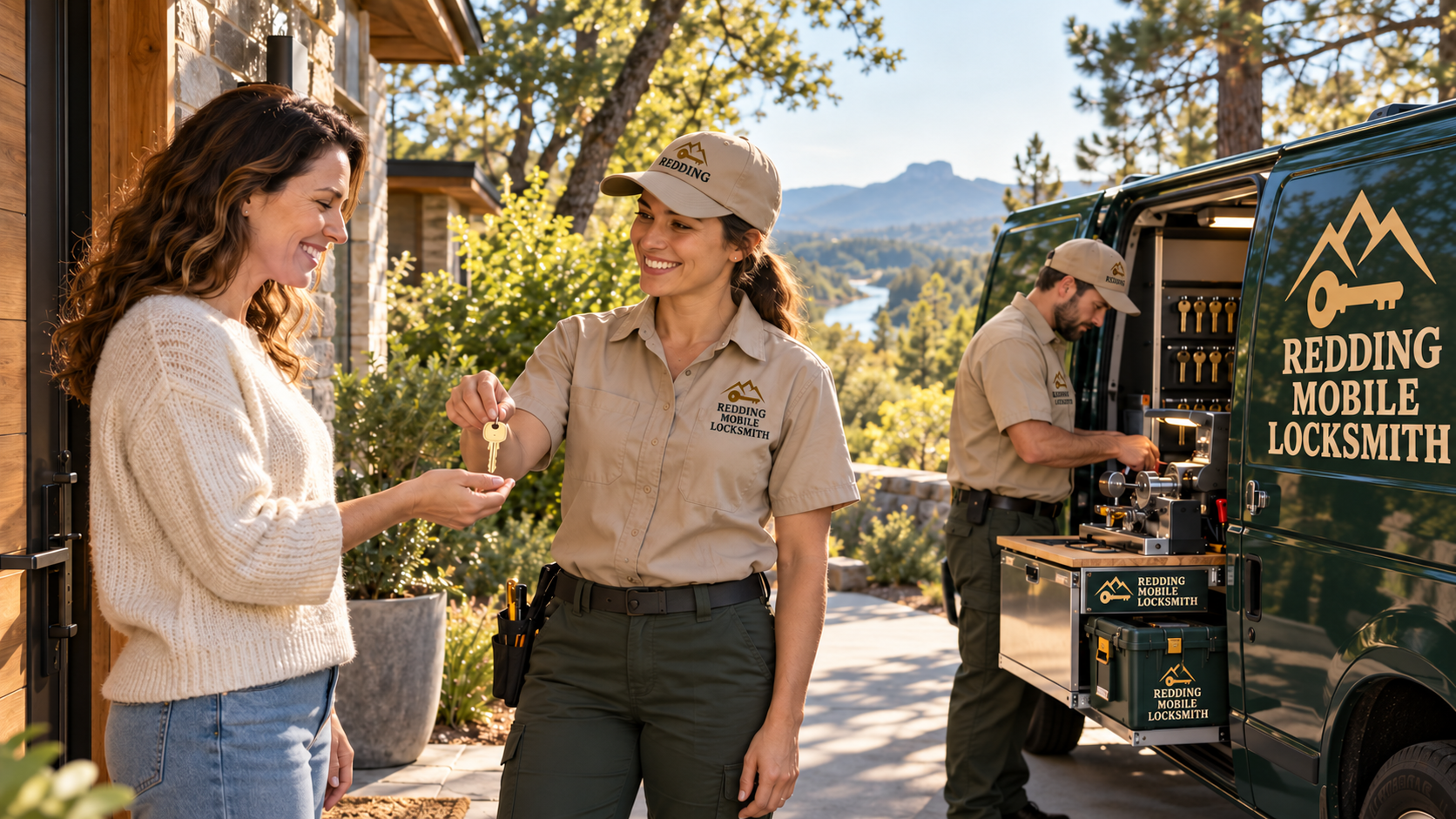
Redding Mobile Locksmith arrives with a branded team in uniforms and a branded service van carrying professional tools, key cutting and programming equipment, and common hardware. That means many key problems can be solved where the vehicle sits, whether it is a driveway, a shop yard or a job site. The team can cut a new key, program it to the vehicle, test the remote functions, and, where possible, repair or replace a damaged ignition cylinder.
Before the work starts, expect questions about the vehicle: the make, model and year, how many keys you have, and what happened. You may be asked for registration or another document showing you are the owner or authorized user. That is routine, and it protects you from someone else getting a key made for your vehicle. After the work, the team should test every key and function with you watching.
For more context, read our overview of cars and trucks, or the pages on key programming and fobs and key programming in Cottonwood. For the wider area, see Cottonwood and Anderson. When you are ready, use the request form, since the phone line is coming soon, and tell us what the vehicle is doing.
Good to know
Common questions
How can I tell if my car will not start because of the key?
Look for patterns: it starts with one key but not another, a key shaped or padlock light blinks on the dash, or the engine cranks and then stops. A worn or damaged key and a weak fob battery are common causes. These clues are not final, but they point you in the right direction.
Does a spare key from a hardware counter work in a modern truck?
It may open the doors and turn the ignition, but if the vehicle uses a transponder chip, the engine will not run until the chip is present and the vehicle has been taught to accept it. That teaching step is programming, which requires special equipment.
What should I do if my key snaps in the ignition?
Stop and do not push the broken piece deeper or try to turn it with pliers. A locksmith can remove the fragment with the right tools, then cut and program a replacement. Keep any pieces you have, and describe the vehicle clearly when you ask for help.
Can I get a key made if I have lost all of them?
Often yes. A locksmith with the right equipment can create a key from vehicle information, though it depends on the make, model and year. Expect to show proof that you own or are authorized to use the vehicle, such as registration and a matching ID.
What if a child or pet is locked inside a vehicle?
Call emergency services first. Heat builds sharply inside a parked vehicle, and trained responders are the right people to decide how to open it. A locksmith can help afterward with the door, the keys, or any damage.
How do I ask for help with a vehicle in Cottonwood?
Use the request form on our contact page, since the phone line is coming soon. Include the make, model and year, how many keys you have, what the vehicle is doing, and where it is parked, so the team can arrive prepared.