
Home / Shasta Lake / Key Programming and Fobs in Shasta Lake
Shasta Lake fobs and chips
Fob and Transponder Programming for Shasta Lake Drivers
A modern car and its key hold a short, private conversation every time you start the engine. This page explains that conversation, and how a mobile locksmith teaches a new key to join it.
Shasta Lake fobs and chips
The end of a day at the lake
Think of a family heading back from a day on the water or in the woods. The kids are damp and sleepy, the cooler is half empty, and somebody has sand in their shoes. At the parking area, a hand pats a pocket and finds nothing. The key, a plastic fob on a little ring, is somewhere between the boat ramp, the picnic table and the bottom of a bag.
That scene is common around Shasta Lake, and it is the moment when most people discover how much their vehicle key actually does. It is not only a piece of metal that turns a lock. It is a small electronic partner to the car, and replacing it means more than cutting a blade. The car has to be taught to recognize the newcomer.
This page explains that teaching in plain language. We cover what the car and the key exchange, why some keys need programming and others do not, what a mobile locksmith does with the equipment in the van, and what to have ready so the whole thing goes smoothly. If you only want the bottom line, it is this: the process is routine, but it depends on your particular vehicle.
Before reading on, it may help to find the key in question and look at it closely. Notice the shape of the head, whether it has buttons, whether it folds, and whether there is any lettering molded into the plastic. Those details are exactly what a dispatcher asks about, and having them in front of you turns a vague call into a useful one.
The conversation between a car and a key
When you turn the key or press the start button, the car sends out a brief radio signal. The chip in the key, which has no battery of its own, uses the energy from that signal to answer. The answer is a code. The car's computer checks the code against the list it keeps. If it matches, the car lets the engine run. If it does not, the engine may start and then stop, or not start at all.
Better systems add a twist: the code changes every time, following a sequence that the car and key both know. That makes a recorded signal useless to anyone trying to copy it. The details differ between manufacturers, but the idea is the same everywhere: the car does not trust a key merely because the metal fits.
For a deeper look at the chip itself, read our short guide on what a transponder chip is. Understanding this conversation also explains many symptoms: a key that turns but does not start the car, a dash light that blinks a key symbol, or a car that starts and promptly dies.
What programming actually changes
Programming changes the list inside the car. A new key arrives with a chip that is blank or carries a code of its own. The technician connects equipment to the car, usually through the diagnostic port under the dashboard, and either writes the new key's code into the car or reads the car's information and writes it onto the key. Which way it goes depends on the vehicle.
The result is a key the car accepts. Nothing about the old keys changes unless the technician also clears the list, which is sometimes done when a key has been lost, so that the missing one can no longer start the car. If you lost a key and want that peace of mind, say so when you call.
What the technician cannot do is promise the process before seeing the car. Some vehicles allow a short procedure with a working key present. Others need longer procedures, or additional information from the vehicle, especially when no key at all is available. Honest technicians describe the likely path and then confirm once they have looked.
It helps to remember that the car, not the locksmith, sets the rules. Each maker designs its own security, and the steps that work for one vehicle may be impossible for another. That is why a technician asks for the year, make and model first, and why the answer to a simple question about time or complexity is often, we will know more when we see it.
Remote functions: locking, unlocking and the rest
The buttons on a fob run on a separate radio link from the chip that starts the engine. When you press unlock, the fob sends a coded signal to a receiver in the car. That code must also be registered with the car. On many vehicles it is a second programming step, done after or alongside the engine start code.
This explains why a replacement key sometimes starts the engine but does not lock the car from a distance. The chip was taught, but the remote was not. A complete job covers both, and it is fair to ask in advance whether remote programming is included. If your vehicle has a power liftgate or a sliding door, ask about those buttons too.
A fob that has stopped responding is not always dead. Often the coin battery inside has simply run down. Our guide on what to do when a fob stops working walks through the first steps. Replace the battery first, and only call for programming if that does not help.
Which vehicles need programming and which do not
Not every car key has a chip. Many older vehicles use plain metal keys, and a cut copy will start the engine. Over past decades manufacturers began adding immobilizer systems, and by now most vehicles have one. The dividing line is not exact, and it varies from maker to maker.
If you are unsure, look at the key head. A thick plastic head often hides a chip, while a plain, thin metal key often has none. This is only a rough guide. The surest test is to ask a technician who knows the vehicle, or to read our explainer on whether all car keys need programming.
Push button start vehicles always have some form of electronic key, and often a backup method of starting the car if the fob battery dies, such as holding the fob against a certain spot on the dash. Your owner's manual will say if yours has one. It is a useful thing to know before the battery fails on a trailhead road.
Spare keys deserve a word here as well. A spare that has never been tried is a hope, not a spare. If you hold one that came with a used vehicle, test it today: unlock the doors, start the engine, and press every button. If anything fails, you have learned it on a calm afternoon instead of at a dusty turnout with tired children and no signal.
- Plain metal keys without a chip need only to be cut.
- Transponder keys need a cut blade and a programmed chip.
- Remote head keys add buttons that must be paired separately.
- Flip keys fold the blade into the fob and often combine all of the above.
- Proximity fobs start the car without the key leaving a pocket.
When the original key is gone
The case that worries people most is the one where no working key exists. The family loses the only fob in the lake, or a spare turns out to have been a blade only copy that never started the car. The technician works from the vehicle in that case, cutting a key by its lock or code and then programming a new chip.
It is usually possible, though how involved it gets depends on the vehicle. Some cars need extra steps for security, and a few require equipment or access beyond what a van can carry. A fair technician tells you that at the start, not halfway through the work. Our guide, can a key be made with no key at all, covers the reasoning.
If this is your situation, our page on replacement car keys describes the whole procedure, and the key programming service page covers the technical side in more detail. Either way, you can send a request using the form on our contact page.
Protecting fobs from the lake, the heat and the dashboard
Fobs live hard lives in a place like Shasta Lake. They get splashed, dropped on rocks, left in swimsuit pockets and baked on dashboards in July. Water finds its way into the case, corrodes the circuit board and kills the battery contacts. Heat softens the plastic and can crack solder joints.
Fobs also get sat on. A key in a back pocket spends a day under body weight, and the case flexes in ways it was never meant to. Over time the small buttons stop responding in the middle, or the case splits along its seam. If your fob looks cracked or the buttons feel mushy, treat it as a warning and arrange a replacement while it still works.
A few small habits help. Keep the fob in a waterproof pouch when you are on or near the water. Do not leave it on the dashboard in the sun. Replace the coin battery when the range shortens, not when it dies. And keep a tested spare at home, away from the vehicle, because a spare in the glove box is lost when the car is.
If a fob does take a dunking, remove the battery if you can and let the parts dry fully before trying them. Do not use heat to dry them, as that can warp the case. Even then the fob may not recover, which is why a spare is worth more than any care you can give a single key.
What the mobile visit looks like
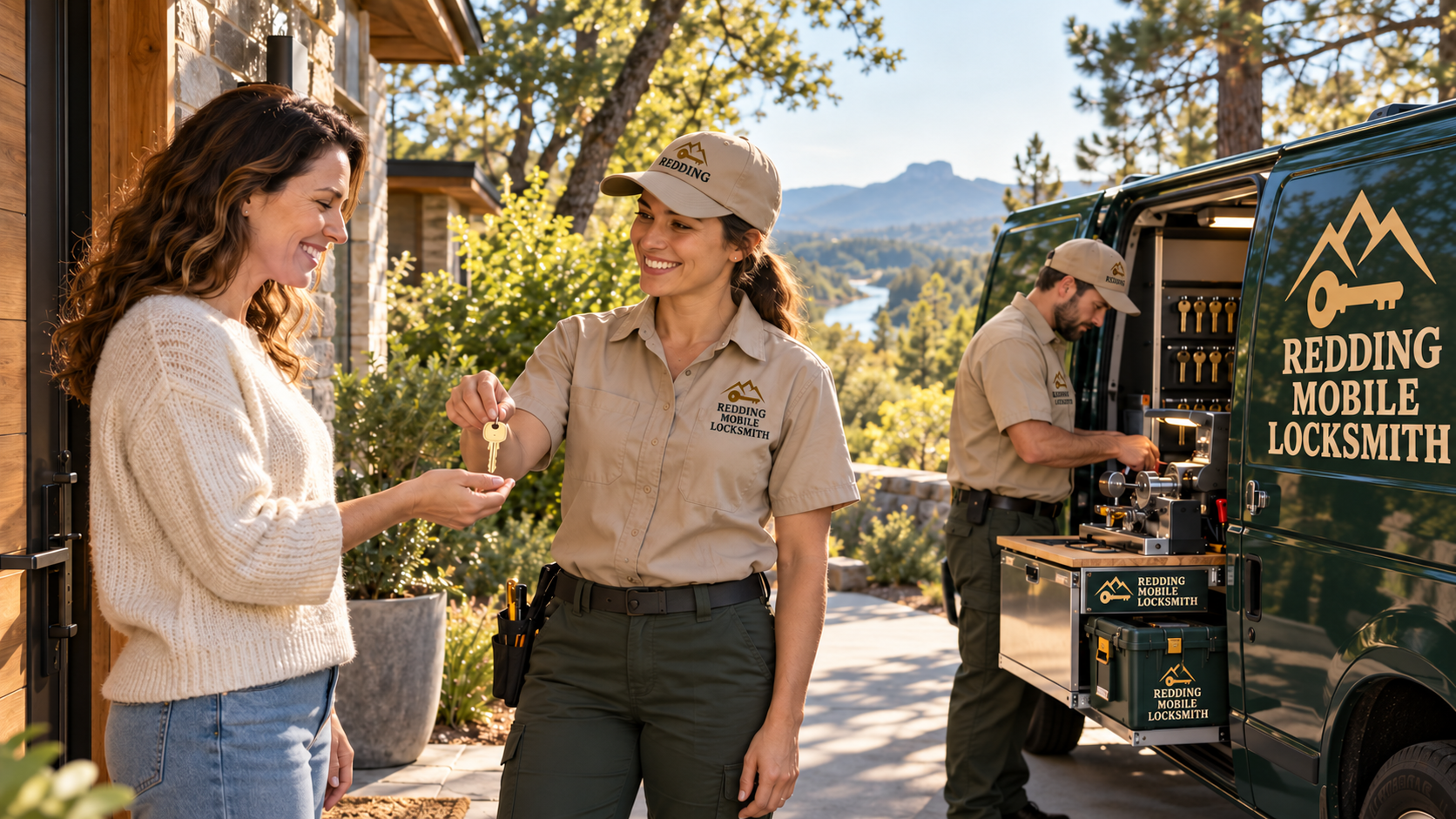
A branded service van arrives carrying key cutting and programming equipment and a stock of common blanks and fobs. The technician confirms the vehicle and your connection to it, checks what keys exist, and explains the plan. They also ask about how the car has been behaving, since a hesitant start or an occasional dash warning can point to something other than the key. For many vehicles the work can be done beside the car, on the roadside, in a driveway or in a parking area.
The technician cuts the blade, if needed, and programs the chip. Then comes the remote, if there is one. Finally, they test everything: the door locks, the ignition, the remote buttons and any extra functions. Test it yourself, too, in the order you would use it on an ordinary day. Start the engine, turn it off and start it again. Lock and unlock from a distance. Do not let the technician leave until all of it works.
If something cannot be done on site, you should hear that clearly and learn what the options are. Ask what happens if the new key stops working later, and how to reach the team. The phone line is coming soon, and in the meantime the contact page request form is open at every hour.
Questions to ask before the work begins
A few questions help you stay in control. What will you do to the car? What will the new key be able to do: start the engine, lock and unlock, open a liftgate? Does the job include a spare? And what, in plain terms, is the price and what does it cover? A good technician answers these without irritation.
Ask also whether any lost keys will be removed from the car's list, if that applies. Some owners want that, especially if a key was lost in a public place. Others do not need it. The point is to decide deliberately, not by default.
If you are replacing a fob for a vehicle that belongs to someone else, such as a teenage driver, a relative or an employer, tell the technician at the start. They will want to confirm who is entitled to the car, and having the owner on the line or a written note ready keeps the visit from stalling.
For general advice on choosing who to trust with your vehicle, our guide on how to tell a real locksmith is worth a few minutes. A professional will want to confirm you own the car, and will not be offended when you ask questions of your own.
More help close to home
Other pages for Shasta Lake drivers and households may be useful. Our overview of cars and trucks in Shasta Lake covers the full mix of vehicle trouble, and the page on home lock service in Shasta Lake helps if your house keys are also in need of attention.
For nearby communities, see Shasta Lake, Anderson and Redding, all served by the same team. A commuter who drives between them can ask for help in whichever town they happen to be.
The right time to sort out a spare is before it is needed. If your family has only one working key to any vehicle, consider that a task for the coming weekend. A tested spare costs a little effort now and saves a good deal of trouble on the day the first key goes for a swim.
Good to know
Common questions
What is a transponder key, in simple terms?
It is a key with a small chip inside the head. When you start the car, the vehicle sends a signal and the chip answers with a code. If the code matches the car's list, the engine is allowed to run. Without that match, the engine stays disabled even if the blade turns.
Can a new fob be programmed at my vehicle in Shasta Lake?
For many vehicles, yes. The service van carries cutting and programming equipment, so the work is done beside the car. Whether yours can be done on site depends on its make, model and year, which the dispatcher can discuss with you when you describe the problem.
Will programming a new key stop my lost key from working?
Not automatically. Some technicians can clear the car's list of keys and add back only those you have, which shuts out a lost one. Tell the technician if a key is missing, and ask whether that step is possible on your vehicle and whether you want it.
Why does my new key start the car but not lock the doors remotely?
The engine chip and the remote buttons are often programmed separately. If only the chip was set up, the remote will not work. Ask in advance whether remote programming is included, and test every button before the technician leaves.
Is a fob that got wet always ruined?
Not always. If you remove the battery and let the fob dry completely, it may recover. Water often corrodes the board, though, and a fob that stays dead needs replacement and programming. A tested spare kept at home is the safest protection.
What should I have ready when I request help?
Have the vehicle's year, make and model, the number of working keys and whether any are lost. Keep registration and identification ready, since the technician will want to confirm you are entitled to the vehicle. Mention where it is parked.