
Home / Millville / New Lock Installation in Millville
Millville lock installation
New Lock Installation for Millville Homes and Job Sites
Putting a new lock on a door sounds like a ten minute chore until the door turns out to be old, warped, or the wrong thickness. Here is how to match the lock to the door, written for Millville.
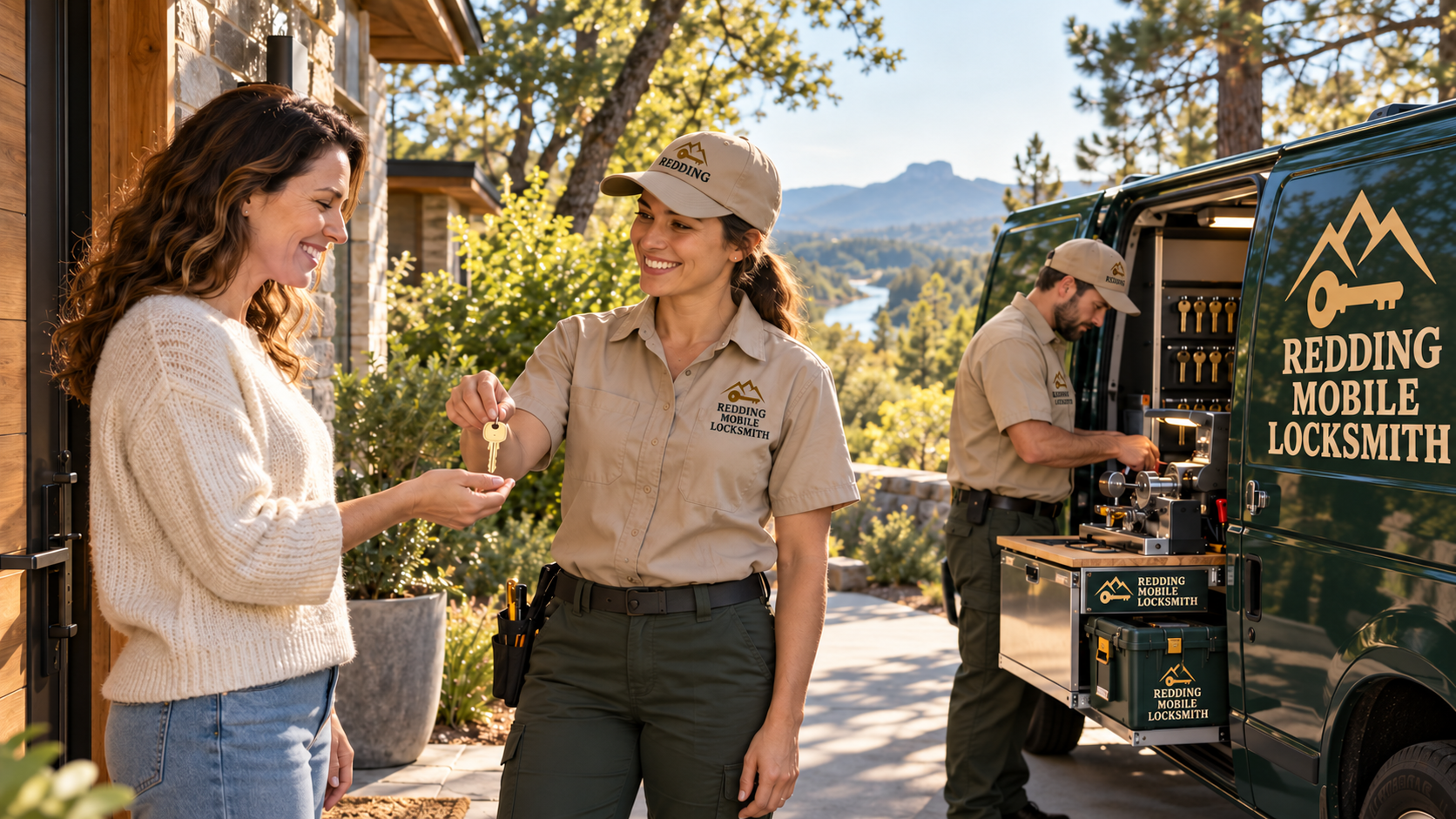
Millville lock installation
A contractor, a work truck and a door that does not match the box
Imagine a contractor in Millville who has just finished framing an addition and now needs the doors to lock before the crew leaves for the weekend. The tools are in the work truck, the hardware is in a bag from a store, and the box says it fits a standard door. Then the door turns out to be a different thickness, the hole is bored a little off, and the latch will not reach the strike. It is a situation every builder and homeowner meets sooner or later.
New lock installation is rarely about the lock alone. It is about the door, the frame, the strike, the hole, and what you want the lock to do. A good installer looks at all of it before opening any packaging, because a lock is only as good as the door it sits in, and a strong bolt in a weak frame is a strong bolt that does not matter.
This page walks through what a proper installation involves and how to choose among deadbolts, handles, keypads and smart locks. If you want the wider picture of the service, our new lock installation page is the place to start, and this one narrows it to the foothill setting around Millville.
Start with the door, not the lock
Doors differ more than people realize. Solid wood, hollow core, steel skinned and fiberglass doors all take hardware differently, and old farmhouse doors can be thicker or thinner than modern ones. A standard exterior door is usually thicker than an interior one, and the lock bored into it expects that thickness. Measure it, and measure the hole too, because a mismatch there is the most common reason a boxed lock will not fit.
Two measurements matter for the hole. One is the large hole through the face of the door, where the lock body sits. The other is the smaller hole drilled into the door edge for the latch bolt. The distance from the edge of the door to the center of the large hole is called the backset, and the two common sizes are not interchangeable without adjusting the hardware. An installer carries the tools to bore or reshape these holes cleanly rather than forcing a lock into a rough opening.
Condition counts as much as size. A door that has dropped on its hinges, swollen in damp weather or split around an old lock gives a new lock a bad start. It is better to fix the door first than to blame the new hardware later. We cover what to look for in our guide on why doors sag and what that does to locks.
Deadbolts, handles and the difference between them
A deadbolt is a separate lock with a solid bolt that slides into the frame and does not retract by pushing on it. A handle set or knob set usually contains a spring latch, which holds the door shut but can be pushed back by force, so it is more about convenience than security. Most exterior doors work well with both: a handle for daily use and a deadbolt for real resistance.
There are a few common deadbolt styles. A single cylinder deadbolt has a key on the outside and a thumb turn on the inside. A double cylinder has a key on both sides, which can be useful where glass sits near the lock, but it can be a hazard in an emergency if the key is not always at hand. Whether a particular arrangement suits your door is a decision worth talking through, since local rules and your circumstances differ.
The throw of the bolt, meaning how far it extends into the frame, also matters. A longer throw into solid framing resists force better than a short one into a thin jamb. That brings us to the part of the installation that many people never think about, the strike and the frame, and we return to it a few sections down.
Keypads and smart locks: who they suit
Electronic locks have moved well beyond novelty. A keypad lets you set a code instead of handing out keys, which is useful where several workers come and go. A smart lock adds connectivity, so access can be shared or removed from a phone, and some keep a record of who entered. These features are real conveniences, but each one brings choices about power, backup access and how the lock behaves if the batteries die.
For a contractor with a trailer or a rural job site, a keypad can be practical: new codes can be set when a crew changes, and nobody has to track who has copies of the key. For a country home, a smart lock can be useful if you manage a rental or share the property with relatives. For an older door that sticks and swells, a simple mechanical lock may last longer than anything with a motor in it.
Our guide on what a smart lock is and who needs one weighs the tradeoffs in plain terms, and the guide on whether smart locks can be rekeyed is worth a look before you choose one. The list above sums up the usual pairings, though your door may point to a different answer.
- A keypad suits a shop, shed or rental where many people need access without carrying keys.
- A smart lock suits someone who wants to give and remove access remotely or keep a log.
- A traditional key lock suits a door where simplicity matters more than features.
- A hybrid keeps a key backup so a dead battery never leaves you outside.
Matching hardware to the buildings of a Millville property
Millville is a community of country properties with houses, wells, barns and long private roads, so a single property may need several different locks. The farmhouse front door wants a deadbolt and handle that handle weather and daily use. The back door may be better with a keypad if family comes and goes. A barn or shop may need a heavier hasp and a padlock, or a lock built for an outbuilding door that is not quite square.
Outbuildings are where people most often under buy. A flimsy hasp on a thin door does not protect expensive equipment, and the lock cannot compensate for a door that gives way around it. A technician can tell you whether the door and frame can carry a better lock or whether the first step is to reinforce the door.
Gates are another matter. Many properties have a gate or two on the driveway, and a lock that works in dry summer weather may seize in a frosty morning. We talk through the questions to ask in our guide on gate locks for country driveways, and you can bring those questions to the installer.
What proper installation involves
A neat installation follows an order. First the door is checked, and any boring or reshaping of the holes is done to fit the chosen hardware. Then the latch and the lock body are fitted so they sit square, without forcing, and the cylinder is set at the right depth. The strike plate is mounted in the frame, and the screws are placed so they bite into solid framing rather than just the thin jamb.
Next comes alignment. The bolt needs to enter the strike freely with the door closed, without lifting or pushing the door. If the bolt scrapes, the door may be rubbing the frame or the strike may sit a hair high or low. A careful installer closes the door slowly, listens to the bolt, and adjusts until it slides in as if it were oiled, because a bolt that fights the strike will eventually wear itself out.
Finally comes testing. Every key is tried, the bolt is thrown and retracted from both sides, and the door is opened and closed several times. If the lock is electronic, the installer sets up codes or accounts, confirms the battery backup, and shows you how it behaves. We recommend asking to see all of this rather than taking it on faith. You can read more about the hardware around the lock in our guide on what makes a good strike plate.
Doors that need preparation first
Sometimes the right move is to prepare the door before any lock goes in. A door with a split edge may need a repair or a reinforcing plate. A door with an oversized old hole may need a filler or a different style of lock that covers the opening. A frame with rot around the strike needs repair, since screws will not hold in soft wood.
Weather plays into this in the foothills. Summers are hot and dry, which can shrink wood, and winters bring damp and cold, which can swell it. A door that closes easily in August may rub in January, and a lock installed in one season may need a small adjustment in the other. This is normal, and it is a good reason to have the work done with a little tolerance rather than a tight fit.
Materials matter as well. A steel skinned or fiberglass door should not be drilled carelessly, since the skin can dent or split, and a technician with the right bits works around that. Our guide on how locks fit metal, wood and fiberglass doors goes into the specifics.
Buying hardware yourself or leaving it to the installer
Some people prefer to pick out the hardware and have the installer fit it, and others want the installer to recommend and supply it. Both approaches work. The van carries common hardware, so a typical door can be handled in one visit. If you have a particular style in mind, mention it ahead of time so the technician arrives with the right parts or knows what to ask about.
If you are supplying your own, check that the hardware is made for the door type, thickness and backset you have. Many boxed locks come with adapters for a few common sizes, but not every door is typical. Keep the packaging until the job is done in case something needs to be swapped.
Ask who keeps the key information. When a lock is installed, the keys that come with it should belong to you, and it is fair to ask whether more copies can be made later. A lock tied to a restricted key system can limit copying, which can be a benefit or an annoyance depending on your needs. Our page about door hardware for business covers that idea for shops and sites.
Small jobs and the pieces around the lock
Lock installations often come with extras. A new deadbolt might be paired with a longer strike, a reinforcing plate around the latch, or a replacement set of hinge screws that reach the framing. These small parts cost little and add real strength. A good installer may suggest them without being asked, and you can accept or decline.
Other times the job is an exchange rather than an addition. If a lock still works but the keys are a problem, rekeying your home may be enough, and replacing the hardware would be more than you need. If the lock is worn or sticking, lock repair and adjustment is worth considering first.
There is no shame in asking whether a repair would do. A technician who offers you the simplest sound solution is the one you want. If the answer is a new lock, you will at least know why.
When the install is part of a larger job
New construction and renovation add their own wrinkles. Doors are hung before the finish work is done, the lock may be fitted during the build and replaced at the end, and different trades may carry keys. It is common to use temporary keys during construction and then change the cylinders when the project is complete, so that nobody who worked on the site keeps a working key.
For a contractor, that means planning ahead. Tell the installer which doors are involved, what the finished hardware will be, and whether keys must be keyed alike. Keying several locks alike means one key opens them all, which is convenient for a house or a shop. Doing it at installation is simpler than fixing it later.
Our guide to changing a door handle covers the cases where a homeowner can handle a simple swap and where help makes sense. And if the build is a business space, business lock service is the right next step.
How to arrange an installation in Millville
Start by listing the doors and what each one needs. Note the type of door, its approximate thickness, whether the old lock still works, and whether you want a keypad, a smart lock or a traditional key. Add any gate code or notes about the road. Send it along with the request form on the contact page at the request form, since the phone line is coming soon.
If you are working with a crew, name the person who will be on site. If the property is occupied by someone else, tell us whether they will be there and whether they know a visit is planned. The more complete the description, the more likely the technician arrives with the right parts.
And if you are looking at the whole neighborhood of services, the Millville page gathers everything. A short way up the lake, new lock installation in Lakehead takes a different look at the same subject.
Good to know
Common questions
Can any lock be installed on any door?
No. The door's thickness, the size of the bored holes, the backset and the material all decide what fits. Many locks include adapters for common sizes, but an older or modified door can need reshaping or a different style of hardware. An installer checks the door first so the lock goes in square and works smoothly.
Is a keypad lock secure enough for a work site?
It can be a sensible choice, since codes are easy to change when a crew changes. The security still depends on the door and frame, not just the lock. Ask about battery backup and what happens when the power runs low, and think about whether a key override suits you.
What is a backset and why does it matter?
The backset is the distance from the edge of the door to the center of the large hole where the lock body sits. Two sizes are common, and they are not interchangeable without adjusting the hardware. Knowing yours helps you buy the right lock or tell the installer what to bring.
Should I replace a lock that still works?
Not always. If the lock turns smoothly and the only concern is who has keys, rekeying may be enough. If it sticks, wears or looks damaged, repair or replacement may help. A technician can tell you which is the simplest sound option for your situation.
Can several locks be keyed to the same key?
Yes. Locks can be keyed alike so one key opens several doors, which is handy for a house, barn and shop. It is easier to set up during installation than later. Ask about it before the work starts, and keep in mind that a lost key then affects every matching lock.
What should I do about a door that sticks in damp weather?
Have the door looked at before or during the installation. A swollen or sagging door can strain a new lock and make the bolt bind in the strike. Adjusting hinges, trimming an edge or realigning the strike often solves it, and the lock can then be fitted with a little allowance for the seasons.