
Home / Sims / New Lock Installation in Sims
Sims, Shasta County
Choosing and Installing New Locks for Sims Doors
A new lock should be chosen for the door it goes on and the person who uses it every day. This page walks through the choices and the installation, so the job makes sense before it starts.
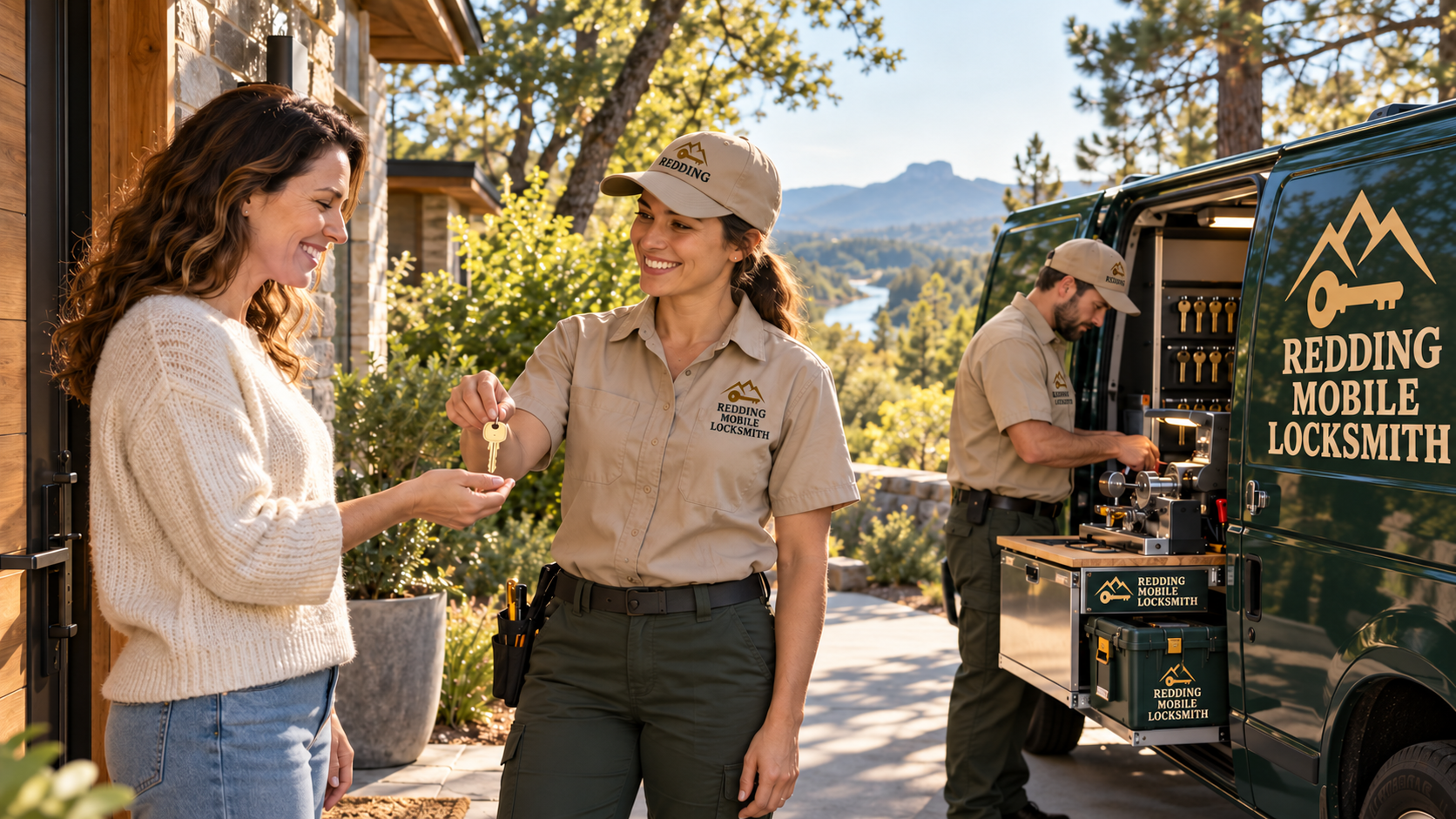
Sims, Shasta County
Picture the end of a long shift
Imagine someone who works long shifts and drives home through the canyon after dark, tired in the way that makes small tasks feel large. They pull into the drive in Sims, where homes and cabins sit scattered through the forest along the Interstate 5 corridor, walk to the door with a bag in one hand and fumble with the lock. The key sticks. The deadbolt takes three tries. The porch light is out. By the time they are inside, they have decided that the locks need to change.
This is a hypothetical, but it frames the question well. A new lock is not an abstract security purchase. It is a small piece of hardware you will touch at the end of every tiring day for years. It should feel solid, work the first time and ask nothing of you when you are running on empty.
That is the standard worth holding hardware to. The rest of this page is about meeting it: what kinds of locks exist, which doors need which, and how a technician makes sure the new lock fits the door it will live in.
Why people install new locks
The reasons vary more than you might think. Some people are replacing worn hardware that has finally given up. Some are moving into a new home and want to know exactly who has keys. Some have had a break in or an attempt and want a stronger setup. Some are building or remodeling, and doors are going on that have no lock at all. Others simply want a lock that suits how they live, such as a keypad for a household that is always misplacing keys.
Each of these has a slightly different path. A worn lock may only need a swap for the same style. A newly purchased home may need a rekey instead of a replacement, which is a distinct option worth considering. A break in calls for looking at the door and the frame as well as the lock, because the hardware is only one piece. A new door needs the holes drilled and the hardware fitted correctly from the start.
If you are not sure which situation you are in, that is a good thing to say when you make a request. The page about new lock installation gives a broader overview, and the question of whether it is better to rekey or replace is worth reading before deciding.
Types of locks and where each belongs
Home locks fall into a few families. A knob or lever set operates the latch, which holds the door closed against its stop. A deadbolt adds a heavy steel bolt that extends into the frame. Many homes use both on the front door, with a lever or knob below and a deadbolt above. A combination set pairs the two in a single trim. A mortise lock sits in a pocket cut into the edge of the door and is common on older or heavier doors. A smart lock replaces the key with a keypad, an app or a card, while the bolt does the same work behind it.
For an exterior door, a deadbolt is the foundation. For an interior door that needs only to latch, a passage set with no lock is fine, and a privacy set with a push button suits a bedroom or bathroom. For a patio slider, a different kind of latch is required, and for a gate there are more choices again.
Our guide on what a smart lock is and who needs one helps with the electronic side. If you are weighing grades and construction, what lock grade means explains why two locks that look alike can behave differently.
- A deadbolt adds a heavy steel bolt that does not depend on a spring.
- A lever or knob set holds the door shut and is easy to operate with full hands.
- A keypad or smart lock removes the need to carry a key, though it adds batteries and settings to manage.
- A mortise lock suits older doors and offers strong construction, but fitting it requires careful work.
Matching the hardware to the door
A lock only works as well as the door it sits in. Doors come in solid wood, hollow core, metal clad, fiberglass and glass, and each handles hardware differently. A solid door can hold a long bolt and strong screws. A hollow core door cannot, and installing a heavy deadbolt in one is like hanging a bank vault door on a screen frame.
Thickness matters, too. Most residential hardware is made for a standard thickness range, and anything outside that range needs a different latch or an adapter. The hole sizes in the door, the distance from the edge of the door to the center of the hole called backset, and the layout of the holes all have to match what the new lock needs. A technician measures before buying or opening anything.
The guide to metal, wood and fiberglass doors and how locks fit them gives more detail. If the door itself is poor, a technician will tell you honestly. There is no point putting a strong lock on a door that cannot support it.
The frame and the strike matter as much as the lock
Strength in a door comes from three places: the lock, the door and the frame. Of the three, the frame is the one that gets forgotten. The strike plate, which receives the bolt, sits in the doorjamb. If it is held by short screws into thin wood, the sturdiest deadbolt made will not keep the door shut under force.
A good installation upgrades the strike at the same time. A reinforced plate with long screws that bite into the stud behind the frame gives the bolt something solid to push against. Some installations also add a longer plate along the edge of the jamb to spread the load. These are small changes that cost little effort and produce real improvement.
Alignment counts as well. If the bolt does not enter the strike cleanly, the lock will feel stiff and wear itself out. A technician fits the lock, tests it, then adjusts the strike until the bolt moves freely and seats fully. For more on strikes, see what makes a good strike plate.
What happens during an installation
A mobile installation goes in stages. The technician starts by looking at the door, the frame and the existing hardware, and talks with you about what you want. If the existing holes are standard, the old lock comes out and the new one goes in. If they are not, the technician may need to widen or add holes using a template and proper cutting tools, taking care not to splinter the door.
Next comes the latch and the bolt, each seated in its bore and fastened with screws. The cylinder or trim goes on, then the strike, and finally the key or code is set. The technician tests the lock repeatedly: key in, key out, bolt thrown, bolt retracted, door closed, door opened. Only when it works smoothly and the door closes without effort is the job done.
The van carries professional tools, key cutting equipment and common hardware, so many installations finish in a single visit. If you want a specific style or finish that is not common, tell us in advance. Redding Mobile Locksmith can plan around it. We do not give installation prices here, and we do not publish arrival times, but we will explain what the work involves and what it will cost before starting.
Choosing for the person who uses it
Back to the tired worker in our picture. If every evening ends with a struggle at the door, think about what would remove the struggle. A lever instead of a knob is easier to operate with an armload or a sore hand. A keypad removes the key search entirely. A deadbolt with a smooth, well fitted cylinder turns on the first try. A porch light with a sensor or a small fixture over the lock helps everyone see what they are doing.
The point is to match the lock to the habits of the household, not to a catalog. Someone who comes home late and tired will value convenience, because a lock that is annoying is a lock that gets left unlocked. Someone who lives with children will value levers they can reach and a bolt they cannot throw by accident. Someone who is in and out all day might want one key for several doors.
A short conversation with the technician about how you actually move through your day will often change the recommendation. We would rather fit a lock that people use properly than one that looks impressive and gets bypassed by habit. For households with young children, our guide on how to childproof exterior doors offers ideas that fit alongside a new lock.
Keys, codes and who gets what
A new lock comes with new keys, and that moment is an opportunity. Decide how many keys the household needs and who gets them. A good practice is to keep a short record of who has a copy, so that a question about access never turns into a mystery. If a key is lost, you will know how worried to be.
Keypads and smart locks add another layer. They let you give a code to a visitor or a contractor and delete it afterward. That is a convenient feature, but it also depends on you keeping the settings tidy. Remove old codes. Replace batteries on a schedule. Keep a physical key as a backup if the lock allows.
If you share the house with others, agree on how new keys are made. Unauthorized copies are the usual way a controlled system becomes uncontrolled. Our guide on how many keys a household should keep lays out a sensible approach.
Planning for weather and seasons
Doors in a forest canyon live outdoors for part of the year in some ways. Summers are hot and dry, winters are cold and damp, and snow can come to higher ground. Wood swells, metal contracts, and the finish on exposed hardware takes a beating. When you pick a lock, think about where the door faces and how much weather reaches it.
A door under a deep porch has an easy life. A door that takes rain and sun directly needs hardware with a durable finish and good seals. Keypads and electronics should be built for outdoor exposure, and a technician can tell you whether a given model suits your door. Lubricant made for locks keeps things moving through the cold without gumming up.
Our article on how weather and seasons affect locks goes into more detail, and the question of how long a lock will last is a useful companion.
Old hardware, new hardware and what happens to the old lock
When a lock is replaced, the old one does not have to go in the trash. Sometimes the hardware is perfectly fine but the keys are a problem, in which case rekeying is the better answer. Sometimes the finish is worn but the mechanism works, and a cleaning and adjustment gives it another stretch of life. And sometimes the old lock has done its job and it is time to let go.
If you choose to replace, ask the technician to keep the old cylinder or lock body for you if you want to look at it, and ask whether anything about it suggests a deeper problem with the door. A lock that was forced, for example, often shows damage around the strike or the latch, and that information helps decide what else needs attention.
Disposal is simple. Old locks can usually be recycled as scrap metal. Do not leave keys that belonged to them lying around, though, because a key to a lock that no longer exists in your home might still open a lock somewhere else if you ever reused the keyway.
Finally, think about the days when you are not at home. A cabin that sits empty for a stretch needs a lock you trust and a way to let a caretaker in. A keypad with a temporary code, or a second key left with a neighbor, solves that. Whatever you choose, tell the technician about the pattern of use, because a lock for a full time home and a lock for a part time cabin are chosen with different priorities.
Getting started with a request
Describe the doors you have in mind: front, back, garage entry, slider, gate. Say what you want to change: stronger security, easier use, new keys, a different look. Mention whether the existing locks work and whether any doors are damaged. If you have already bought hardware, tell us the type and bring the box, so the technician can check that it suits the door.
Send the details through the request form on the contact page. Our phone line is coming soon. A technician will read the request and follow up with questions or a plan.
If you are comparing nearby communities, our pages for Sims, Lakehead and Dunsmuir give a sense of the area we serve. The page on home lock service in Sims looks at the whole system of cylinder, bolt, strike and frame.
Good to know
Common questions
Do I need a locksmith to install a deadbolt?
Many handy owners can swap one like for like. A locksmith helps when the holes need to be cut or enlarged, the door is unusual, or the frame needs reinforcing. A poor installation can bind and wear out early, so getting it right the first time matters.
Should I choose a keypad or a regular key?
It depends on how you live. A keypad removes the need to carry a key and lets you change codes, but it needs batteries and attention. A regular key is simple and dependable. Some households choose a lock that offers both, so there is always a backup.
Can new locks be keyed to match each other?
Yes. A locksmith can set several locks to use the same key, so one key opens the front door, the back door and the garage entry. This is called keying alike. Decide up front, since it is easier to set at installation.
Will a new lock fit my old door?
Usually, if the existing holes are standard and the door is in good shape. A technician measures the thickness and the hole layout before buying anything. Doors that are damaged, hollow or unusual may need modifications or a different lock style.
What if I only want to change the keys and not the lock?
That is called rekeying, and it changes the pins inside the existing cylinder so that old keys no longer work. It is often the simpler option when the lock is in good condition. We can tell you which path suits your door.
How should I prepare for the installation visit?
Clear space around each door, gather any keys you have, and decide how many new keys you want. Tell us about pets, gates and parking. If you bought hardware yourself, have it available so the technician can confirm it suits your doors.