
Home / Anderson / Key Programming and Fobs in Anderson
Anderson key programming
Key Programming and Fobs for Anderson Households
A key that cuts perfectly can still leave a car silent, because the car also wants to hear the right chip. Here is how programming works, told for Anderson families who suddenly have a lot less spare time.
Anderson key programming
Why a household with a new baby notices this first
Nobody plans their key problems around a nursery, but the two have a way of colliding. A new baby means one car seat that has to be buckled in a parking lot, a diaper bag that swallows everything, and a fob that spends its days at the bottom of it. When the fob goes missing or the spare finally gets pressed into service, the real state of your key situation shows up at the worst moment.
Picture a couple in Anderson with a two week old at home. One of them takes the car to the hardware store on the way back from an errand, and the second key, the one that has lived in a kitchen drawer since they bought the car, is handed over. The blade slides into the ignition. The key turns. And then the dash shows a little key symbol and the engine does nothing at all.
That is the exact moment this page is written for. It is not a broken car and it is not a bad copy of the key, at least not in the way people first assume. It is a car doing precisely what it was built to do, which is to refuse any key that has not been introduced to it. The rest of this page explains that introduction and how a mobile locksmith handles it where your car is parked.
What the chip inside the key is actually doing
Most cars built in the last couple of decades carry a transponder chip inside the plastic head of the key. The chip is tiny, has no battery, and wakes up when the car sends a short radio signal through an antenna ring around the ignition. The chip answers with a code. If the code matches one the car has stored, the engine control system allows fuel and spark. If not, the engine may crank for a second or never crank at all.
This is the reason a cut only key fails. The metal blade can match the ignition cylinder perfectly and still be worthless, because the lock is only half of the conversation. The chip is the other half, and a blank without a chip, or with the wrong kind of chip, simply stays silent when the car asks it a question.
There is a longer explanation in our guide on what a transponder chip is, and a companion piece asking whether all car keys need programming. The short answer is no, not all of them, but enough of them that it is wise to assume yours does until someone has looked at the key and the vehicle.
Programming is an introduction, not a copy
People often picture programming as copying the old key onto the new one. It is closer to adding a name to a guest list. The car holds a small list of codes it will accept. Programming puts the new key's code on that list, usually by connecting equipment to the diagnostic port under the dashboard and walking the car through a sequence that depends on the make, model and year.
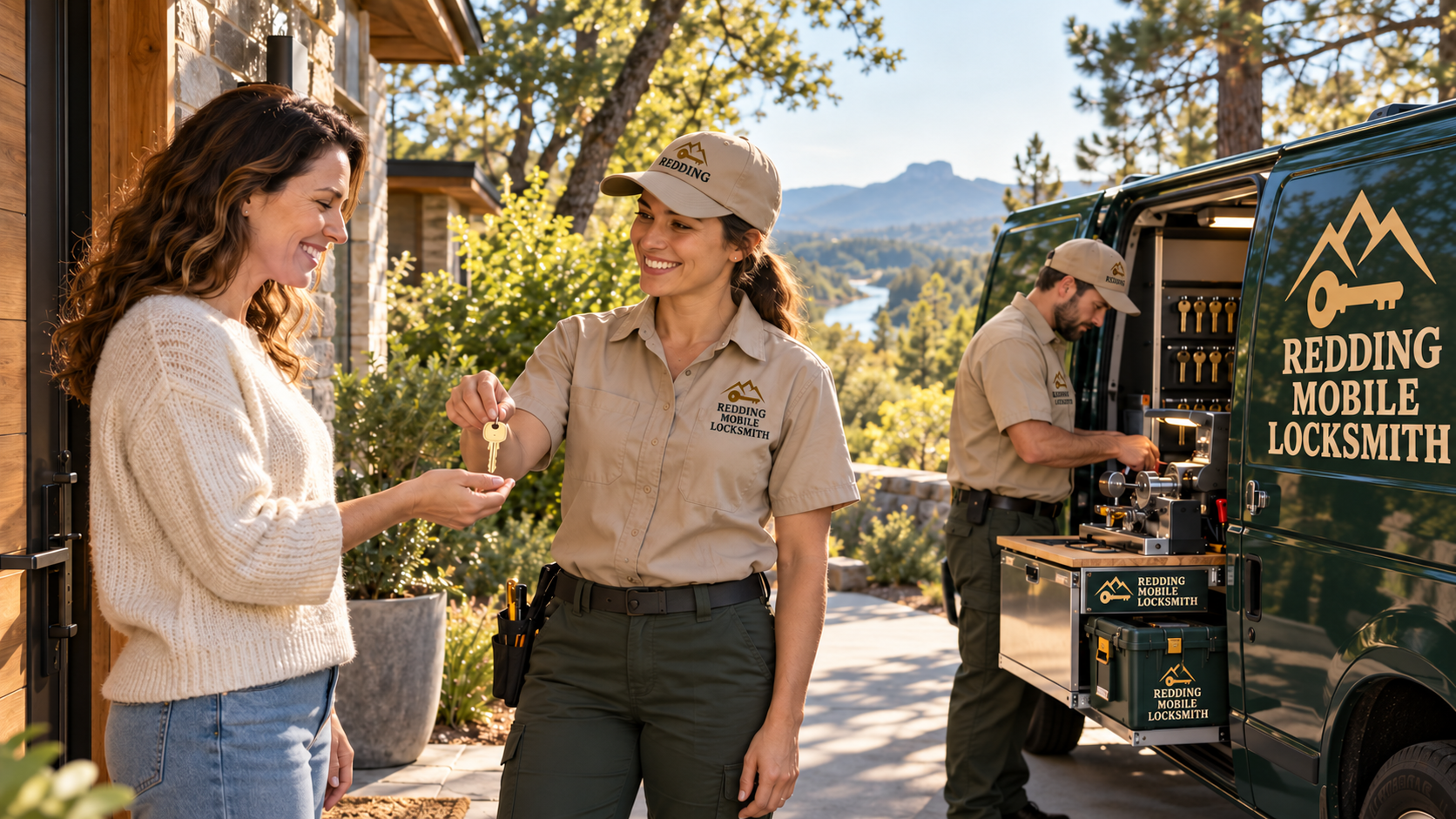
Some vehicles allow a new key to be added while an existing working key is present. Others, especially when every key has been lost, need a more involved procedure and sometimes additional information tied to the vehicle. A mobile locksmith carries the equipment to do this on site, which is why the service van matters more than the shop. Your car does not have to go anywhere.
What the technician cannot know until they see the car is which of those paths applies. That is why a good first conversation includes the year, make and model, how many keys work today, and whether any key has been lost entirely. Those three answers decide a great deal about how the visit goes.
There is also a quiet benefit to doing it properly. When a technician programs a key, they can often remove a lost key's code from the car's list, so a fob that slid under a seat in a parking lot stops being a way into your vehicle. Ask about that if a key has gone missing for good, because the answer depends on the car, and it is worth knowing whether the lost key can be shut out.
Fobs, remotes and the keys that never touch the ignition
A fob is the part of the key that talks to the car from a distance. On older designs it is a separate remote with lock, unlock and trunk buttons clipped to a plain transponder key. On newer vehicles the two have merged into one flip out key, or into a proximity fob that stays in a pocket while the car starts with a push of a button.
Remote functions are programmed separately from the engine start chip on many vehicles. That is why a fob can open the doors from across the lot but fail to start the engine, or the other way around. If your remote stopped responding but the key still starts the car, you are probably dealing with a worn battery or a remote that has lost its pairing, not a dead key.
Our short piece on what to do when a key fob stops working walks through the battery first approach. Only when a fresh battery does not help does it make sense to bring in programming equipment, and sometimes the fob itself has simply worn out inside after years of being sat on, dropped and carried through rain.
Proximity fobs deserve a special mention for busy households. Because the car senses the fob nearby, a fob left in a diaper bag on the back seat can keep the car running even after the person who started it has walked away. That is convenient until the bag goes into the house with the fob still inside. Learn how your particular car behaves when it loses the fob, and treat any warning chime as information worth heeding.
What to set out before the technician arrives
A little preparation turns a vague problem into a clear one. Anything you can tell the dispatcher about the vehicle helps the technician bring the right blanks and the right programming tools in the van. You do not need to be mechanical to do this. You need to read a few things off a door jamb and your registration.
The technician will also ask for proof that the car is yours, and that is a good sign, not an inconvenience. A reputable locksmith should want to know you are entitled to the vehicle before making a key for it. Have your registration or other paperwork ready, plus identification that matches. If the car is a family vehicle and the paperwork is in someone else's name, say so early so the conversation is easy.
- The year, make and model of the vehicle, and the trim if you know it.
- How many keys work today and whether any have been lost or stolen.
- Whether the car has a push button start or a traditional ignition slot.
- Where the car is parked and whether the area is safe and well lit.
- Registration or similar paperwork and matching identification for the person asking.
When there is no working key at all
The hardest version of this problem is the one where nobody has a working key. Maybe the only fob went into a stroller bag and the bag went into a river of errands. Maybe the spare turned out to be a copy that never learned the car. In that situation the technician usually works from the vehicle itself, cutting a key by code or by reading the lock, then programming the new key to the car.
We cover the reasoning in our piece on whether a key can be made with no key at all. The honest answer is that it is very often possible, though how involved it gets depends on the vehicle. Some cars need extra steps for security, and a few need more specialized access than a van can carry. A fair locksmith tells you that in the first conversation rather than after the work begins.
If this describes your morning, our page on replacement car keys sets out how that whole process runs from start to finish, and you can send a request through the request form on the contact page while you gather the details.
Spares are worth more than they cost to think about
Anyone who has done this once tends to become a person with strong opinions about spares. A second programmed key, kept somewhere other than the car and other than the diaper bag, turns a lost key from a crisis into an inconvenience. It also tends to be simpler to add a key while a working one is present than to start from nothing.
The temptation is to cut a plain duplicate and call it done. A blade only copy opens the door and turns the ignition on some older vehicles, but it will not start a car that checks for a chip. Worse, it can give you false comfort for years, until the day you need it. Test every spare. Walk out to the car, start the engine, and see for yourself.
A household with young children has an extra reason to do this early. Parents hand keys to grandparents, to babysitters, to a neighbor who is watching the dog. Each handoff is a new chance for a key to wander off, so a clean, tested spare that stays put is worth having before the busiest months arrive.
Anderson's cars, commutes and why it all matters here
Anderson sits on the valley floor along Interstate 5, south of Redding, and a lot of daily life here happens in a car. People commute north, drive to work in other towns, haul kids to practice, and make longer trips toward the mountains when the weather allows. When a car will not start in a driveway, nothing else on the schedule works either.
Summer heat adds its own wrinkle. Plastic fobs left on a dashboard bake, batteries weaken, and cases crack. Winter nights are milder on the valley floor than in the mountain towns, but a weak coin battery will still pick the coldest morning to quit. Both seasons are good reasons to treat a fob as a small piece of electronics rather than an indestructible lump of plastic.
If you live outside the town center on a rural parcel, a mobile visit saves you the awkward business of getting a car that will not start to a shop. The van comes to the driveway, and the programming happens beside the vehicle. Our overview of the Anderson area describes the other services we offer around town.
Other local pages that sit beside this one
Key programming is rarely the only thing a household needs sorted out. A change in routine, a move, or a new family member tends to surface a handful of small security questions at once, from the front door lock to what happens if you are ever locked out in the middle of the night. We keep local pages for several of these, so you can read them in whatever order suits your week.
For a home that is getting a second look at its doors, the page on new lock installation in Anderson describes how to choose hardware. For anything that cannot wait until morning, emergency help in Anderson explains how an around the clock call goes. And if your car trouble is bigger than a fob, cars and trucks in Anderson covers the full mix.
Neighbors in nearby communities may find their own versions useful too. Our pages for Redding and Shasta Lake describe the surrounding area, and the broader key programming and fobs service page goes deeper into the technical side than we can here.
Questions worth asking before you agree to anything
A phone call about a car key is a small negotiation, and you are allowed to ask questions. Ask what information the technician needs from you, what they will do if the car turns out to need something more involved than expected, and whether the new key will be tested in front of you before the visit ends. None of these questions are rude. They are exactly what a careful customer asks.
Ask also whether the work includes cutting the blade, programming the chip, and programming the remote buttons, or only some of those. A key that starts the car but cannot lock it from a distance is a half finished job, and it is better to know up front which parts you are getting. If a price is quoted, ask what it covers.
Finally, ask what to do if something stops working a week later. A professional will tell you plainly. If the answer is vague or defensive, treat that as a signal. Our piece on how to tell a real locksmith has more on spotting the difference before you commit.
Good to know
Common questions
Why will my copied key turn in the ignition but not start the car?
The metal blade only handles the mechanical half of the job. If the car uses a transponder system, the key's chip must also send a code the car recognizes. A copy without a properly programmed chip turns the cylinder but leaves the engine locked out by the immobilizer.
Can you program a key at my home in Anderson?
Mobile service is built around exactly this. The technician comes to the vehicle with cutting and programming equipment, so the car stays where it is. Whether a particular vehicle can be done on site depends on its make, model and year, which the dispatcher can sort out with you on the first call.
Do I need an existing key to program a new one?
Not always. Some vehicles allow a new key to be added when a working key is present, which is often simpler. When every key is lost, a different procedure applies. It usually remains possible, though how involved it is depends on the vehicle and its security system.
My fob unlocks the doors but the car will not start. What does that mean?
Remote buttons and the engine start chip are separate functions on many vehicles. A fob can still work as a remote while its chip fails to communicate, or the reverse. A technician can test both functions and tell you which one needs attention.
What should I have ready when I call?
Have the year, make and model, the number of working keys, and whether any are lost. Keep your registration and matching identification close, since a careful locksmith will want to confirm you are entitled to the vehicle. Mention where the car is parked and whether it is a safe, well lit spot.
Is a plain blank key from a hardware store ever enough?
On some older vehicles without a chip, a plain cut key will do. On most newer ones it will open doors and may turn the ignition, but it will not start the engine. Test any copy by actually starting the car before you rely on it as a spare.