
Home / Montague / Cars and Trucks in Montague
Montague vehicle keys
Cars and Trucks in Montague, California
Vehicle trouble comes in several shapes: a locked door, a lost key, a dead fob or an ignition that will not turn. This page sorts them out for drivers in Montague and explains what a mobile locksmith can do on the spot.
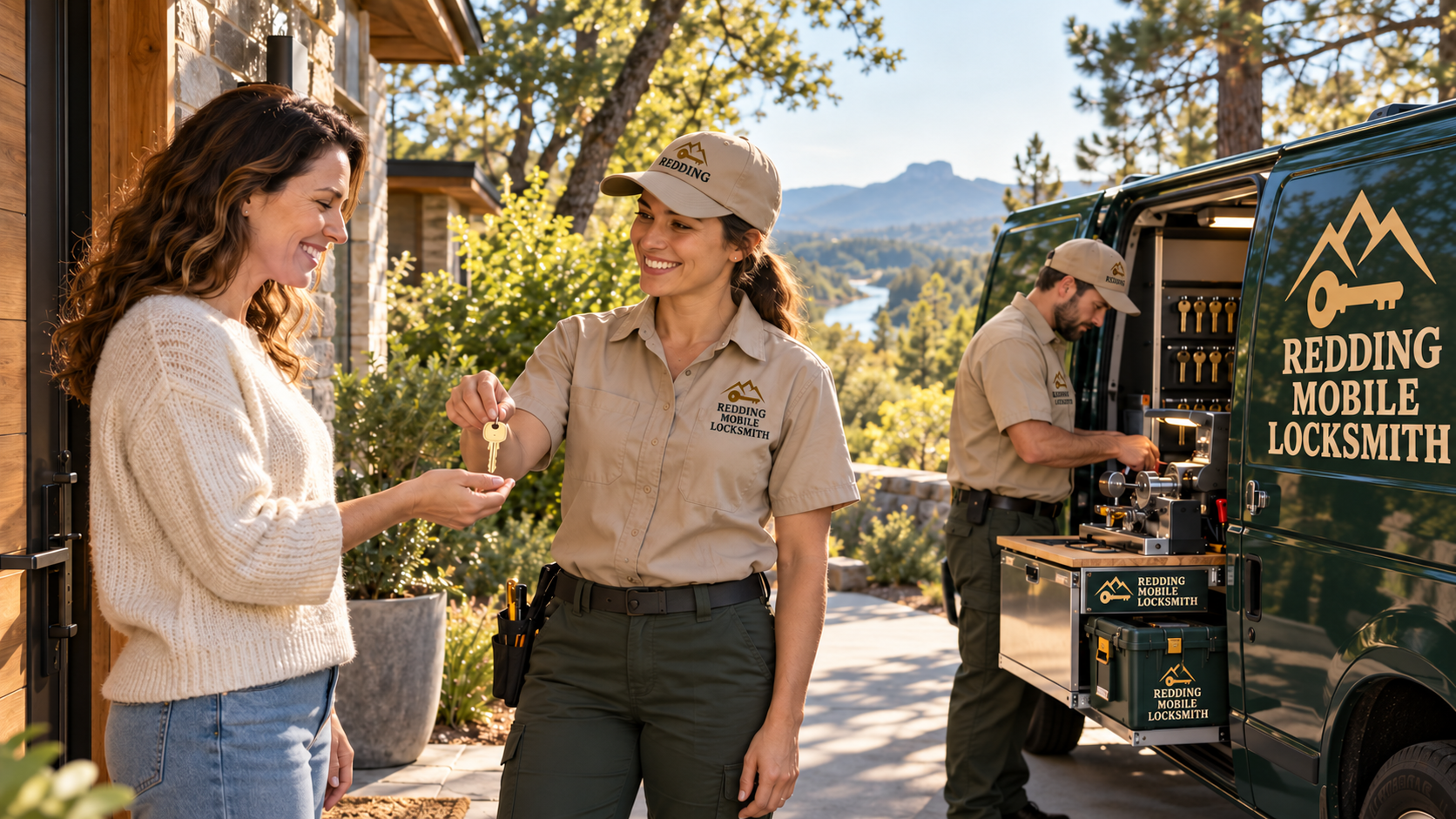
Montague vehicle keys
A visit that ran longer than planned
Picture a caregiver who drives to Montague to spend the afternoon with an elderly relative. The visit goes long, in the pleasant way that visits sometimes do, and by the time the light is fading she finds that her car keys have slipped out of her coat. They are not on the porch, not in the kitchen and not in the car. The vehicle sits in the driveway with its doors locked and its small light blinking.
It is a very ordinary kind of problem, and it comes in a surprising number of varieties. The keys can be inside the car with the doors locked. They can be lost altogether. They can be present but broken, worn or no longer recognized by the engine. The fob can be working for the doors but not the ignition, or the other way around.
Because each variety has a different remedy, this page walks through them in turn. The goal is to help you describe your situation clearly, understand what a technician is likely to do, and recognize which of these jobs can be handled in a driveway without towing anything to a shop.
There is a practical advantage to having all four under one roof. A single visit can open the door, make a new key and program it, then test the ignition, which saves you from chasing three different services. For a caregiver on a tight afternoon, or anyone with a family waiting at home, that is a real relief.
The range of vehicle problems a mobile locksmith handles
Vehicle work falls into four broad groups. The first is entry: getting into a locked car or truck without harming it. The second is keys: cutting, copying and creating replacements, including for vehicles that have lost every key. The third is programming: teaching the car to accept a new transponder key or fob. The fourth is the ignition and door lock hardware, which can wear, jam or break.
Many drivers expect only the first of those from a locksmith, and are glad to learn about the rest. A mobile locksmith with a branded service van carries professional tools, key cutting and programming equipment, and common hardware, so most of these jobs can be completed beside the vehicle.
Our page on cars and trucks gives the overview, and the pages on locked out of your car, replacement car keys and key programming and fobs go deeper on each job.
Modern vehicles add details worth knowing. Side airbags in the doors, wiring that runs through the frame and alarm systems that wake at the wrong touch all affect how a door should be handled. A professional works with those in mind, and it is a good reason not to try a coat hanger or a wedge yourself, since the damage can cost more than the call.
Locked out: how a car is opened without the key
When keys are locked inside, a technician uses tools designed to operate the door's internal mechanism or unlock button without scratching the paint or bending the frame. The right approach depends on the vehicle. Some doors have a simple lock rod and others have electronic controls or shielded cabling, which calls for a more careful touch.
This is work done in a few steps that you can see. The technician checks that you own the vehicle, assesses the door and its seals, protects the finish and then opens the lock using the method suited to that model. The door is tested afterward, and you should be able to confirm that nothing has been marked.
We keep our description general on purpose, because the point is what you can expect rather than a method for anyone to copy. Our guide on how a car is opened without the key explains the idea, and the one on lockouts and what to try first lists safe checks before you call.
Prevention is the kinder route. Build the habit of checking the back seat every time you leave a vehicle, and keep your keys in your hand or pocket and never on a seat or in a cup holder. Most lockouts happen in the few seconds when a door is closed while the keys are still resting inside.
When a child or pet is inside
This situation is different from every other lockout. If a child or a pet is locked inside a vehicle, call emergency services first, before anything else, and follow their instructions. Heat and cold both build up rapidly inside a closed vehicle, and a rescue is not a matter for a scheduled appointment.
A locksmith can help later if the car still needs opening or the lock needs attention, but emergency responders are trained and equipped for the urgent moment. Do not delay a call while you search for a locksmith, and do not try to break a window yourself unless emergency services advise it.
It is worth saying this on every vehicle page, because it is the kind of knowledge that matters only once in a lifetime and then matters enormously. Share it with the people who drive your family's cars, including babysitters, grandparents and visiting relatives.
Spare key planning is simple once you accept it. Keep the spare somewhere other than the vehicle, such as at home or with a trusted person, and check it every so often. For a caregiver who drives a relative's car as well as her own, having a labeled spare for each vehicle prevents a stranded afternoon.
Lost keys and keys that no longer work
A lost key can be replaced even if you have no working key at all. The technician confirms ownership, identifies the vehicle and creates a new key to match. Depending on the car, this can mean cutting a blade from the vehicle's code, generating a transponder key and programming it to the car through its diagnostic port.
It helps to know what you were carrying. A plain metal key from an older vehicle is a different job from a smart fob that starts the engine with a push button. Tell the dispatcher what the original looked like and whether it had buttons, a rubber cover or a flip blade.
Worn keys cause trouble even when they are present. A key that has been used for years may have rounded edges that no longer lift the pins correctly, and it may start the engine on some days and not on others. If that is happening, replacing the key before it fails entirely is far less stressful than waiting for the day it breaks off in the ignition. The guide on a key stuck in the ignition covers what to do in that case.
Battery trouble in the car itself can look like a key problem. Dim dashboard lights, slow cranking and clicking sounds all point to a weak car battery and not to a faulty key. A technician can help you tell the difference, and it saves you paying for key work you do not need.
Transponders, fobs and the car that will not start
When the key turns but the engine will not catch, the problem is often the transponder system, which checks a code in the key before allowing the engine to run. A copy that was cut but not programmed will behave exactly this way. A fob with a weak battery can also make the car act as if the key were missing.
Programming is the process by which a diagnostic tool teaches the car to accept the key. It is a normal part of replacing keys on modern vehicles, and it is the reason a copy from a general key machine may disappoint. Our guide on what a transponder chip is describes the idea in plain terms.
If your vehicle will not start and a key is involved, the guide on when a car will not start because of the key helps you decide whether to check a battery, try a spare or call a locksmith. For the programming side in your own town, see key programming and fobs in Montague.
Keys that go home in someone's pocket after a shift are the most common cause of trouble with shared trucks. A hook board in a fixed location, a sign out sheet and a spare kept by the person in charge turn a recurring headache into a routine. These habits cost nothing and prevent most calls.
Work trucks, borrowed cars and shared vehicles
Not every vehicle belongs to the person driving it. In an agricultural area like the Shasta Valley, work trucks are shared between employees, borrowed between neighbors and parked in yards at all hours. That brings its own questions. Who has authority to order a new key? Who needs to know when a lockout occurs?
For a borrowed car, call the owner before anything else, because a technician will want to confirm authority and the owner may have a spare. Our guide on locked out of a borrowed car covers this, and the one on a work vehicle lockout explains who to inform when the truck belongs to a business.
For shared vehicles, a written note of who holds each key is surprisingly effective. It takes a minute to make and saves a morning of searching when someone leaves with the only key in their pocket.
Ask the seller directly how many keys they have owned and whether any fob has been replaced. Check that the remote buttons work, that the key turns smoothly and that there is no sign of a previous ignition repair. A seller who cannot produce a second key is giving you a bargaining point.
Buying a used vehicle: the key question
A used car or truck often arrives with fewer keys than the seller admits. One key might be missing, a fob might be worn or a spare might have been quietly lost years ago. Before you hand over money, count the working keys and test each one.
A used vehicle with only one working key is a problem waiting to happen. It is much simpler to have a spare made while you still hold a key that works, because the technician can use that key to authorize a new one. Without it, the job grows into a full replacement from scratch.
Our guides on buying a used car and the extra key question and on how many keys come with a used car and which ones matter explain what to look for. They are worth reading before you shake hands on a deal.
Keep your key ring light. A heavy bundle of keys and charms hanging from the ignition adds weight to the cylinder every time the car moves, which can speed up wear. Removing the vehicle key from the bunch when you park it for service, or when you hand it to someone else, is a small habit that protects the ignition.
If an ignition lock has been damaged, the cause is sometimes an earlier attempt to start the car without the correct key. Do not force a key that will not turn. Forcing it can snap the key off or strain the cylinder, and a gentle jiggle with the steering wheel eased slightly is the most you should try before calling someone.
Ignitions, door locks and wear
Hardware wears out. An ignition cylinder that has turned thousands of times can develop slack, and a key may begin to stick or refuse to turn. A door lock that is rarely used on one side may freeze up in cold weather. A lock that has been forced in an earlier break in may hide damage.
A technician can often repair or replace a worn ignition cylinder and key it to your existing key, so you do not have to carry a separate one for the ignition. Door locks can be serviced, and trunk and glove box locks can be rekeyed to match.
Cold is a factor in this part of Siskiyou County. A lock that is stiff on a frosty morning may simply need the right lubricant, applied sparingly. Our guide on how weather and seasons affect locks explains this, and the page on remote start and key questions covers one more common source of confusion.
Safe parking matters too. If the vehicle is on a road shoulder or a narrow lane, switch on the hazard lights if you can, stand well clear of traffic and tell the dispatcher about the setting. Main street businesses in town often have parking areas where a technician can work comfortably, so mention if you can move to one.
Getting ready to ask for help
A little preparation helps in any vehicle call. Know the make, model and year of the vehicle, where it is parked and whether a child, a pet or a person in distress is involved. Have identification and something that shows the vehicle is yours, such as a registration, ready to show.
The request form on the contact page is where to start. For the neighboring community, see cars and trucks in Granada, and the Montague overview gathers every local page for the town.
- Say whether you have any working key at all.
- Describe the key: metal only, buttons, flip blade or push button start.
- Note whether the car shows any warning lights or sounds when you approach it.
- Mention if the vehicle is on a roadside or in a place that needs extra care.
- Check the fob battery before you call, if you still have the fob.
Good to know
Common questions
Can a locksmith open my car without damaging it?
In most cases, yes. A trained technician uses tools made for the job, protects the finish and tests the door afterward. Some vehicles are more delicate than others, and the technician will explain if there is any risk before starting. Ownership is checked first, so have identification and registration ready.
What if I lost every key to my car or truck?
A replacement is usually still possible. The technician confirms ownership, identifies the vehicle and creates a key that fits, programming it to the car if it has a transponder system. Some models need extra security steps. Tell the dispatcher the make, model and year so the right equipment comes with the van.
Why does my car start only sometimes with a worn key?
Wear rounds the key's edges and changes how it lifts the pins, so it works on some days and not others. A weak transponder chip or a damaged ignition cylinder can have a similar effect. Replacing the key before it fails completely is easier than dealing with a break in the ignition.
Do I need the original key to make a spare?
It helps a great deal, but it is not required. With a working key, the technician can often add a spare more simply. Without one, the job becomes a full replacement, which takes more steps and may call for extra security procedures. Either way, ownership must be shown first.
What should I do if a child is locked in the car?
Call emergency services immediately and follow their instructions. Do not wait for a locksmith. Emergency responders are trained for this situation, and the lock can be dealt with afterward. The same applies to a pet in a vehicle, especially when the weather is hot or cold.
Can a fob be programmed on site in Montague?
In many cases it can. The van carries key cutting and programming equipment, so a technician can often cut and program a key beside your vehicle. A few models need a dealer only procedure, and the technician will tell you plainly once the make, model and year are known.