
Home / Montague / Home Lock Service in Montague
Montague home locks
Home Lock Service in Montague, California
Houses change hands, families grow, and locks quietly wear out. This page explains how a Montague household can keep its doors secure through moves, repairs and ordinary wear, one clear decision at a time.
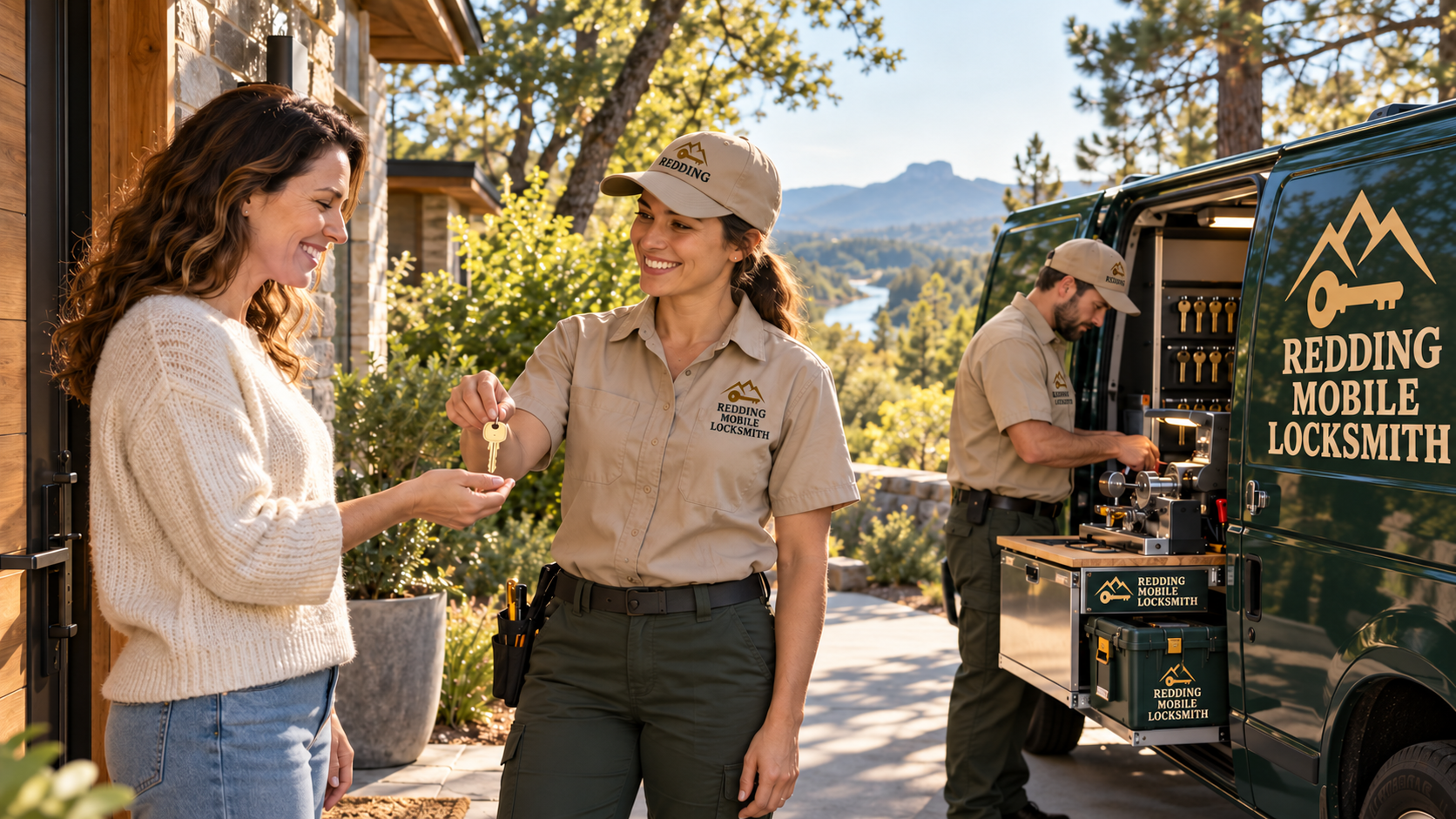
Montague home locks
The house that waits at the end of the day
Imagine an angler who spends the long light of a summer evening on the water near Montague and heads back to the trailhead as dusk settles in. The truck is where he left it, the air is cooling, and the only thing on his mind is the drive home. Then he pats his pockets. Somewhere between the river and the road, the house key has gone.
Most of us treat the lock on our own door as part of the furniture until the day it fails us. A lost key, a stiff cylinder or a door that will not latch turns an ordinary evening into a problem, and the problem is never really about the lock. It is about being able to get into your own home and trusting that nobody else can.
This page is about that trust. It follows the life of a household lock from the day you move in through repairs, rekeying, replacement and the odd emergency. Think of it as a conversation with a patient neighbor who happens to know how pin tumblers, deadbolts and strike plates really work.
Older homes and what their locks are telling you
Montague is a small town in the Shasta Valley of Siskiyou County, with older homes, agricultural surroundings and small main street businesses. Older houses bring character, and they also bring hardware of every age. A single home may have an original mortise lock in the front door, a deadbolt added in some decade past, a knob lock on the back that has been rekeyed twice, and a window latch painted shut.
Each of those tells a story. A loose handle suggests worn screws or a spindle that has seen too much use. A key that must be jiggled points to worn pins or a cylinder full of grit. A door that has to be lifted before it will lock hints that the house has settled and the strike no longer lines up with the bolt.
You do not need to fix it all at once. A calm walk around the house, noting which locks work smoothly and which complain, gives a technician a place to start. Our guide on how to tell if your locks are worn out lists signs to watch for.
Sellers and landlords vary in how carefully they hand over keys. Some give you a neat set with a spare, and others leave one on the counter with a shrug. Either way, the fresh start of a move is the cleanest time to settle the matter, before the boxes are unpacked and the routine of daily life takes over.
Moving in: who else holds a key?
The first job in any new home is to ask who else can get in. Previous owners, former tenants, contractors, real estate agents and relatives of all of them may have copies. Nobody means harm, and most of those keys sit forgotten in drawers. Still, nobody can say for certain how many exist, and that uncertainty is exactly what rekeying solves.
Rekeying changes the inside of the lock cylinder so that old keys stop working and a new key takes over. The lock itself, the handle and the door all stay in place. It usually makes more sense than replacing hardware that is in good condition, and it lets you have every exterior lock on one key if you prefer.
The question comes up so often that we have a guide called do I need to rekey after buying a house. Our page on rekeying your home explains the process, and the guide on whether it is better to rekey or replace helps when you cannot decide.
A small habit helps more than most people expect. Once or twice a year, try each lock slowly from both sides and listen to it. A smooth turn and a clean click mean all is well. A grating sound, a hesitation or a bolt that stops short is the early warning, and a visit at that stage is usually shorter and simpler than one after a failure.
Repairs: keeping working locks working
Most household locks do not fail all at once. They get stiff, then stiffer, and then one cold morning the key will not turn at all. Dust, rust and old lubricant gum up the pins. A door that has shifted pushes the bolt against the frame. A latch spring weakens and the handle droops.
Many of these troubles are simple to deal with when they are small. A technician can clean and lubricate a cylinder with the right product, adjust a strike plate, tighten a loose set or rehang a door that has dropped. Spraying the wrong oil into a lock is a very common mistake that makes things worse, so it is worth reading about the right lubricant for a lock before you reach for a can.
If a lock turns hard, the cause is not always inside the lock. Our guide on why a lock turns so hard walks through the likely culprits, and the page on lock repair and adjustment describes what a visit involves.
Matching is a worry for many households. If you want several new locks to feel like part of one set, ask for them in the same finish and keyed alike. A technician can often supply a matching handle for each door, so that the front, back and side entries look planned rather than collected over decades.
When replacement is the honest answer
There comes a point when repair is not sensible. The mechanism may be worn past saving, the finish may be pitted, parts may no longer be made, or the lock may simply be too weak for what the door guards. A lightweight knob lock on an exterior door, with no deadbolt above it, is an easy example.
Replacement is also a chance to improve. A deadbolt with a deep throw, a strike anchored into the framing, and a handle that suits the household can turn a worrisome door into a trustworthy one. Keypads and smart locks may suit some homes, especially where keys are often lost or shared.
A technician will tell you which situation you are in. You should hear a plain explanation of what is wrong, what the options are and what each means in practice. Our page on new lock installation covers the fitting side of the work, and the guide on how long a lock will last helps you set expectations.
Weather and darkness add urgency in this part of Siskiyou County, where winter evenings are cold and summer afternoons are hot and dry. If you are locked out in either extreme, find shelter first. A car, a neighbor's porch or a lit building is better than waiting on a dark doorstep, and the technician can meet you when you are ready.
Lost keys, locked doors and the evening lockout
Back to our angler. His truck is fine and the house is a drive away, but there is no key. If someone is at home, the problem is solved with a knock. If not, he has a decision to make. Climbing a window or kicking a door is the wrong answer, since the repair bill will be larger than the call to a locksmith.
A mobile locksmith can open most ordinary door locks without damaging them, after confirming that you live there. You will be asked for identification and some link between you and the address. Once inside, you can decide whether to cut a spare, rekey because the lost key could be anywhere, or simply carry on.
That second question deserves thought. A key lost at a trailhead or a riverbank, with no name attached, is a modest risk. A key lost with a wallet that shows your address is a different matter. Our guide on what to do if your wallet and house keys are gone explains how to weigh it, and the page on locked out of your home covers the lockout itself.
Seasonal adjustment is entirely normal. Many older doors bind a little in the damp months and loosen again in summer. If your door only sticks in winter, mention that when you call, because it suggests a swelling door and not a failing lock. The remedy may be a plane, a hinge shim or a strike moved a fraction, and not a new mechanism.
Doors, frames and the parts around the lock
A lock sits in a door, and a door sits in a frame. Plenty of lock trouble starts in those surroundings. Wood swells in damp weather and shrinks in the dry heat of summer. Hinge screws loosen. Strike plates are fixed with short screws that barely reach the trim. In older houses, a century of paint can thicken the edges until the latch scrapes.
A better strike plate, longer screws and a bit of attention to the hinges often improve both security and daily use for very little effort. A well adjusted door closes with a gentle push and latches without lifting. If you have to slam or shoulder a door to lock it, the lock is not the problem.
Our guides on strike plates and on doors that sag and what that does to locks explain these issues. They are good reading for anyone who owns an older home and wants to understand why some doors always seem to misbehave.
Outbuildings in a place like Montague often hold the most valuable things a household owns: tools, equipment, a spare vehicle, stored goods. A padlock and hasp that were adequate for a woodshed may not suit that workload. Check that the hasp is bolted through the wall and not merely screwed into soft trim, because the padlock is only part of the system.
Beyond the front door
A household has more openings than the front door. The back door, the garage entry, sliding glass doors, windows, outbuildings, sheds and gates all need some thought, particularly in a town surrounded by agricultural land where equipment and tools are often stored in outbuildings.
Sliding doors have latches and tracks that can be fitted with extra bars or pins. Older windows may have simple catches that can be upgraded. A door from the garage into the house is easy to overlook, yet it needs the same quality of deadbolt as any other exterior door. If the garage entry lock fails, the answer is not to ignore it.
Our guides on sliding door security, window locks for older houses and what to do when the garage entry lock fails go through those points one at a time.
Seasonal visitors and temporary help raise another question. A house sitter, a relative watching the place while you are away or a contractor with a job to do may all need access. Lending your own key and hoping it comes back is the weakest answer. A spare on a clearly recorded loan, or a keypad code you can cancel afterward, is a cleaner one.
Keeping a sensible set of keys
How many keys does a household need? Enough that nobody is stranded, and few enough that you know where each one is. A common arrangement is one key per adult, a spare with someone trusted and perhaps one in a secure spot outside the house. Teenagers and visiting relatives complicate the picture, and so do rentals and guest rooms.
Our guide on how many keys a household should keep explores this in more depth, and the one on judging whether your locks are good enough helps you decide what to improve first.
- Number or tag keys in a way that only you understand, never with your address.
- Record who holds each key and when it was handed over.
- Rekey when a key is lost with an address attached, or when someone with a key leaves under strained circumstances.
- Avoid hiding a spare in the obvious places such as a flower pot or under a mat.
- Test every spare once a year to make sure it still turns smoothly.
Calling for help and what to expect
When something goes wrong with a household lock, the process is easy to follow. Describe the problem and the type of lock. Confirm that you are entitled to the work. The technician arrives in uniform in a branded service van carrying professional tools, key cutting and programming equipment, and common hardware, so many jobs are completed in a single visit.
Redding Mobile Locksmith runs around the clock, so a lockout in the evening does not have to wait until the next day. The phone line is listed as coming soon, so the way to begin is the request form on the contact page. Please keep emergency services in mind for any situation involving danger.
For a look at the same service in the neighboring community, see home lock service in Granada, and the Montague overview lists every local page for the town. Whatever stage your household is at, a little understanding goes a long way, and the right lock on the right door is a quiet comfort.
Good to know
Common questions
Should I rekey my locks when I move into an older Montague home?
It is a sensible step, because you cannot know how many copies of the old keys exist. Rekeying changes the inside of each cylinder so old keys stop working, usually without replacing the hardware. A technician can also check whether any lock is too worn to rekey and suggest a replacement.
Can a stiff lock be repaired rather than replaced?
Often yes. Stiffness usually comes from dirt, old lubricant, a misaligned strike or a door that has shifted. A technician can clean, lubricate and adjust the lock, and tighten the surrounding hardware. If the mechanism is worn out or the lock is too weak for the door, replacement is the honest answer.
What happens if I lose my house key away from home?
First check whether anyone else at home can let you in. If not, a mobile locksmith can open most ordinary door locks without damage once you show you live there. Afterward, think about whether the lost key could be traced to your address and whether rekeying makes sense.
Do old mortise locks need special treatment?
They are built differently from modern bored locks, with a larger body set into the edge of the door. Many can be serviced or rekeyed, and parts can sometimes be found, though some older designs are harder to match. A technician can examine the lock and tell you whether to restore it or replace it.
Is a deadbolt really necessary on every outside door?
For most households it is a sensible addition. A deadbolt gives a door much more resistance than a spring latch alone, as long as it is fitted in a solid frame with a well anchored strike. Local rules and your insurer may have views, so it is worth asking about them.
How do I prove I live at the house when I am locked out?
A technician will usually ask for identification and something linking you to the address, such as mail, a utility bill or a lease. If those are locked inside, say so when you call, and the dispatcher can suggest alternatives. Requirements can vary, so ask what to have ready.