
Home / Millville / Emergency Help Any Hour in Millville
Millville emergency help
Emergency Lock Help in Millville, Any Hour
Being shut out is bad enough in daylight, and it is worse on a dark country road with no neighbors in sight. Here is how to stay safe, stay calm, and give the details that matter.
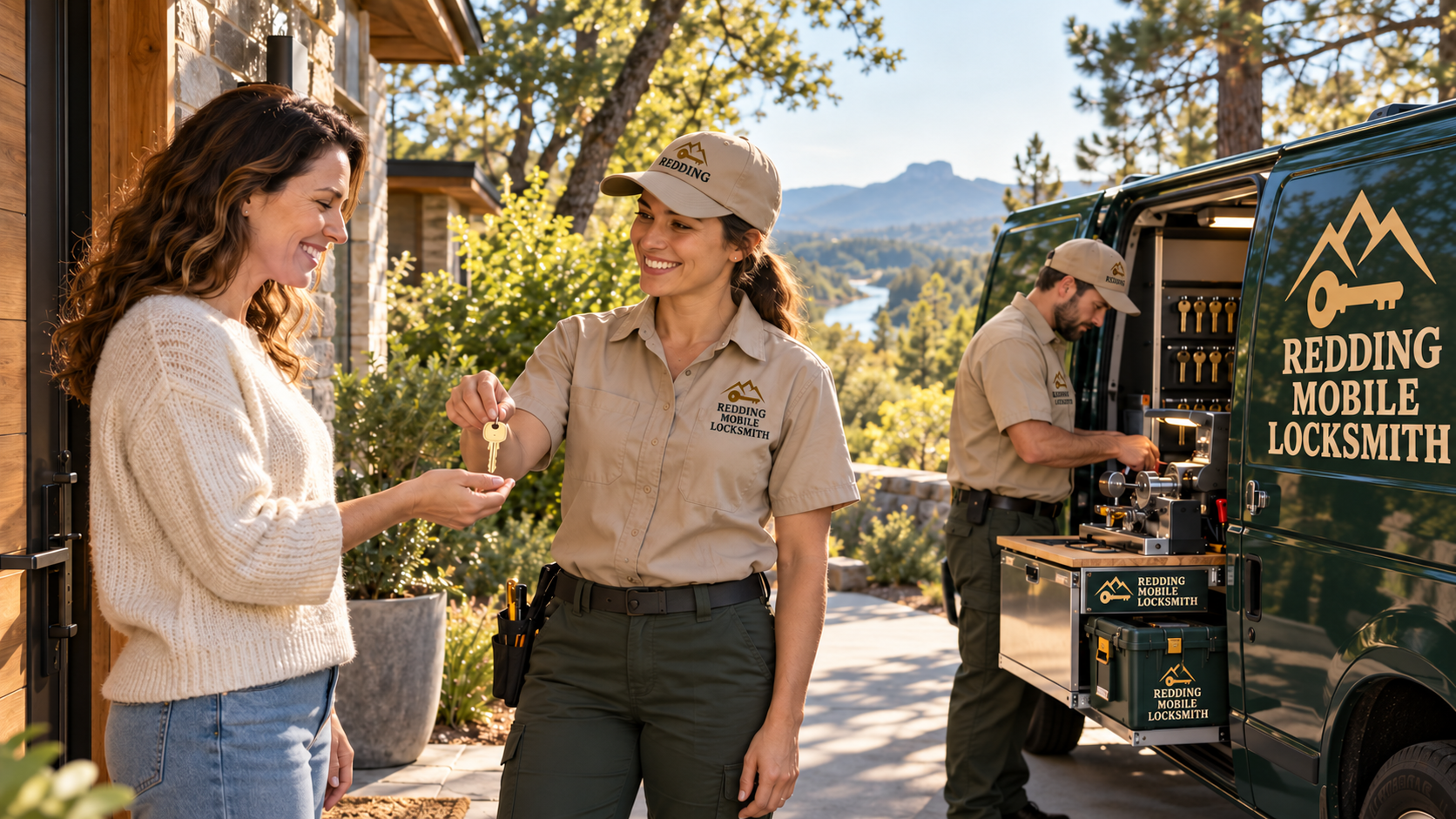
Millville emergency help
The cabin owner who arrives after weeks away
Picture someone who owns a seasonal cabin in the Millville foothills and drives out after several weeks away. It is dusk, the gravel road is quiet, and the key that has always worked will not turn. Maybe the lock has seized, maybe the door has swollen against the frame, maybe the cylinder has worn, or maybe a key was copied badly years ago. Whatever the cause, the plan for the evening has just changed.
This situation is a good way to think about emergencies in a rural community. There is no corner store to walk to, no hallway full of neighbors, and often no phone signal at the exact spot where the trouble is. Cabins, barns and houses are spread out, and the nearest person may be a long way off. A little preparation, and a clear head, matter more here than in town.
This page walks through what to do and what to say when you cannot get in, whether it is a house, a barn, a vehicle or a shop. For the general service, our page on emergency help at any hour sets out the basics, and the rest of this article is about the Millville setting.
First, check that you are safe
Before thinking about the lock, think about yourself. If you feel unsafe, if you see signs that someone has been inside, a broken window, a door standing open or something that looks wrong, do not go in. Step away, get to a safe spot, and contact emergency services. A lock problem can wait. Your safety cannot.
If a child or a pet is locked inside a vehicle, call emergency services first, before anything else. Heat and cold can become dangerous surprisingly soon in a closed car, and this is not a situation for waiting on a locksmith. Emergency responders are equipped to deal with it right away, and a locksmith can follow up afterward.
If it is simply a matter of being shut out with nothing alarming around you, take a breath. Most lockouts are an inconvenience, not a danger. Look around: is there warm clothing in the vehicle, light from a phone, a safe place to wait? Our guide on being locked out at night covers the safe choices step by step.
Check the simple things before you call
Many lockouts end here, and there is no shame in that. Before calling, give the obvious a minute. Do not force the key. A key forced in a stiff lock can snap off inside, turning a small problem into a bigger one. If the key turns partway and stops, stop too.
Never try to break a window or force a door yourself to get in, unless there is a real emergency such as a fire or a medical situation, in which case you should call emergency services. Damaged doors and frames cost more to repair than most lockouts cost to solve, and you can hurt yourself.
Our guide on what a lockout is and what to try first goes into more of these simple steps. If none of them work, it is time to ask for help.
Think too about the light and the weather. A country lockout after dark is easier to handle if you can see what you are doing, so use a phone light or the vehicle headlights rather than fumbling. In winter, keep warm and out of the wind, and in a hot dry summer, find shade and water before you start. None of this solves the lock, but it keeps a small problem from growing into a large one while you wait.
- Try every door and window you own, calmly, in case one was left unlocked.
- Look for a spare key you hid for exactly this day, and think about who else holds one.
- Check the key itself: is it the right one, and is it bent or worn?
- Try the key gently with a little wiggle, without forcing it or twisting hard.
- If the lock is stiff, note whether it was stiff last time, since that helps a technician.
What to tell us when you ask for help
The details you give shape the visit. A technician who knows what to expect can bring the right tools and parts and plan the work, rather than discovering the problem on arrival. So when you describe your situation, be as specific as you can.
Say what is locked. A house, a barn, a car, a gate? Say what kind of lock it appears to be, such as a deadbolt, a knob, a keypad or a padlock. Tell us what happened: lost key, broken key, a lock that will not turn, a door that will not latch. Describe where you are in terms of landmarks and road type, but because you may not be sure of an address, describe the approach: gravel, paved, gate, turnaround.
Also say whether you have proof that the property or vehicle is yours. A technician will reasonably ask for that before opening anything, since helping someone into a place they do not own would be a serious mistake. A rental agreement, registration or a document with your name and the address can do. Our guide on what to have ready when you call lists it all.
Be ready for questions about the lock, too. Is it the original or was it changed? Does the key slide in smoothly? Has the door been hard to close lately? Small facts like these help a technician guess whether the trouble is the key, the cylinder, the latch or the door, and they can shorten the work considerably once the van pulls up to your gate.
Getting your location across in a rural area
In town, an address does the job. In the foothills, it is more complicated. Many properties are on long private roads, some are numbered unclearly, and a map app can lead a driver to the wrong gate. The more you help, the smoother the arrival.
Give the road name if you know it, the ZIP code, which is 96062 for Millville, and any landmarks someone could see from the road. Mention a gate, whether it is locked, and the code if there is one. Say what the driveway is like, how long it is, and whether a van can turn around. If your phone has a location feature, share it through whatever channel you are using.
If the reception is poor, move to the spot where it improves before you try to send details. A better signal at the top of a driveway can save a long wait. When you use the request form, add as much of this as you can, since the phone line is coming soon and the form is the way to reach the team for now.
Cabins and seasonal properties
A cabin that sits empty for weeks has its own habits. Locks that have not been turned in a while can stiffen. Dust, damp and the swing between hot dry summers and cold winters change how metal and wood behave. A door that closed freely last autumn may stick in spring, and a lock that moved easily may feel gritty after a long season of disuse.
If the lock is the problem, a technician can often clean, adjust or repair it without replacing the hardware. If the door is the problem, a swollen or shifted door may need adjustment so the bolt lines up with the strike. If the key itself is worn, a new key can be cut from the lock or from a good original. Our guide on closing and reopening a cabin includes things to check before you leave and when you come back.
Seasonal owners also tend to share keys with family, neighbors and caretakers. If you are not sure who holds a copy, now is a good time to think about rekeying, so that the old keys stop working and you control who comes and goes.
Cars, trucks and farm vehicles
A vehicle lockout on a country road is a different animal from one in a parking lot. The vehicle may be out of sight of anyone, the weather may be harsh, and the keys may be in the ignition of a truck you left running by the barn. First, confirm no one, no child and no pet, is inside, and if there is, call emergency services immediately.
If everyone is safe, a technician can open most vehicles without damage using professional tools designed for the purpose. We will not describe the methods, and you should be wary of anyone who offers an easy trick online, since a wrong move can damage seals, wiring or an airbag system. Our guide on how a car is opened without the key explains the general idea without a step by step guide.
If the problem is a lost key and not just a lockout, the answer is likely a new key and programming. Our page for replacement car keys explains how that goes, and locked out of your car covers the lockout side.
Shops, barns and business doors after hours
Business emergencies come at odd hours too. A farm stand owner who finds a padlock jammed, a workshop with a door that will not lock at closing time, or a storeroom with a broken latch all need to secure the property. In those cases, the first question is whether the property is safe to leave unattended.
If a door cannot be locked, consider whether someone can stay on site until help arrives. If a building has been broken into, contact the authorities first and avoid touching anything. A locksmith can secure the door afterward, but the report comes first.
Once the immediate problem is handled, think about the longer view. A lock that failed at midnight is likely to fail again. Our business lock service page covers repairs, replacements and key control for places of work.
What a technician does when they arrive
When the van arrives, the technician will ask to confirm who you are and that you are authorized to have the lock opened. They will look at the lock and the door, decide on an approach, and explain what they plan to do. A good technician talks you through the work and tells you if the door or lock will be damaged, and why.
The aim in most lockouts is to open the door without harming it. Professional tools and training make that possible in many cases. In others, the lock must be drilled or replaced, which is more disruptive but sometimes the right call, for example when a key has broken inside or the lock has failed. We would rather tell you that plainly than promise something that cannot be done.
After the door is open, ask the technician to look at the lock. If it failed because of age or wear, a repair or replacement now will prevent a repeat. See lock repair and adjustment for what that involves.
Take a moment as well to think about who else should know. If you are alone on a remote property, tell a friend or relative where you are and that you are waiting for help. It is a small habit that makes a rural evening feel less uncertain, and it costs nothing. Once the door is open, you can let them know you are inside and fine.
Making the next time easier
Every lockout teaches something. Perhaps it shows that nobody had a spare, or that the spare is hidden somewhere too obvious or too hard to find. Perhaps the locks on the cabin have not been serviced in years. Use the experience to improve things.
Keep a spare with someone you trust, not under a mat or in a planter where anyone can find it. Test your keys before the season starts. Take a photo of the door hardware. Make a note of the road, gate code and landmarks, and keep it somewhere you can reach. If you want ideas, our guide on how many keys a household should keep offers a starting point.
And remember that a small effort now means a shorter evening later. A cabin owner who has a plan, a spare and a technician's number will spend a lot less time standing in the dark.
Reaching the team and exploring nearby pages
When you are ready, the request form is the way to get a visit started. Describe what is locked, where you are and what has happened. The phone line is coming soon, and until then the form is the right place.
The Millville page brings together everything local, and neighbors in other communities have written about their own situations. A page on emergency help in Lakehead looks at a lake setting with marinas and vacation homes.
Whatever the hour, you do not have to solve it alone. A clear description and a calm approach will get you most of the way, and a technician can take it from there.
The same calm approach helps when you are guiding someone else. If a relative or a caretaker is the one standing at the door, stay on the line, ask them what they see, and help them work through the same checks. Two people thinking clearly usually solve a lockout sooner than one person who is frustrated and alone at the end of a long road.
Good to know
Common questions
What should I do first if I am locked out at night?
First, make sure you are safe and that nobody, especially a child or pet, is trapped inside a vehicle. If someone is, call emergency services at once. Otherwise, check for other unlocked doors, think about spare keys, and then ask for help with as many details as you can give.
Can you find me if I do not have a street address?
We can plan around landmarks and directions, though an address is easier. Give the road name, the ZIP code 96062 for Millville, a description of the gate and driveway, and any landmark you can see. If your phone can share a location, include it. Clear details make the visit smoother.
Will opening my door damage it?
In many lockouts the door can be opened without damage using professional tools, but that depends on the lock and the situation. If the lock has failed or the key has broken inside, drilling or replacement may be needed. A technician should explain this before starting, so you know what to expect.
Do I need to prove the property is mine?
Yes, expect to be asked. A technician cannot reasonably open a door for someone who may not belong there. A document with your name and the address, a rental agreement or vehicle registration is usually enough. Having something ready saves time and avoids awkward delays.
My cabin lock got stiff over the off season. Is that normal?
Yes, it is common. Dust, damp and temperature swings can make a lock gritty or stiff, and a swollen door can bind the bolt. Do not force the key. A technician can clean, adjust or repair the lock, and may check whether the door and strike need alignment.
Is it safe to wait in my vehicle for help?
Often, yes, if the vehicle is working and you have light and warmth, but use judgment. Pick a safe, visible spot, away from traffic, and keep your phone charged. If you feel unsafe at any point, move somewhere secure and contact emergency services. Your safety matters more than the lock.