
Home / Mount Shasta / Emergency Help Any Hour in Mount Shasta
Help at any hour
Emergency Locksmith Help, Any Hour, in Mount Shasta
Being unable to get into your car or home is stressful, especially in the cold or the dark. This page explains how to stay safe, stay calm and give the details that help a locksmith reach you well prepared.
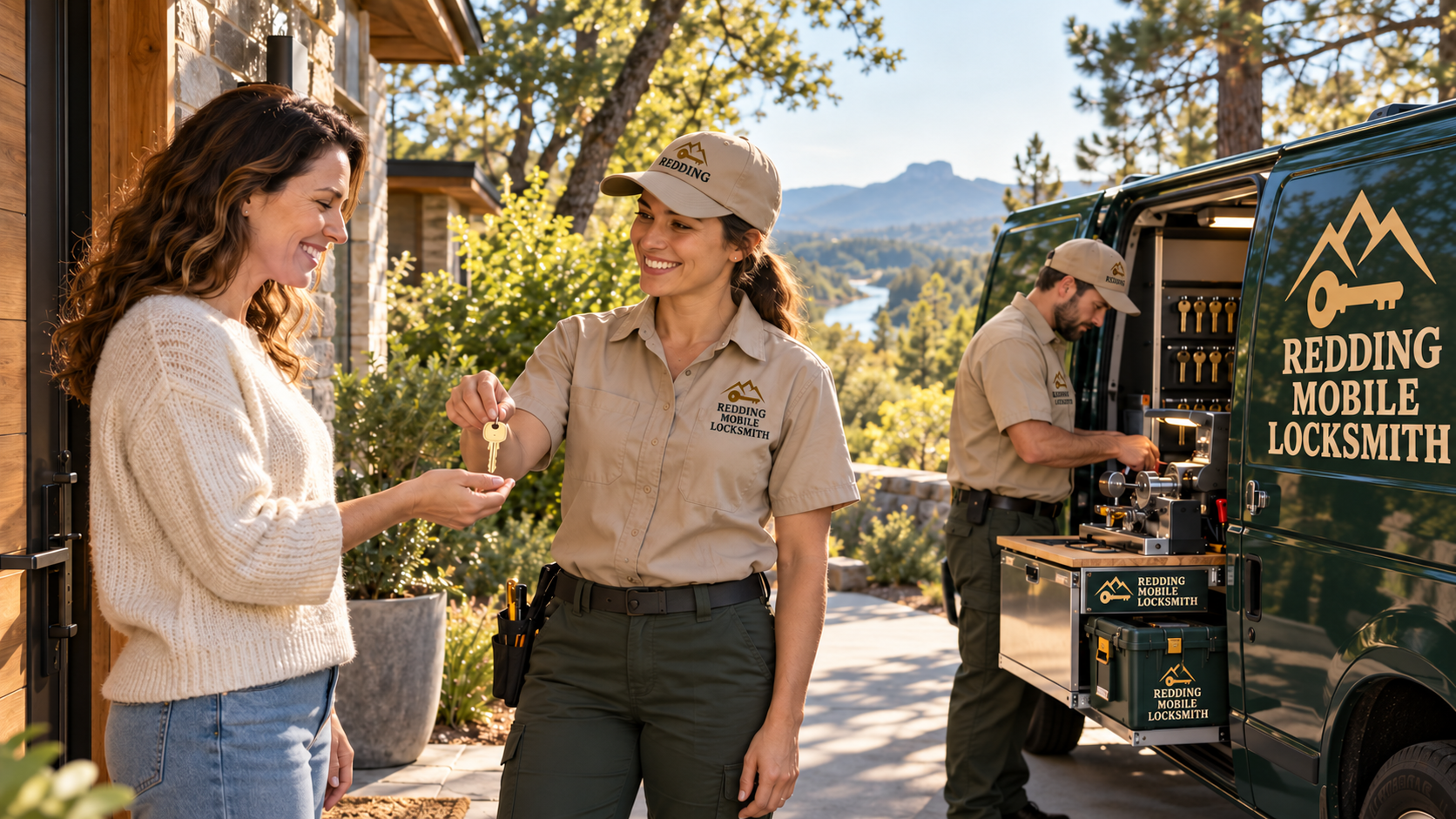
Help at any hour
A family at the end of a long day
Picture a family heading home from a day at the lake or in the woods. The kids are tired, the cooler is empty, there is a little sunburn and a lot of dust on everyone's shoes. At the trailhead parking area the dad closes the tailgate, the doors click shut and, a moment later, someone realises the keys are on the seat.
That is an imagined scene and not a real customer, but anyone who spends time outdoors in this part of the world knows it could happen to them. A lockout at an awkward place and hour is not a catastrophe if you handle the first few minutes well. This page is about handling them well.
Emergency in the locksmith sense does not always mean danger. It means a problem that cannot wait until morning. Sometimes it also means real danger, and the advice differs. We will cover both, starting with the cases where the right call is not to a locksmith at all. Knowing the difference in advance means you do not have to work it out while cold, tired and worried.
When to call emergency services first
If a child or a pet is locked inside a vehicle, call emergency services before anything else. Vehicles heat up and cool down with surprising speed, and every minute you spend looking for a locksmith is a minute a child or an animal is at risk. The emergency crew has the training and authority to act at once.
The same goes for any situation where someone inside a home is in trouble: a person who has collapsed, a smell of gas, smoke or any sign of fire. Do not wait for a locksmith. Make the emergency call, follow the dispatcher's instructions and stay clear of anything dangerous.
A locksmith is there for the problem that follows, getting the door open and the lock working again once everyone is safe. We say this plainly because we would rather you made the right call first than the convenient one. If you are not sure whether the situation is dangerous, treat it as if it is and call.
Stay safe while you wait
If you are locked out at night or in the cold, your first job is to keep yourself and your family comfortable and safe. Find shelter from wind and snow, keep children close, and stay in a well lit, visible place. If you are at a trailhead or on a quiet road, stay near your vehicle unless there is a reason to move.
Check your clothing and supplies. A coat, a hat, a flashlight on a phone and a bottle of water make a wait more comfortable. If it is very cold and you have a nearby neighbor, a friend or a business that is open, it is reasonable to ask to wait inside for a while.
Keep your phone charged and conserve the battery by lowering the screen brightness while you wait. If the phone is the only way to reach help, treat its battery as a resource. It is a small tip, but in a mountain area where signal can be patchy, it matters. If you can, send your location from a map app to a family member, so someone else knows exactly where you are even if your battery fails.
- Move out of traffic and into a visible, well lit place if you can.
- Keep children and pets close and out of the cold or heat.
- Save phone battery by dimming the screen and closing apps.
- Tell someone where you are and what has happened.
- Avoid forcing a door, window or lock, which often turns a small job into a bigger one.
What to try before you call
Before you send a request, take two minutes for the obvious. Try every door on the vehicle, including the rear doors and any hatch. Check whether a window is open a crack. If you have a spare key, see whether a family member or neighbor can bring it, or whether an app on a phone can unlock the car.
At a house, walk around and check the doors and windows you control. A back door may be unlocked, a garage door may open with a code, or a neighbor may hold a spare. Do not climb through a high window or force anything if it risks injury or damage. A broken pane costs far more than a visit.
Our guide to what a lockout is and what to try first goes through the checks in a calm order. If none of them work, you have not failed. You have cleared the simple options and can ask for help with a clear conscience.
The details that help most
When you contact a locksmith, the quality of the information you give shapes the visit. For a vehicle, give the type, year, color and exact location, and say whether keys are inside, whether the engine is running and whether anyone or anything is in the vehicle. For a house, describe the type of door and lock, and whether anyone is inside.
Say how many people are with you, what the weather is doing and whether it is safe where you are. Mention any lock problems you had before, such as a key that stuck or a door that was hard to close. Those hints help the locksmith choose tools and parts.
Have proof ready. For a car, that means registration or identification that matches. For a house, it means identification showing the address, a bill or something similar. The check can feel like a hurdle at midnight, but it is the same protection that keeps a stranger from asking a locksmith to open your door. See what to have ready when you call a locksmith.
How to reach us right now
Our phone line is coming soon, so for the moment the way to reach Redding Mobile Locksmith is the request form on our contact page. Put the most urgent fact first, such as locked out of a vehicle at a trailhead, then add the details described above.
We are a 24 hour mobile locksmith, and our branded team and van carry professional tools, key cutting and programming equipment and common hardware. We do not promise a specific arrival time, because distances, weather and road conditions in this area change a great deal. We will tell you what we can do as clearly as we can, including what we cannot do from where we are, and what you might try in the meantime that is safe. Plain, honest information is the one thing we can always offer, whatever the hour and whatever the weather.
If the situation changes while you wait, tell us. A door that has been opened by a neighbor, a spare key that has appeared or a child who has been freed by emergency crews all mean we can adjust our plan. Honest updates keep everything efficient and respectful of everyone's time.
What happens when help arrives
The locksmith will greet you, confirm who you are and check that you are entitled to access the vehicle or property. They will look at the lock, explain what they plan to do and ask for your agreement. Then they get to work with professional tools, aiming to open the door without damaging the lock, frame, paint or seals. A lock that has been opened carefully usually keeps working as before, which is why gentle entry is the first choice whenever it is possible.
If the lock is damaged, worn or has failed, the locksmith will tell you what repair or replacement makes sense. If a key is lost, they can often cut and program a new one on the spot. These are your decisions, and you can ask questions or take time to think.
When the work is finished, test the lock yourself. Turn the key, try the handle, shut and open the door a couple of times. Make sure you understand what was done and have all the keys you should. Our page on emergency help any hour sets out the wider service.
Emergencies that are not lockouts
Not every after hours call is about keys left inside. Sometimes a lock has been forced and the door will not secure. Sometimes a key snaps off in the cylinder, or a latch jams halfway and traps the handle. Sometimes a break in, an attempted entry or a visit from a person who should not have a key means the locks must be changed tonight, not next week.
In those cases the goal is to make the building safe again. If there has been a break in, call the police first and do not enter if you think someone may still be inside. Once it is safe, a locksmith can repair the damage, secure the door and rekey or replace the locks so old keys no longer work.
Keep photos of any damage, note the time you found it, and leave the scene as it is until you have spoken with the people who need to see it. Our neighbors page on what to do about locks after a break in sets out the steps in a calm order, and our lock repair and adjustment page describes the mechanical side.
Cold, snow and mountain roads
Winter in Mount Shasta adds difficulty to any emergency. Roads can be icy, parking areas may be snowed in and daylight is short. A lockout in a snowbank at dusk needs more patience than one on a summer afternoon. Tell the locksmith about the conditions so they can plan for access and safety. If a driveway is unplowed or a road is closed, say so, and suggest a safer meeting spot where the van can park and the work can be done without risk.
Cold can also complicate the lock itself. A frozen cylinder, a stiff latch or a fob with a drained battery may be the real cause of the problem. Describe what you tried, whether the lock was working earlier and whether there was any ice or moisture involved. That information can save time.
Dress for a wait, even if you expect a short one. Keep a blanket, a torch and some water in the vehicle in winter, and a spare key in a safe place. The easiest emergency is the one you were ready for, and these small preparations count for a lot out here.
Preparing so the next one is easier
The calmest emergency is one you have planned for. Keep a spare key with a trusted person or in a lockbox that only you can open. Program a spare fob for each vehicle. Write down the details a locksmith will ask for and keep them in your phone: vehicle type and year, house address, and the contact details for family members.
Teach everyone in the household what to do. Children old enough to understand should know not to climb through windows or force doors, and who to ask for help. Adults should know where spare keys are and who can bring them. A short family chat once a year takes five minutes, and it turns a stressful moment into one where everybody already knows their part. For a family that spends weekends at lakes and trailheads, a habit of checking for keys before closing a door is the simplest protection of all.
Think about the objects that make a lockout likely: a tailgate that closes with a push, a door with a button lock, a bag that holds the keys and gets set down on a rock. Naming those risks out loud, before they happen, is a small habit with a real payoff. Clip keys to a bag, carry a spare on a belt loop or give one to the adult who stays behind.
If you have an older relative living alone, a visitor who cannot easily wait outside or a pet that cannot be left in a vehicle, plan extra carefully. See our neighbors page on what is the safe thing to do when locked out at night for more thoughts.
More about Mount Shasta and nearby
Our help extends across the county, including Weed, Dunsmuir and McCloud. Our Mount Shasta neighborhood page collects the local services in one place.
For vehicle matters, see cars and trucks in Mount Shasta. For houses, see home lock service in Mount Shasta. Both go further into the work that follows an emergency call.
The family at the trailhead would have been fine with a little preparation and a clear head. That is the aim of this page: not to alarm anyone, but to make the worst moments a bit more manageable. When you are ready, or when you simply need to ask a question, the request form is open at any hour, and a real person reads what you send.
Before you close this page, take a moment to check the spare key arrangements in your own household. Ask yourself who has a key to your house, where the spare for your vehicle lives and whether a family member could fetch it at midnight. If any answer is unclear, that is the thing to fix this week, while there is no pressure.
Good to know
Common questions
What should I do if a child or pet is locked in a vehicle?
Call emergency services first, before contacting a locksmith. Vehicles can heat up or cool down dangerously, and emergency crews have the training and authority to act at once. Once the child or pet is safe, we can help with the vehicle and lock afterwards.
What details should I give when I request emergency help?
Give the vehicle or door type, your exact location, whether keys are inside, whether anyone is in danger and what the weather is like. Mention any earlier problems with the lock. Have identification and proof of ownership or residence ready, since a locksmith will need to confirm you are entitled to access.
Do you work at night and in bad weather?
Yes, we are a 24 hour mobile locksmith. We do not promise a specific arrival time, because roads, distance and weather in the mountains vary. Tell us the conditions and how safe your location is so we can plan the visit and give you honest updates.
Why does a locksmith ask for proof of identity?
It protects you. Without a check, a stranger could ask a locksmith to open your home or vehicle. A registration, identification with a matching address or a bill is usually enough. If you cannot provide something right away, explain the situation and the locksmith will say what else may work.
Should I try to force the door or break a window?
It is better not to. Forcing a door or window often costs more than the visit and can injure you. If someone is in danger, call emergency services. Otherwise, wait in a safe place for help and tell us what you tried so we can plan around any damage.
How do I reach you if the phone line is not available?
Our phone line is coming soon. Until then, use the request form on our contact page and put the most urgent fact first. If you are in danger or someone is trapped, call emergency services instead of waiting for a reply from us.