
Home / Redding / Door Hardware for Business in Redding
Redding, business hardware
Door Hardware for Redding Businesses: Keeping Busy Doors Working
The door at a busy Redding business opens and closes hundreds of times a day, and the hardware pays for it. This page explains how closers, hinges, latches and push bars are maintained and adjusted before they fail.
Redding, business hardware
The shop with a sleeping baby upstairs
Picture a young couple in Redding who run a small shop and live above it, with a new baby in the apartment. They are tired in the particular way that new parents are, and every small annoyance is magnified. The front door slams, the latch sticks, and one morning it stays locked from the outside when it should have opened for the first customer.
That scenario is made up, but it points at a real truth about commercial doors. They are used far more than the doors of a home, and the people who depend on them are often too busy to notice a slow decline. A door closer that has drifted out of adjustment slams or hangs open, a hinge works loose, and a strike plate shifts a fraction, until a morning arrives when the whole system objects.
Maintenance, done a little at a time, prevents that morning. This page looks at what is involved in looking after the hardware on busy doors, using the idea of the shop and the baby as a way to think about noise, safety and dependability together. For a wider view of the subject, see our main page on door hardware for business.
The practical lesson is that hardware does not fail all at once. It drifts, and the people who use the door every day are the last to notice because the change is gradual. An outside pair of eyes, or a deliberate monthly look, catches what familiarity hides.
What hardware sits on a commercial door
A typical storefront or office door carries more than a lock. There is a pair or trio of heavy hinges, a latch or lockset, a strike in the frame, a door closer on the top, and sometimes a push bar, a pull handle, a threshold and weatherstripping. Each part has a job, and each part wears in its own way.
The closer is the unsung hero. It is a spring and a hydraulic cylinder in a small housing, and it pulls the door shut at a controlled speed so that the latch engages every time. Without it, doors drift open or bang closed. With it set well, a door closes gently and positively, which matters for security, for energy bills and for anyone trying to keep the apartment above quiet.
Our guide to what a door closer is and why it matters explains the mechanism in detail. The guide on push bars and panic hardware covers the exit devices found on many commercial doors, and electric strikes are explained as well.
Weatherstripping and thresholds are part of the picture as well. A worn bottom sweep lets dust and heat slip in during a Redding summer, and a threshold that has loosened can catch the door and keep it from latching. They are inexpensive parts, but they influence how the whole door behaves, so a thorough visit includes them.
Adjusting a closer without making it worse
Closers have small adjustment screws, usually one for the main closing sweep and another for the final latching stretch. Turning them changes how swiftly the door travels and how firmly it finishes. A door that slams needs the sweep slowed; a door that stops just short of the latch needs the latching speed increased.
Adjustments are small, and they must be made patiently. A quarter turn can change behavior dramatically, and turning a valve too far can let hydraulic fluid leak. If you see oil on the closer or the door, the unit is failing and should be replaced instead of adjusted. Weather matters, too: temperature changes the fluid's thickness, so a closer set perfectly in July may behave differently in January.
A good technician adjusts, tests, adjusts again and then watches the door close several times with different amounts of wind and traffic. In a place with hot dry summers and mild wet winters, such as Redding, a recheck after the seasons change is worth the effort.
It helps to adjust with a purpose. Decide what you want the door to do: close in a steady sweep, slow near the end, and then give a firm final push that seats the latch. Make a small change, test it, and write down the setting. Without a plan, adjustment turns into chasing your own tail.
- Watch the door close from fully open and note where it speeds up or slows.
- Look for oil on the closer body, which signals a failing unit.
- Check that the arm and bracket screws are tight.
- Confirm the latch engages every time without a push.
- Recheck the settings when the weather changes.
Hinges, the heavy lifters
Hinges carry the full weight of the door and take the shock of every opening. On busy doors, screws loosen, holes enlarge, and the door begins to sag. A sagging door scrapes the floor or the frame, puts strain on the latch and pulls the strike out of line. Many latch problems are really hinge problems wearing a different mask.
The first step is to tighten the screws. If they spin without gripping, the holes in the frame have worn out. Longer screws that reach the solid framing behind the jamb often fix it, and a wooden dowel or filler can repair a badly stripped hole. Technicians also check the hinge pins and leaves for wear, since a worn hinge allows the door to wobble.
Our guide on why doors sag and what it does to locks goes into the chain of effects. It is a handy read for anyone who suspects the lock is the culprit when the real trouble is lower down.
Not every hinge needs replacement, but some do, especially on heavy glass or metal doors. Ball bearing hinges last longer under constant use than plain ones, and a technician can tell which type you have by looking at the knuckle. Matching a replacement to the original mounting pattern saves drilling new holes in the frame.
Latches, locks and the strike
The latch and strike are partners. The latch bolt must meet the strike squarely and slide in without resistance. When the door settles or the closer changes the way it swings, the bolt starts hitting the edge of the strike, producing a scraping sound and a door that needs a push.
Fixing this can be as simple as enlarging the strike opening a hair or moving the plate slightly. It can also mean replacing a worn latch that has lost spring tension. Lubricating moving parts with a product made for locks, and not with whatever happens to be in the garage, keeps things working. The guide on which lubricant belongs in a lock explains the difference.
Keys deserve a mention. A commercial cylinder gets used constantly, and worn keys wear cylinders further. If a key has begun to feel rough, cut a new one from the code before the old one damages the pins. Our page on business lock service covers the key and cylinder side.
If the lock cylinder has become stiff, resist the urge to spray whatever is nearby. Oil attracts dust, and dust becomes grit that grinds the pins. A dry lubricant made for locks keeps things moving without gumming. When a cylinder is worn beyond saving, replacing it and keeping the existing hardware is often a sensible middle path.
Noise, safety and the sleeping household
For anyone living above or beside a business, noise is not a trivial matter. A slamming door sends a thud through the building and can wake a sleeping infant. Adjusting the closer to a gentler close, adding a bumper or stop and choosing a latch that does not clack are all part of keeping the peace.
Safety is the other side of the coin. A door that closes too softly may not latch, leaving the building open overnight. The balance is a closer that is gentle enough for comfort and firm enough to secure the door every single time. That balance is found by testing, not by guessing.
Doors that lead to private living space deserve extra attention. A residential entry connected to a commercial space should have its own lock, kept in good working order and keyed separately. Mixing the two under one key can create confusion at the worst moment, and our guide on a new business owner lock checklist covers how to separate them.
Light and sound cues help too. A door that clicks loudly can often be quieted by adjusting the strike or adding a small silent pad to the stop. A door that creaks usually needs lubrication at the hinge pins, not a new hinge. Solving noise at its source is better than learning to live with it.
A simple maintenance routine
Most hardware problems announce themselves long before they become emergencies. A short routine, carried out monthly, catches nearly all of them. Open and close each door slowly and fully, and watch and listen. Look at screws and brackets. Operate each lock with the key and from the inside.
Keep a log, even if it is only a few lines in a notebook. Note the date, which doors you checked, what you noticed and what you did. The log shows patterns, such as a door that always needs its closer tightened, and it helps a technician see the history. It is also useful for anyone who takes over the building later.
Schedule a professional check once a year, ideally before the busiest season of your business. A locksmith will adjust closers, tighten hinges, check strikes, lubricate and test every lock. It is far easier to do this on a calm day than during an emergency. Our lock repair and adjustment page describes how such visits go.
For shops that open early, remember that the first opening of the day is when overnight temperature changes show up. A cold door can behave differently for the first hour, and a closer may need extra time to warm. If the door works fine by midmorning, mention that to your technician, because it is a clue about fluid, seals or swelling.
- Open and close each door fully once a month.
- Check screws, brackets and hinges for looseness.
- Operate every lock from both sides.
- Write down what you find and what changes.
- Book a professional check once a year.
Emergency exits and legal questions
Exit hardware is a specialized area. Doors that serve as emergency exits must let people leave easily, and the rules about this vary by location and building type. We do not give legal advice, so check with the local fire authority or building department about what applies to your premises. A locksmith can describe what the hardware does and how it is maintained.
What we can say is that exit devices need care. A push bar that sticks, a latch that does not retract fully, or a door that cannot open without a key from the inside are all signs of trouble. Do not ignore them or tape them over. Tell a professional and have them corrected.
If your door is part of a security upgrade, ask about the compatibility of access control with exit hardware. An electric strike, a magnetic lock or a keypad each interacts with exit requirements in a different way. Plan the whole door as a system, not as a collection of products.
One more consideration is who has access to the building. Staff come and go, deliveries arrive, and cleaners may hold keys. A tidy key record, together with the habit of changing or rekeying when someone leaves, keeps the hardware investment meaningful. The guide on how an office should handle keys when an employee leaves goes into it.
Local pages and related help
Redding has a set of local pages for each service. For the business doors you are reading about, you might also want new lock installation in Redding, which covers door prep and alignment, and emergency help any hour in Redding for lockouts after hours. The city overview is at Redding.
If your business is in a neighboring community, Anderson and Shasta Lake have their own pages. The same team serves them, and the same van arrives with professional tools and common hardware.
Offices and shops also tend to ask about master key systems. The guide on what a master key system is explains when it helps and when it only adds complication.
Take a moment to match each page to a need. Someone planning a new storefront door will want the installation page, someone coping with a locked out morning will want the emergency page, and someone refreshing an old door will want this one. Together they cover the ground that a small business in Redding is likely to meet.
How to ask for service
When something is wrong, describe it in plain terms. Say which door, what it does or fails to do, and when the problem started. Mention whether the door must be secured tonight. Photos of the closer and the strike are useful if you have them.
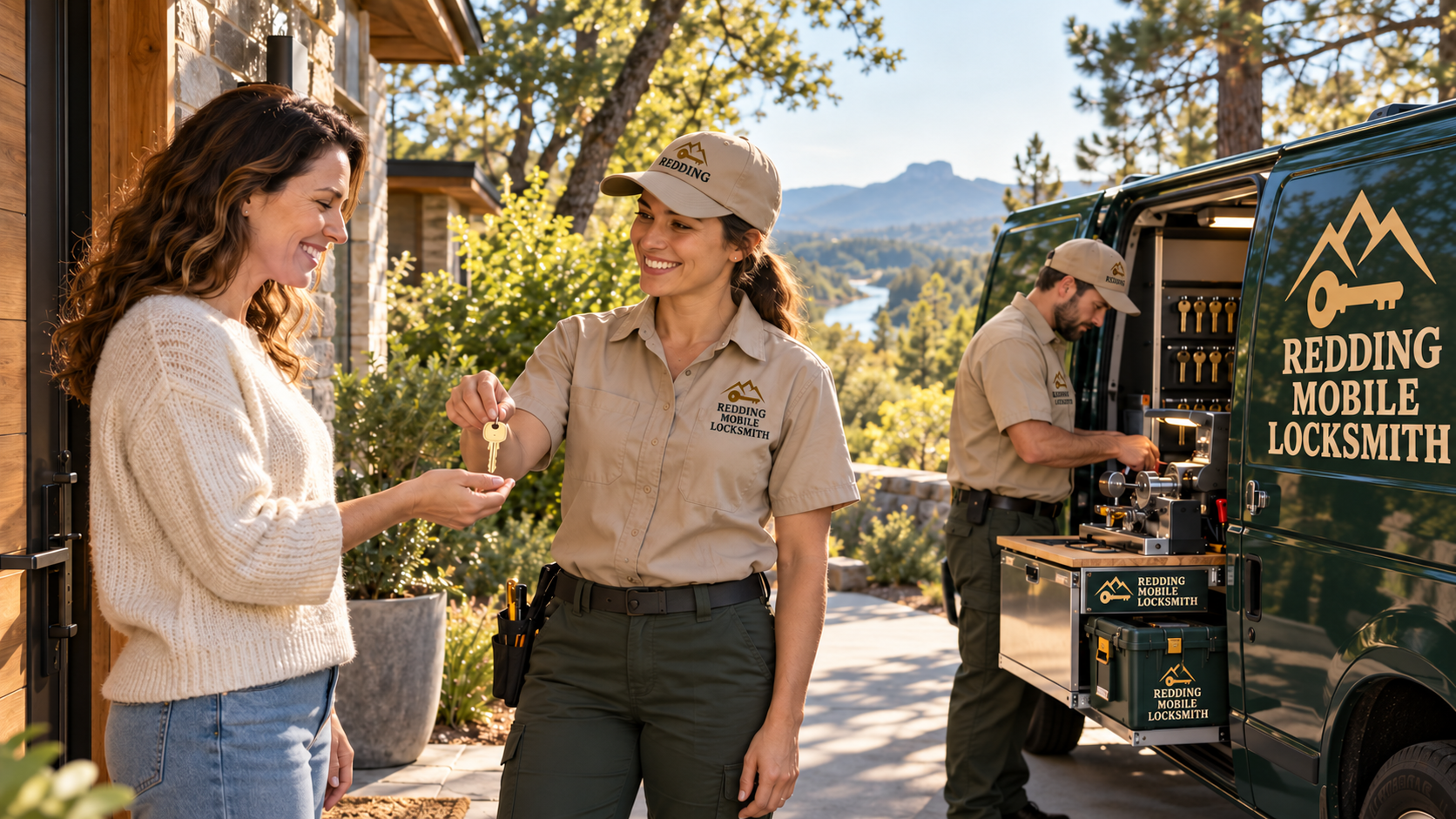
Redding Mobile Locksmith works around the clock, and the request form on the contact page is the way to begin, because the phone line is coming soon. A technician arrives in a branded van with common hardware on board, which means many adjustments and repairs can be finished at the door.
If the work is routine, say that, and ask for a maintenance visit instead of waiting for a breakdown. A calm day and a thorough check beat a frantic evening every time, and the new parents upstairs will thank you for the quiet.
When you reach out, tell us what is working as well as what is not. Knowing that the lock is fine but the closer is the problem, or that the problem only appears in the morning when the building is cold, helps narrow the search. Small observations turn a general visit into a precise one.
Good to know
Common questions
Why does the door at my business slam or stay open?
The door closer is the most likely cause. Its adjustment screws control the closing speed, and temperature changes or wear can shift them. A technician can adjust the sweep and latching speed and check the arm and bracket. If the closer is leaking oil, it should be replaced rather than adjusted.
How often should business door hardware be checked?
A short monthly walk through is useful, covering screws, closers, locks and latches. A professional check once a year, ideally before your busiest season, is a sensible addition. Doors that see heavy traffic may need more frequent attention. The goal is to catch small problems before they become a lockout.
Is a sagging door a lock problem or a hinge problem?
Often it is a hinge problem. Loose screws or worn holes let the door drop, which pulls the latch out of line with the strike. Tightening or lengthening the screws can restore alignment. If the lock still binds after the door is straight, then the lock or strike itself needs attention.
Can exit hardware be maintained by a locksmith?
Yes, a locksmith can adjust and service push bars, latches and related parts. Rules about exit doors vary by location and building type, and we do not give legal advice, so check with the local authority about what applies to your premises. Never disable or block an exit device to save effort.
Can the same visit cover my living space and my shop?
Often it can, since the same team handles homes and businesses. If a private entry connects to your shop, it is wise to key it separately. Mention both doors when you request service so the technician brings suitable hardware and plans time for each.
Is there a phone number to request a maintenance visit?
The phone line is coming soon, and no number is published yet. Use the request form on the contact page and explain what you want checked. For a lockout or a door that cannot be secured, say so clearly, and if anyone is in danger call emergency services first.