
Home / Fort Jones / Key Programming and Fobs in Fort Jones
Fort Jones keys and fobs
Key Programming and Fobs in Fort Jones: Test Every Function
Picture a newcomer in Fort Jones who just bought a house and a used truck that came with one tired fob. Here is what to test before and after a replacement key or fob is made.
Fort Jones keys and fobs
One tired fob and a new address
Picture someone who has just moved to Fort Jones. They bought an older house with a porch and a view of the valley, and in the same month picked up a used truck from a neighbor of the previous owner. The truck came with a single key fob, scuffed at the corners, with a rubber button worn smooth. It works most of the time. Most of the time is a dangerous phrase when it is the only fob you own.
The newcomer has a decision to make. Wait until the fob dies completely, which will happen on the worst possible morning, or deal with it now. Dealing with it now means a spare key or fob, cut and programmed properly, and a clear idea of what the old one still does. This page explains how that process works and, most importantly, what to test before and after, because a key that only does half its job is more irritating than no key at all.
The approach is simple enough to follow on your own. Test the old key. Write down what it can do. Have the new key made. Test it against the same list. The only trick is knowing what belongs on the list, and that is where most people leave things out.
What programming actually means
People use the word programming for several different things, and it helps to pull them apart. A key blade is metal cut to match the lock. A transponder chip inside the key head carries a code that the vehicle's computer must recognize before it lets the engine run. A remote is a radio transmitter, with buttons that lock, unlock or open the trunk. A keyless fob is a more advanced remote that also lets the vehicle detect it nearby.
Programming is the process of introducing a new chip or remote to a vehicle so that it is accepted. A locksmith connects equipment to the vehicle, tells it to learn the new key, and checks that it responds. Depending on the vehicle, this may involve a sequence done from inside the cab, a connection to the diagnostic port or a combination. Some vehicles allow more keys to be added with only an existing key; others require specialized equipment.
For a deeper explanation, read whether all car keys need programming and what a transponder chip is. Our service page on key programming and fobs covers the work in broader terms.
Keep one idea in mind: a key is really two things working together, a shape that turns the lock and a code that satisfies the vehicle. When someone says a key does not work, the first question is always which of the two is failing. A blade that turns the door but will not start the engine has the shape and lacks the code. A chip that is recognized but will not turn the lock has the code and lacks the shape. Knowing which half is missing points straight to the fix.
Before the new key: test what you already have
A short test of the existing key is the foundation of the whole job. Sit in the vehicle with the door closed. Turn the key in the ignition, or press the start button with the fob in your pocket, and watch how the vehicle responds. Does it start smoothly? Does a warning light linger? Does the engine run all the way through, or die after a moment?
Now test the remote functions one at a time. Lock and unlock the doors. Try the trunk or tailgate button. If it has a panic button, press it once in a safe spot, away from sleeping neighbors. If the vehicle has a remote start, try that too. Try each button from close range and from a moderate distance, noting any that need a harder press.
Take notes or a photo of the key, front and back, with any numbers or markings. Record the number of buttons and any symbols on them. This list is exactly what a locksmith needs, and it also becomes your checklist for the new key. It takes ten minutes and makes the rest of the job easier.
- Starting the engine with the existing key or fob.
- Locking and unlocking all doors from the remote.
- The trunk or tailgate release button.
- The panic button, tested briefly in a safe spot.
- Remote start, if the vehicle has it.
- Any extra buttons for sliding doors or other features.
What the locksmith needs from you
To make a key, we need to know the vehicle and confirm that you are entitled to have a key made. Expect questions about the vehicle's make, model and year in general terms, and about how you came to own it. For a vehicle that was just purchased, a bill of sale and registration are normal evidence. This is routine and protects the owner, so please do not be offended when we ask.
We also ask about the keys you have. One working key makes the job simpler, because the vehicle can often be told to accept a new one with the existing key in hand. When all keys are lost, the work can be more involved. It is still often possible to complete on site. Our page on whether a key can be made with no key at all explains the situation.
Tell us the story of the keys, including anything strange. A key that was dropped in water, a fob that stopped working after a battery change, a spare that never worked properly. These details save time because they point to the most likely cause.
What happens during the visit
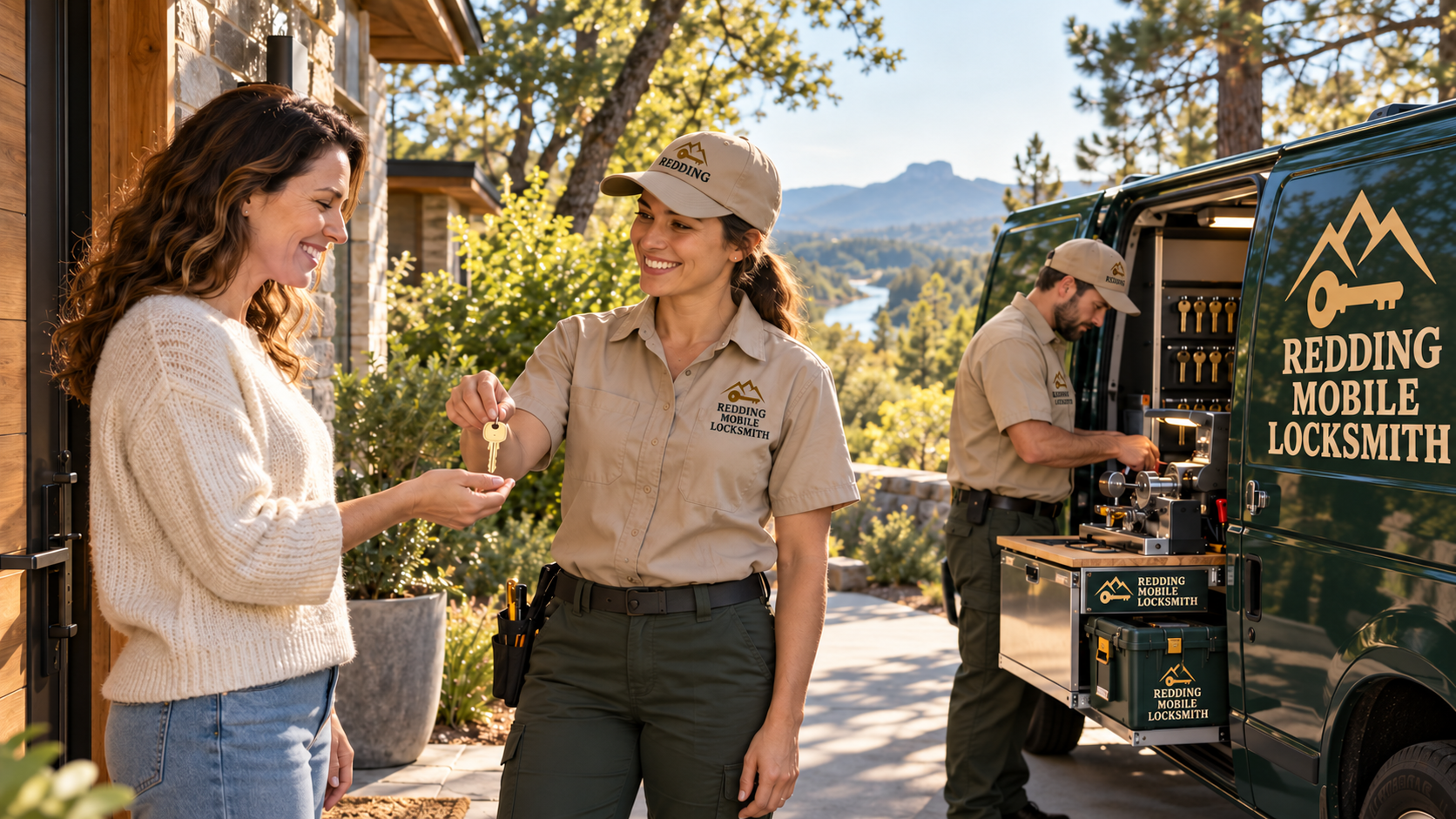
Our branded service van carries professional tools, key cutting and programming equipment, and common hardware. On arrival, our team confirms the vehicle and your authority, looks over the key and prepares what is needed. If the new key requires cutting, it is cut on site. Then the chip or remote is introduced to the vehicle.
During programming, the vehicle may be placed into a learning mode in which it accepts a new key. In some cases, all existing keys must be programmed together at the same time, because the process clears the vehicle's memory of keys it knew before. That is why you should have every working key available when the visit begins. A key that is left out of that session may stop working.
This is also a good moment to talk about whether you want old keys removed from the vehicle's memory. If a key has been lost or may be in the wrong hands, removing it is a smart protection. A lost key that can no longer start the vehicle is much less worrying than one that still can.
It also helps to know what we will not do. We do not program keys for vehicles when ownership is unclear, and we do not skip the questions about who you are. If you cannot show that the vehicle is yours, we will tell you what paperwork would settle it. That firm line is part of why a locksmith can be trusted with keys at all.
After the new key: test every function again
This is where a careful visit separates itself from a hurried one. Once the new key or fob is programmed, we go through the same list as before. Start the engine, let it idle, shut it off and start it again. Do it three times, because a key that starts the vehicle once may fail on the second try if the programming did not fully take.
Next, the remote. Lock and unlock from near and from a short distance. Test the trunk or tailgate. Test remote start. Check that the panic button works. Walk away from the vehicle with the key in your pocket and see whether a keyless fob locks and unlocks as expected. Compare the behavior with your original notes.
Finally, test the physical key blade. Turn it in the driver's door lock and, if there is one, the trunk or glove box lock. A key that starts the engine but does not turn in the door is a half finished job. If something does not work, say so before we leave. It is much easier to fix at the roadside than after you have driven away.
Battery, case and the small parts that fail
Many fob problems have nothing to do with programming. A tired coin cell battery is the most common cause of a fob that works at close range and not at all from a distance. Replacing it takes a minute and a small tool, and it is the first step we suggest when a fob seems weak. Some fobs have a visible battery cover; others require opening the case along a seam.
The case itself can wear out. Plastic cracks, rubber buttons wear through and the small contacts under them lose their bite. A fob with a worn pad may need a harder press, which is often the first sign. Replacing the shell, sometimes while keeping the electronics inside, can give an older fob a longer life.
Cold is hard on all of this. Fort Jones winters bring freezing mornings, and batteries lose strength in the cold. If a fob works in the warm kitchen and fails on the frozen driveway, a fresh battery is the first thing to try. Our article my key fob stopped working, now what covers the steps in order.
A practical habit is to replace the fob battery before it fails, the way you would replace a smoke detector battery on a regular schedule. Pick a date that is easy to remember, such as the start of winter, and do it then. Carry a spare battery of the right size in the glove box, taped to the owner manual, so that a weak fob never becomes a stranded morning on a country road.
Spare keys, and why one is never enough
A single key is a single point of failure. If it is lost, broken or stolen, you start from a worse position than if you had a spare, because the vehicle needs more work and you have less to work with. Adding a spare while you still have a working original is nearly always simpler than recovering from nothing. This is one of the few pieces of advice in locksmithing that never changes.
A spare also helps in everyday life. A partner can use the vehicle without trading keys. A neighbor can move it in an emergency. You can keep a spare in a safe place at home, not under the bumper, where thieves look first. The right number is usually two or three, kept in different places.
If you buy a used vehicle, ask about every key that exists. Our page on how many keys come with a used car and which ones matter goes through it, and the extra key question shows how to ask.
If you are the person lending a vehicle, think about what you hand over. A spare key that opens the door and starts the engine is full access. Some owners keep a simple door only key for valet and parking situations, which keeps the glove box and trunk locked, and that option is worth asking about when a spare is made.
House keys, garage remotes and the rest of the ring
Our newcomer has more than a truck to deal with. A house in Fort Jones comes with its own keys, and a garage may have a remote or a keypad. A tidy approach is to deal with all of it in one go. If the house locks need rekeying, we can often handle that during the same visit. See rekey your home and home lock service in Fort Jones.
Keep your ring in order. Too many keys on a heavy ring wear down the ignition over time, and a dangling weight can strain the lock cylinder. Separating the vehicle key from the others is a small habit that extends the life of the ignition. It also means you can hand over a single key to a valet or a mechanic without handing over your house.
If you rent out a cabin or share a vehicle with family, label each key discreetly and keep a simple list. Not on the key itself, where a stranger could read it, but in a notebook at home.
Reaching us in Fort Jones
Redding Mobile Locksmith is a 24 hour mobile locksmith serving Fort Jones and nearby communities in Siskiyou County and Shasta County. Use the request form to tell us about the vehicle and the keys. Our phone line is coming soon.
When you write, include what you have: one fob, two keys or none, and what each does. Mention anything odd. If you can, add a photo of the key. Related pages that may help are cars and trucks in Fort Jones, emergency help in Fort Jones and the main Fort Jones page.
Good to know
Common questions
What should I test before a new key is made?
Test the existing key: starting the engine, locking and unlocking doors, the trunk or tailgate button, the panic button and remote start if the vehicle has it. Write down what works and what does not. That list is what we use to confirm the new key does everything the old one did.
What should I test after the new key is programmed?
Run the same list. Start the engine three times, test every remote button near and at a distance, turn the physical blade in the door lock, and for a keyless fob walk away and back to check locking. Report anything that fails before the visit ends, so it can be fixed on the spot.
Why do I need to bring all my keys to a programming visit?
In many vehicles, adding a key clears the memory of keys the vehicle knew before, so every key you want to keep must be programmed in the same session. A key that is left out may stop working. Bring all of them, and tell us about any you have lost.
Is a fob battery change enough to fix a weak fob?
Often it is. A tired coin cell is the most common reason a fob works up close and fails at a distance. If a fresh battery does not help, the fob itself may be worn or its chip may need attention. Cold weather makes weak batteries show up sooner.
Can you remove an old lost key from the vehicle's memory?
In many vehicles, yes. When a key is programmed, the process can be set to clear keys that were known before. That protects you if a key was lost or may be in the wrong hands. Tell us if you want that done and bring every key you plan to keep.
Do you come to Fort Jones for key programming?
Yes. Our service van carries cutting and programming equipment, so most key and fob work is done on site. Tell us about the vehicle through the request form, and we will talk through what is possible. We handle urgent calls at any hour.