
Home / Dunsmuir / Home Lock Service in Dunsmuir
Dunsmuir home locks
Home Lock Service in Dunsmuir, Explained as a System
A home lock is not one object but a small team of parts that must agree with each other. Here is how that team works in Dunsmuir houses and rentals, and where it tends to fall apart.
Dunsmuir home locks
Four housemates and one tired deadbolt
Picture a college student who has taken a room in a shared rental in Dunsmuir, one of those older houses on a steep lot with a long set of steps to the front door. Four people live there. Between them they have lost two keys, copied three, lent one to a friend and misplaced the spare that was supposed to be under a flowerpot. The deadbolt has begun to stick in cold weather, and nobody is sure whose job it is to fix it.
This is an ordinary story, and it is a good doorway into how home locks work. Everything that goes wrong in it, from the lost keys to the sticking bolt, points at a different part of the system. Once you can name those parts, you can tell what you are dealing with and what you can ask for.
The Local Standard is written in a neighborly voice, so think of this page as the explanation a patient friend would give you on the porch. We will go from the key to the frame, one piece at a time.
The key and the cylinder: where the secret lives
Most home locks use a pin tumbler cylinder. Inside the cylinder is a row of small spring loaded pin stacks. A key with the right cuts lifts each stack to the exact height where the gap between pins lines up with the edge of the cylinder plug. When every stack is at the right height, the plug is able to turn.
That turning plug is what moves the rest of the lock. It is connected to a cam or a tailpiece, which pulls the latch or throws the bolt. The cylinder is the part that knows the secret, and everything beyond it is mechanical hardware that does what the plug tells it.
Because the secret lives in the cylinder, many fixes involve only the cylinder. Rekeying changes the pins so a different key works and the old one does not. A worn cylinder can be replaced without touching the rest of the lock. Our rekey your home page explains that process step by step.
It also helps to know that keys wear. A key that has been copied from a copy carries the small errors of each step, and eventually it fits loosely and drags on the pins. If a key has started to feel gritty in the lock, a fresh key cut from a good original, or from the lock itself, often cures what looked like a lock problem. In a household that shares keys, this wear arrives sooner than people expect.
Deadbolts, latches and what each one is for
A typical front door carries two locking elements. The knob or lever has a spring latch with an angled tongue, and its job is to keep the door closed against drafts and casual pushing. The deadbolt, with a flat bolt that must be turned by key or thumb piece, is the part that offers real resistance.
The two are different on purpose. A latch is easy to open from the inside and gives way to a shove if it is the only thing holding the door. A deadbolt does not retract unless the cylinder or thumb turn drives it, which is why it is the lock people mean when they talk about securing a door.
Our guide on whether every exterior door needs a deadbolt goes into when one is worth adding. For the shared house in our example, the key point is that the deadbolt is the lock worth keeping in good order, since it is the one that actually matters on the night someone tests the door.
One more detail is how far the bolt travels. A deadbolt that extends only part way, perhaps because the door has shifted or the strike hole is too shallow, offers much less than one that throws fully. You can check this yourself by locking the door and looking at how much of the bolt shows in the edge of the door. A technician can measure it properly, and adjusting the strike hole is a modest job.
- The spring latch keeps the door closed but offers little resistance on its own.
- The deadbolt provides the real locking strength when it is thrown fully.
- A thumb turn lets people inside lock and unlock without a key.
- A single cylinder deadbolt uses a key outside and a thumb turn inside.
The strike and the frame: the half people forget
Every bolt needs a place to land. The strike plate on the frame receives the bolt, and the frame behind it supplies the strength. A heavy deadbolt in a weak frame is like a strong chain tied to a loose post.
In older houses like many in Dunsmuir, frames can be soft with age, dried out, or patched. Screws that hold the strike may be short, and the wood they bite into may have crumbled. When the strike loosens, the bolt starts to bind on it, and the lock begins to feel stiff even though the lock itself is fine.
Fixing this is usually simple. Longer screws that reach the framing behind the trim, a replacement strike set properly into the frame, and a check that the bolt enters the hole squarely often turn a hard lock into a smooth one. Our guide on what makes a good strike plate explains why this small part earns so much attention.
Why locks stick in a canyon town
Dunsmuir sits in the upper Sacramento River canyon along Interstate 5 and the railroad, with forest close by and cold winters. Moisture, temperature swings and the dust and needles that blow around the canyon all find their way into lock mechanisms. A lock that turned freely in August can resist in January.
Cold alone can stiffen lubricant, and condensation can leave a thin film of moisture inside a cylinder. Wood doors swell and shrink with the seasons, and a shifted door changes how the bolt meets the strike. A tired deadbolt, like the one in our shared rental, might simply be showing a seasonal misalignment rather than a failing part.
Our guides on how weather and seasons affect locks and why a lock turns hard are worth a read before you assume the lock is dead. Often an adjustment or a proper lubricant is all that is needed.
A word on lubricant, since it is the thing people reach for first. Heavy oils and sprays that leave a wet film can attract grit, especially in a forested canyon where needles and dust drift everywhere. A dry lubricant made for locks, used sparingly, is a gentler choice. If a key is hard to insert, do not force it, because a bent key or a damaged cylinder turns a small chore into a repair.
Keys in a shared household
Back in the rental, the key situation is the most pressing problem. With four residents and several copies floating around, nobody can say who can get in. That uncertainty is the real issue, more than any single lost key.
There are a few ways to handle it. If the household has simply lost track, a rekey gives everyone a fresh key and makes the old ones useless. If residents come and go, hardware that can be rekeyed easily is a smart choice. If the building is a rental, the landlord or property manager is the person to ask about changing locks.
Rules and lease terms vary, and we do not give legal advice. Before any change, ask the owner who is responsible for the locks and who should hold the keys. Our guides on college students and shared housing keys and what renters should ask a landlord cover the practical questions.
Housemates can also help themselves with a few habits. Keep one agreed place inside the house for the spare, not outside it. Do not lend a key without telling the others. When someone moves out, collect their key before the moving boxes leave. These are small courtesies, and they prevent the loose, untracked key situation that makes a shared house feel less secure than it is.
Doors, hinges and the quiet role of the threshold
A lock is only as good as the door that carries it. Hinges hold the door to the frame, and if they loosen, the door sags and drags the latch out of line. A sagging door can make a good lock feel broken, and no amount of lubricant will fix a hinge problem.
On the steep lots common in Dunsmuir, porches and steps can shift over time, and the thresholds and frames move with them. If your door starts to drag on the floor or rub at the top corner, the cause might be the building, not the hardware. A technician can often make small adjustments that bring the door back to square.
Our guide on why doors sag and what it does to locks explains the effect on the bolt. For a persistent door problem, our lock repair and adjustment page describes how we approach it.
What a home lock service visit covers
A home lock service visit begins with a walk around the doors you want looked at. The technician checks how each lock turns, how each door closes, and what condition the strikes and frames are in. Then they explain what they find in plain language, and you decide what to do.
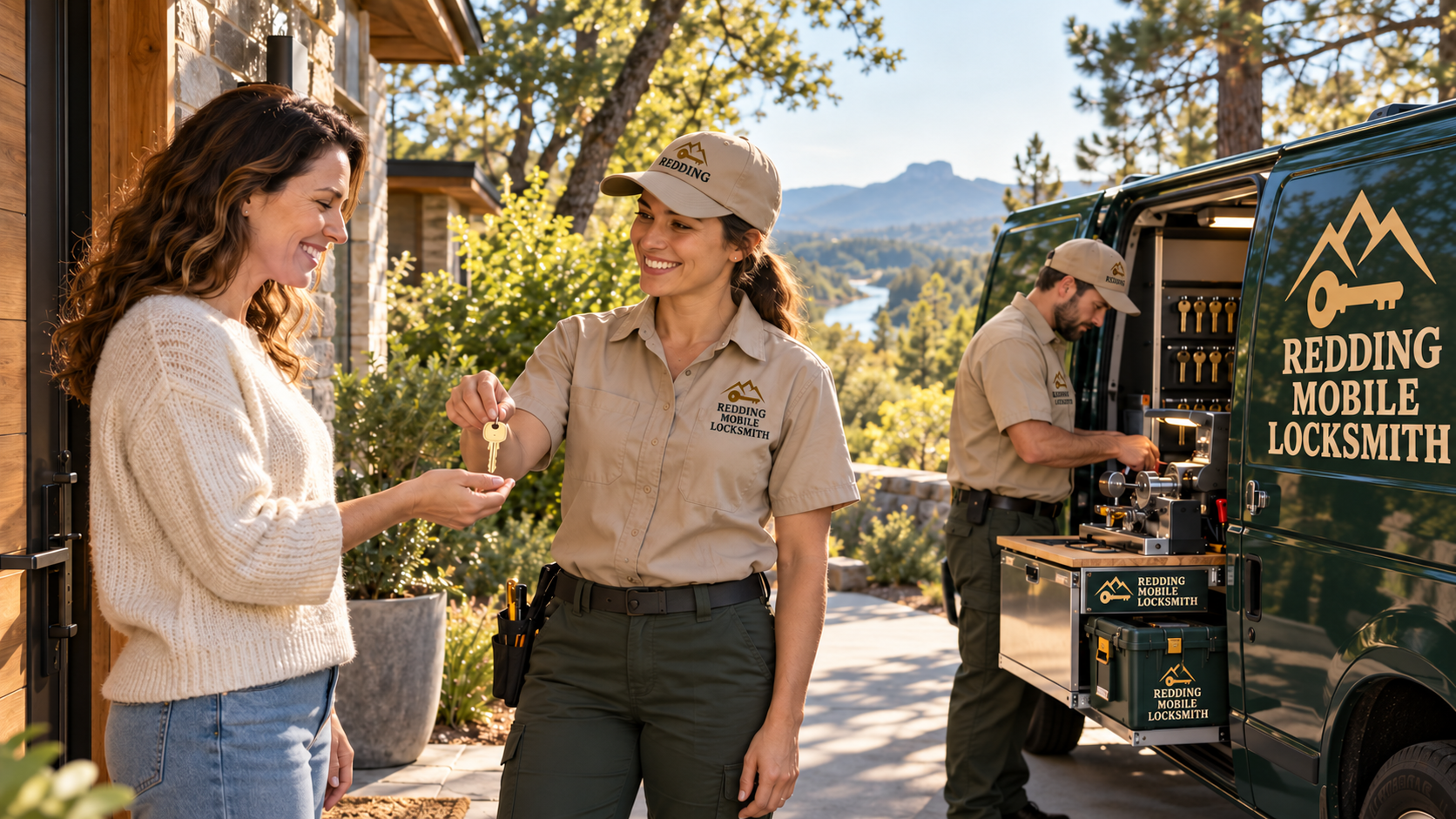
Common work includes rekeying, replacing a worn cylinder, installing a new deadbolt, adjusting or replacing a strike, and tightening or shimming a door. Our team arrives in a branded van with professional tools, key cutting equipment and common hardware, so most of this is done on the spot.
If you want to see the full list, our home lock service page describes everything we offer for houses, and our page for locked out of your home covers the emergency side.
Before the visit, it helps to tidy the path to each door and to clear anything that blocks the frame, such as boots, firewood or snow. Tell the technician about any past problems, like a break in or a door that was forced, since damaged frames deserve repair along with the lock. And if you rent, have the owner's permission ready so that nothing delays the work.
A checklist for the sort of house with a story
If your home has a long history of copied and lost keys, a short audit is worthwhile. Count the keys you know about and the people who hold them. Try each lock with its key and watch for sticking or rough spots. Look at each strike and frame for loose screws or splits.
Then think about who needs access and how they get it. A household with several adults might prefer keys keyed alike, while a rental might prefer a fresh start with each new resident. A simple log of who holds what keeps confusion from returning.
Finally, decide what is worth fixing now and what can wait. A sticking deadbolt on the front door is worth attention. A back door that nobody uses can wait. Prioritizing keeps the work sensible and the plan realistic.
- Count every key you know about and note who holds each one.
- Try each lock slowly with its key and listen for rough spots.
- Check strike plates and frames for loose screws, cracks or splits.
- Watch each door close and note any rubbing or sagging.
- Decide which doors matter most and start there.
Dunsmuir and its neighbors on the interstate
The Local Standard serves Dunsmuir and nearby communities, including McCloud, Mount Shasta and Weed. These mountain towns share cold winters and older homes, and the lessons in this page carry over from one to the next.
For a wider look at what we do in town, visit the Dunsmuir page. If you are buying or moving into a house, the page on new lock installation in Dunsmuir may help.
We are Redding Mobile Locksmith, a 24 hour mobile service. Our phone line is coming soon, so for now please use the request form to describe what is going on with your locks.
Putting it together for the shared house
Return to our four housemates. A sensible plan would be to ask the owner who handles lock changes, to rekey or replace the front deadbolt, to check the strike and frame, and to hand out a clear set of keys with a note of who holds them. That sequence addresses the lost keys, the sticking bolt and the uncertainty in one go.
The same logic works for any household. Understand which part is failing, fix that part, and then document the result. A lock system that is understood and kept in order is one you rarely have to think about, which is the point.
If you would like help working out which part of your system is the trouble, describe the symptoms in the form. We would rather help you find the small fix than sell you a large one.
Good to know
Common questions
Why does my deadbolt stick only in winter?
Cold can thicken old lubricant and shrink or shift a door so the bolt no longer meets the strike squarely. Moisture inside a cylinder can also play a part. Often the fix is an adjustment of the strike or a proper lock lubricant, not a new lock. A technician can check alignment with the door closed.
What is the difference between rekeying and changing the lock?
Rekeying changes the pins inside the cylinder so a new key works and old keys do not, while the lock hardware stays in place. Replacing installs a different lock entirely. Rekeying suits good hardware with unknown key copies. Replacement suits worn, damaged or mismatched locks. We can look at the door and tell you which fits.
Can a renter ask for the locks to be changed?
Often a renter can ask, but rules and lease terms vary and we do not give legal advice. Start by asking your landlord or property manager who is responsible for lock changes and who should hold the keys. Settling that first prevents misunderstandings and keeps any work simple for everyone.
My housemates have lost several keys. What should we do?
Count the keys you can account for, then consider rekeying so that any lost copies stop working. Decide how many fresh keys each person gets and write down who holds which. If the home is a rental, speak to the owner first. A rekey is usually done at the door in a single visit.
Is a single cylinder or double cylinder deadbolt better?
It depends on how the door is used. A single cylinder uses a key outside and a thumb turn inside, which is easy to operate in an emergency. A double cylinder needs a key on both sides and can slow exit if a key is missing. Many households choose single cylinder for convenience and safety of movement.
Do you serve homes outside Dunsmuir?
Yes. Redding Mobile Locksmith serves Shasta County and Siskiyou County, including McCloud, Mount Shasta, Weed, Yreka, Redding and many other communities. Our branded team works from a service van with tools and hardware, so most home lock work is completed at your door. Tell us your town in the request form.