
Home / Granada / Key Programming and Fobs in Granada
Granada car keys
Key Programming and Fobs in Granada, California
A key that looks right and turns the ignition can still leave the engine silent. Here is what programming means, why it matters out in Granada, and how a shared household can keep every driver covered.
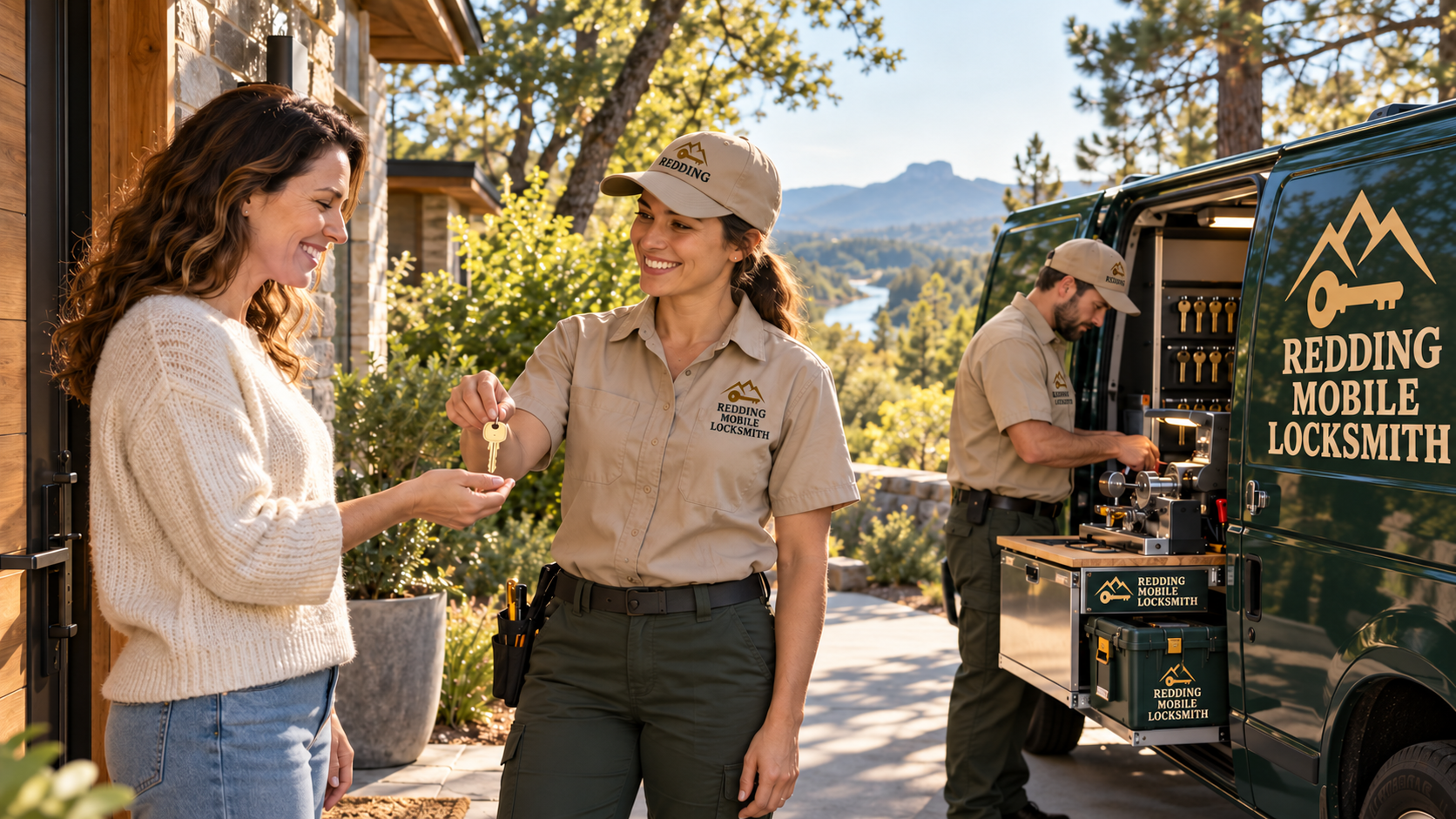
Granada car keys
The key that fits but will not start
Picture a college student who shares a rental house with two roommates and a single hatchback that all three of them drive. One afternoon a friendly neighbor hands over a copy of the car key from a hardware counter. It slides into the ignition, it turns, and the dashboard lights flicker, yet the engine never catches. Nothing is wrong with the cut of the metal. The car simply does not know the new key exists.
That moment surprises almost everyone the first time, because for most of the last century a key was only a shape. If the shape matched the lock, the lock opened. Modern vehicles added a second question. Before the engine is allowed to run, the car asks the key to prove who it is, and a copy that cannot answer is treated like a stranger.
Key programming is the work of teaching the car and the key to recognize each other. It is a short, tidy job when a technician has the right equipment, and it is the reason a mobile locksmith carries more than a cutting machine. If you live in or near Granada and a new key refuses to start the car, the cutting is probably fine and the programming is what is missing.
What lives inside a transponder key
Look closely at the plastic head of a newer car key and you will find a tiny glass or ceramic capsule sealed inside. That capsule is a transponder chip. It has no battery. When you turn the key, a ring antenna around the ignition sends a small burst of energy toward the chip, and the chip uses that energy to reply with a code. The car compares the reply with the codes it has stored and, if they match, releases the engine.
Because the chip answers with a code rather than a shape, two keys that are cut identically can behave very differently. One carries a code the car has memorized. The other carries a blank chip, or a chip with a code the car has never heard of. Our guide on what a transponder chip is goes through the idea in plain language, and it is worth a read if the subject is new to you.
Some systems go a step further and use rolling codes, where the conversation between key and car changes every time so that a recorded signal is useless later. You do not need to understand the mathematics. What matters for you is that the car keeps a small list of approved keys, and programming is how a key gets onto that list.
Think of it as a guest list at a small event. The car is the host, every programmed key is a name on the list, and the transponder chip is the guest showing a ticket at the door. A key that was never added can be dressed exactly like the others and it will still be turned away.
Fobs, remotes and smart keys are different animals
People use the word fob for several different things, so it helps to separate them. A remote head key combines a metal blade, a transponder chip, and buttons that lock and unlock the doors. A flip key folds the blade into the fob. A smart key or proximity fob may have no visible blade at all and lets the car start when the fob is simply inside the cabin.
Each of these has two jobs that are programmed separately. The remote buttons talk to the door locks, and the chip or the proximity signal talks to the engine. It is quite possible for a fob to unlock the doors and still fail to start the car, or the other way around. When you describe the problem to a dispatcher, saying which of those two jobs is failing saves a lot of back and forth.
Proximity keys add one more wrinkle. They are always listening for a short range signal from the car, so a weak battery in the fob can make the car act as if the key were missing. Before you decide that a fob needs programming at all, it is worth asking whether the battery inside it has simply run down.
How a technician programs a key
The usual sequence is calmer than people expect. The technician confirms the vehicle and checks that you are the person entitled to a key for it. Then the new key is cut if it needs a blade, and the car is connected to a diagnostic tool through the port under the dashboard. The tool puts the car into a learning mode, the new key is presented, and the car stores its code.
Some vehicles accept a new key only after an existing working key has been used to authorize the change. Others need a security procedure that takes the car through a short series of steps before it will learn anything. A few require a code that has to be looked up for that specific vehicle. The point is that a technician with the right gear can handle each of these on site, which is why the work travels well in a branded service van.
When it is finished, the sensible test is to try everything. Start the engine more than once, lock and unlock with the buttons, open the trunk or hatch if the fob has a button for it, and check every key you own, not just the new one. If anything misbehaves, it is far easier to sort out while the technician is still standing beside the car.
Cold mornings in the valley and hot, dusty afternoons are hard on electronics in general. Fobs that ride in a pocket next to a phone, a pocketknife or a bunch of farm keys pick up knocks and moisture. If a fob has started to work only some of the time, a replacement shell or a fresh battery may be all it needs, and a technician can tell you which.
Why a copy from a hardware counter often disappoints
Plenty of general key machines can duplicate the blade of a transponder key perfectly well. What they usually cannot do is make the car accept that blade. A cut only key will open a door and turn a lock cylinder, but it carries no recognized chip, so the engine stays locked out. People sometimes assume the copy was faulty and go back to complain, when in fact the copy did exactly what that kind of service does.
There is also the reverse trap. A key with a chip that has been cloned or copied might start the car today and cause trouble tomorrow if the vehicle later decides it has two keys with the same identity. Technicians who program properly give each key its own place on the car's list, which keeps everything tidy.
For a shared household this matters more than for a single owner. If three people each want a working key, ask for three keys that are each programmed to the car, rather than one key and two lookalikes. It costs a little more thought up front and saves a morning of arguments later.
A shared rental and the question of who holds the keys
Back to our imaginary student. Her house has three drivers, one car, and a landlord who owns the property but not the vehicle. The car belongs to whoever is on the title, and that person is the one who should authorize a new key. Roommates who split costs informally often forget this until a technician politely asks for proof of ownership, which is a normal and protective step.
A little housekeeping makes the whole arrangement smoother. Agree on where the spare lives, who pays for a replacement if one is lost, and what happens when someone moves out and takes a key with them. Keys that leave with a former roommate are the quiet cause of a lot of awkward phone calls.
Our guide to keys in shared housing covers the house side of this, such as who holds door keys and how to handle a departing tenant. The car side comes down to the same habit: know how many working keys exist and who has each one.
Life in Granada and why spares matter more out here
Granada sits in the Shasta Valley of Siskiyou County, near Montague, among rural homes, open ranch country, outbuildings and gates. Driving here often means longer stretches between stops and fewer places to wait if something goes wrong. A single working key is a thin margin when your next errand is a long way from the driveway.
That is the argument for a spare. A spare key is simpler and calmer to arrange while the original still works, because the technician can use the working key to authorize the new one. Once every key is lost, the job usually becomes more involved. Our page on replacement car keys explains the difference.
If you also keep work trucks, farm vehicles or an older car around the property, count their keys too. Older vehicles may use a plain cut key with no chip at all, and newer ones may use a fob. Knowing which is which for each vehicle in your yard is a simple afternoon task that pays off the day something goes missing.
A last point about gates and outbuildings, since they are so common around Granada. Many properties use padlocks, gate chains and shed locks that have nothing to do with the car at all, and people sometimes hang the car key on the same ring as all of them. Splitting the vehicle keys onto their own ring means a lost gate key never takes your ignition key with it.
What to gather before you ask for help
A few details make the conversation efficient. Have the make, model and year of the vehicle, and know whether you have any working key at all. Be ready to show identification and some sign that the car is yours, such as a registration or title, because a responsible technician will ask. Say what the existing key looks like, whether it has a blade, buttons, or neither.
You can start a request through the request form on the contact page, and our emergency help page for Granada describes how an around the clock conversation works if the situation is urgent.
- Note whether the car starts with a turn of a key or with a push button.
- Tell the dispatcher how many working keys you have right now, even if the answer is zero.
- Check the fob battery before the call, since a weak battery is a common false alarm.
- Mention anything that changed recently, such as a dropped fob, water exposure or a new battery.
- Have the vehicle parked somewhere safe and reachable, ideally off the road.
Honest limits and the odd car
Not every vehicle can be handled on a driveway. Some models lock their security system so tightly that a particular procedure or a dealer only step is involved, and a technician will tell you plainly if yours is one of them. That honesty is part of the service. A locksmith who explains the limit at the start is more useful than one who promises everything and delivers a lesson.
Age is another variable. Very old vehicles are mechanically simple, and many newer ones are standard, but cars in between can have quirks that show up only once the diagnostic tool is connected. Aftermarket remote start kits, previous repairs and damaged ignition parts can all complicate a job that looked routine.
If you are unsure what you have, describe it as precisely as you can and ask what the technician expects. Our overview of key programming and fobs sets out the general process, and the page on cars and trucks shows the wider range of vehicle work a mobile locksmith handles.
Finally, ask about the practical side of testing. A careful technician will not leave until every key you hold has been tried in the ignition and on the door buttons, and will usually hand over any code or paperwork that applies to your vehicle. Keep that information somewhere safe, away from the car itself.
Neighbors, nearby towns and where to read next
Granada shares its stretch of the Shasta Valley with Montague, and many households here do their errands in both places. If you want to compare how the same service looks in the next town, our page on key programming and fobs in Montague takes a different angle, and the Granada overview gathers every local page for this community in one place.
If you only need to understand what the fuss is about, the guide on whether all car keys need programming is a good short read. It explains which keys are plain metal, which carry chips, and how to tell the difference by looking at the head.
Whichever page you land on, the pattern is the same. Know your keys, keep a programmed spare, and give the technician clear information. Redding Mobile Locksmith is a 24 hour mobile service with a van that carries key cutting and programming equipment, so most of this can be done where your car is parked.
Good to know
Common questions
Why does my copied car key turn the ignition but not start the engine?
The metal blade matches, but the transponder chip inside the head has not been taught to the car. The vehicle expects a stored code and ignores a key that cannot supply one. Programming adds the key to the car's approved list, after which it starts the engine normally. Cut only copies from general key machines usually cannot do this step.
Is a fob the same thing as a transponder key?
Not quite. A transponder key carries a chip that lets the engine run. A fob usually adds buttons for locking, unlocking or opening the trunk. Many keys combine both, and the two functions are programmed separately, so one can work while the other fails. Smart keys add a third style that works by proximity.
Can a new key be programmed if I have lost every key?
Often yes, though the job is more involved than adding a spare. The technician confirms your ownership, connects diagnostic equipment, and creates a key that the car will accept. Some vehicles need extra security steps and a few need a dealer only procedure, which a technician will tell you plainly after learning the make, model and year.
Will programming a new key stop my old keys from working?
Usually not. Programming adds a key to the car's list, and your existing keys remain on it unless you ask for them to be removed. Removing a lost key from the list is a sensible request if it could be in the wrong hands, and a technician can explain whether your vehicle supports it.
What should I check before I decide the fob is broken?
Start with the battery, since a weak cell can make a perfectly good fob seem dead. Try the spare key if you have one, and note whether the doors respond even when the engine will not start. Telling the dispatcher exactly which function fails helps the technician arrive with the right parts.
What proof of ownership will be asked for in Granada?
Expect to show identification and some document linking you to the vehicle, such as a registration or title. This protects owners from anyone trying to get a key for a car that is not theirs. Rules and accepted documents can vary, so ask the dispatcher what to have ready when you call.