
Home / Neighbors ask / Do expensive locks make a difference?
Price versus protection
Do expensive locks make a difference?
Sometimes, yes, and sometimes the money goes into looks. A higher price can buy tougher metal, tighter tolerances and better key control, but it cannot fix a weak door, a loose strike or a spare key under the mat.
Price versus protection
A fair answer, not a sales pitch
Ask ten people whether expensive locks are worth it and you will get ten opinions, most of them confident. The honest answer is that price and quality travel together often, but not always, and that what you pay for matters more than how much you pay. A costly lock that spends its budget on a fancy finish adds little to security, while a modest lock built from solid parts can serve for a long time.
So the useful question is not whether a lock costs a lot, but what the extra money is buying. Strength, durability, resistance to attack, key control, convenience and looks are all separate things, and a given lock may excel at some and ignore others.
This guide is written to help you sort those things out. We will look at where higher prices tend to buy real value, where they do not and how to decide what your doors actually need. Think of it as a talk over the fence with someone who has seen many doors and has nothing to sell you but information.
It helps to remember what a lock is for. Most home break ins are crimes of opportunity, and the people behind them look for doors that give way easily and make little noise. A lock that holds up to a few hard shoves and takes real effort to defeat does most of its job simply by discouraging the attempt. You are not trying to build a fortress, only to make the easy door a difficult one.
What extra money can really buy
Better materials come first. A lock with thicker steel in the bolt, hardened inserts in the cylinder and longer, sturdier mounting screws resists force better and wears more slowly. You can often feel the difference by hefting it. A heavier lock is not always better, but a flimsy one is almost never a bargain.
Tighter manufacturing is next. Poorly made parts tend to have loose tolerances, which means the pins, springs and housings fit sloppily. Over time sloppy parts wear sooner and are easier to defeat. A precisely made cylinder feels smooth in the hand and holds its feel for much longer.
Finally, extra money can buy a wider range of protection features, such as a reinforced strike, a longer bolt throw, a protected cylinder face and key systems that are harder to copy. These details are invisible when you look at the box, but they matter when someone tests the door.
Corrosion resistance is a quieter benefit of better hardware. Finishes that protect the base metal keep screws from seizing and springs from rusting in damp winters or salty air. In the mountain towns, where snow melt soaks everything, a finish that holds up can double the useful life of a lock and keep it turning smoothly long after a lesser one has gone stiff.
- Thicker, hardened metal in the bolt and the cylinder.
- Tighter tolerances that keep the lock smooth as it ages.
- Longer mounting screws and reinforced hardware that resist force.
- Protected cylinder faces and better pin designs.
- Key systems that are harder to copy without authorization.
What extra money often does not buy
A premium finish is the most common place for money to hide. Polished brass, oil rubbed bronze and designer shapes look wonderful on a front door. They say little about security. A good looking lock can be made around a plain mechanism and still be fine, but you should know whether you are paying for the face or for the inside.
Smart features are another. A lock with an app, a keypad and a camera costs more than a mechanical deadbolt, and it can add convenience. But those features do not make the bolt stronger or the door tougher. Our guide on smart locks and who needs one weighs what you gain and what you take on.
Brand prestige also takes a share of the price. Two locks built to the same standard may differ in cost because one has more advertising behind it. A lock grade and a clear description of construction tell you more than a famous name.
A good test is to ask what the lock does that a plain one does not. If the answer is that it looks lovely, you are buying beauty, which is a fine thing to buy if you know that is what you are doing. If the answer is a stronger bolt, a better cylinder or tighter key control, you are buying security. Keep the two columns separate in your mind.
Lock grade is a better guide than price
Instead of price, look at the grade. Industry standards rate residential and commercial locks by how many times they cycle and how much force they resist. Grades run from basic to heavy duty, and a higher grade generally means a tougher lock. Our guide on what lock grade means explains the ladder.
Grade is not the whole story, because tests measure specific things and do not cover every attack. But as a rough guide, it separates serious hardware from light duty hardware better than the price tag does. A mid priced lock with a good grade may beat a costly lock with no grade at all.
If the box does not say, ask the seller or a technician. A mobile locksmith carries common hardware and can explain which options suit your door and your budget. You can describe your needs through the request form.
Remember also that grade labels apply to specific parts. A lock may be tested as a whole, or its latch and deadbolt may be graded separately. Look for details like bolt throw, the thickness of the bolt and the materials in the cylinder. A seller who can talk about these without waffling usually knows the product, and one who cannot is a signal to ask someone who does.
The door matters more than the lock
The strongest lock in the world is only as good as the door and frame it sits in. A deadbolt with a long throw screwed into a thin, split frame will give way when the wood does. A hollow door with a heavy lock still has a hollow door. Spending money on the lock and ignoring the surroundings is a classic mistake.
Check the frame, the strike plate and the hinges. A strong strike plate with long screws that reach into the stud is one of the most cost effective upgrades there is. Our guide on what makes a good strike plate explains why.
The door material also counts. Our guide on metal, wood or fiberglass doors shows how each type affects the choice of hardware. A modest lock on a solid door can outperform an expensive one on a weak door.
Hinges are an overlooked weak point. If the hinge screws are short and bite only into the thin door jamb, a firm kick can pull the hinge side of the door loose, no matter how strong the lock is on the other side. Longer screws that reach the framing behind the jamb cost almost nothing and make a visible difference in how solid the door feels.
Key control is where cost can matter
One area where higher cost often buys real value is key control. Standard keys can be copied at any counter. Some systems use restricted keyways, which means keys can be copied only through an authorized source. For a business, a landlord or a household that worries about stray copies, that can be worth the price.
Key control also covers rekeying and master key systems. A lock that can be rekeyed easily saves money in the long run, since you do not have to replace it when tenants or employees change. Our page on rekey your home and our guide on master key systems go into this.
For most homes, key control is a smaller concern than a strong door and a good deadbolt. But if you have many keys out in the world, a rental, or a business with turnover, the ability to manage keys may be the most valuable feature you can buy.
Even without a special system, you can improve key control by habit. Keep a written list of who holds keys, rekey when someone moves out or leaves a job, and avoid leaving spare keys in obvious hiding places. A modest lock with good habits beats a costly lock with a key under the flowerpot, because the flowerpot is the first place anyone looks.
Matching the lock to the door
A front door that faces the street deserves a solid deadbolt and a reinforced strike. A side door facing a fence may be fine with a standard lock. A sliding glass door needs a different approach, since its weakness is the latch and the track, not the cylinder. Our guide on sliding door security explains.
Garages, sheds and gates have their own needs. A padlock on a gate faces weather and bolt cutters, so a hardened shackle and a protected body matter more than a fancy finish. In dusty or snowy places, a weather ready design is worth paying for.
Think of the doors you use and the risks you face, then spend where it helps. A sensible plan puts better hardware on the doors that matter most and sensible hardware on the rest. That approach gives you stronger protection per dollar than buying the same expensive lock for every opening.
Garage entry doors, which connect a garage to the house, are worth thinking about too. They are often forgotten, with a weak lock and a hollow door, yet they are a path into the home. A proper deadbolt and a solid door there matter more than another fancy lock on the front. Our guide on a failing garage entry door lock covers this.
Avoiding the traps
There are a few traps to watch. Beware of the lock that is sold on a promise of being unbeatable. No lock is. Security comes from layers: a good door, a solid lock, a strong strike, sensible habits and decent lighting. Be wary of any pitch that rests on a single product.
Watch out for look alike products. Some inexpensive locks copy the shape of premium ones but use lighter parts. Check the weight, the grade and the construction details. Ask the seller to explain what is inside. If the answers are vague, move on.
Finally, avoid buying more than you need. A large collection of high end hardware that you do not use well is money wasted. It is better to have a good lock on each key door and a plan for managing the keys than to own a vault door on a hallway closet.
Another trap is the idea that you must replace everything at once. Many people feel pressure to overhaul every door after a scare, and end up spending more than they need to. A better approach is to rank the doors by risk and use, fix the weakest first and spread the rest over time. Calm, planned spending usually protects you better than a panicked shopping trip.
How a locksmith can help you decide
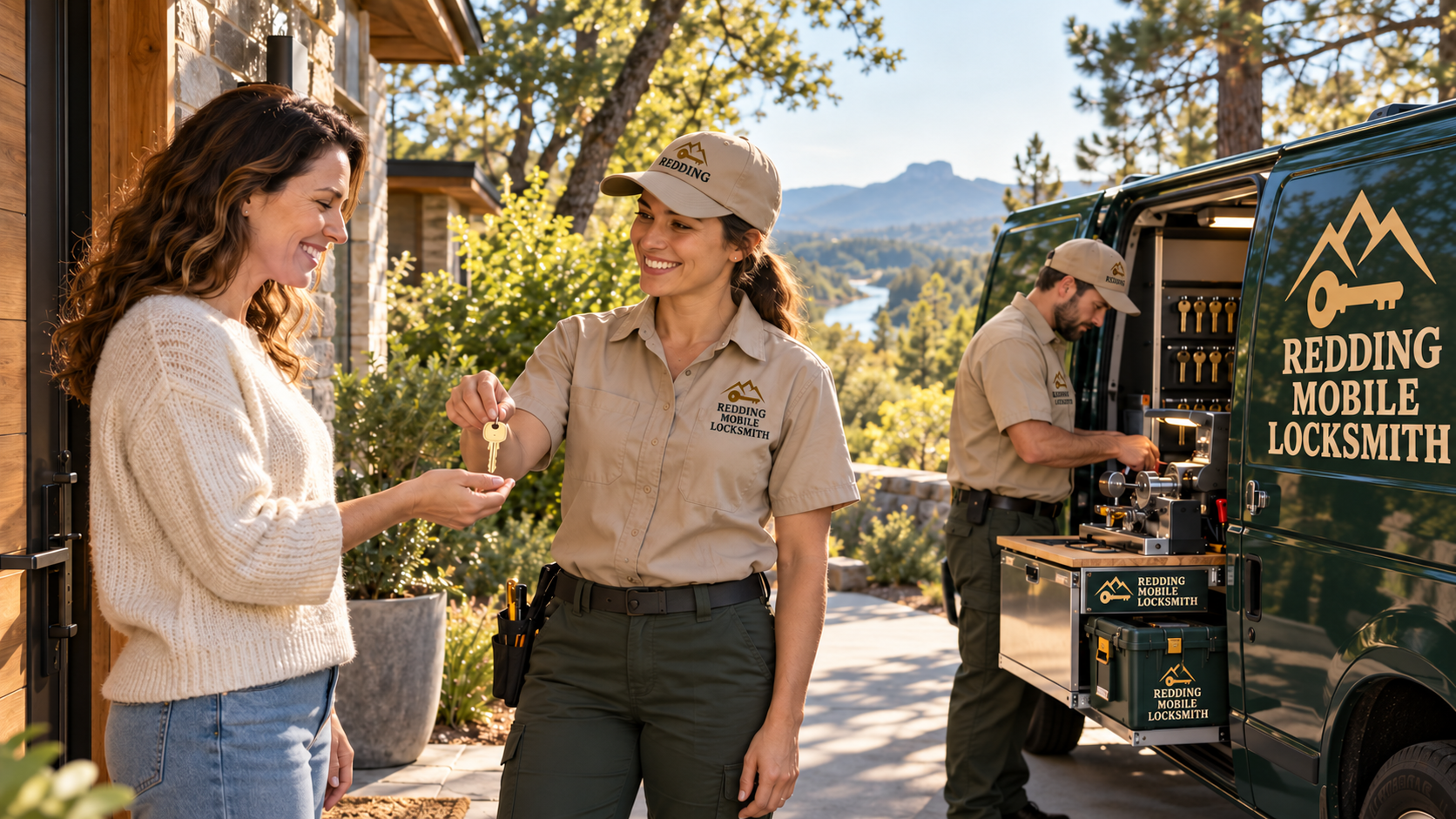
A technician can look at your doors and tell you which ones need an upgrade and which do not. We bring a branded van with professional tools, key cutting and programming equipment and common hardware, so we can show you real options on the spot. Our pages on new lock installation and home lock service describe what we do.
Ask plain questions. What is the grade? How is the bolt built? How is the cylinder protected? Can it be rekeyed? How does it fare in cold or dusty conditions? A good technician answers openly and does not push the most expensive choice.
We serve towns from Redding to Etna, and a visit to your own door tells us far more than a catalog can. If you would like advice, send details through the request form and we will be glad to help.
Bring up your budget openly. A technician would rather match the work to what you can spend than sell you hardware you will resent. There are almost always several sensible tiers: a basic upgrade that fixes the worst problem, a middle option that improves several doors and a fuller option for those who want everything done at once. You choose, and the choice is yours.
A few stories to picture
Imagine a family in Palo Cedro who spends heavily on a stylish front door lock but leaves the thin strike plate and short screws as they came. The lock is excellent and the door still gives way to a firm shove. A modest upgrade of the strike would have done more than the pricey lock.
Now imagine a small shop owner in Yreka who chooses a mid priced, well graded deadbolt, adds a reinforced strike and manages keys carefully. The lock is not famous, but it works every day and holds up for years of use. The owner spent sensibly and sleeps well.
The lesson in both stories is the same. Money helps when it goes into the right places. A thoughtful choice, a solid door and good habits beat a high price paired with a weak setup every time.
Good to know
Common questions
Is a more expensive lock always more secure?
No. Price can reflect better materials, tighter parts and key control, but it can also reflect finish, brand and smart features that do not strengthen the bolt. Look at the lock grade, the construction and the door it will sit in rather than the price alone.
What matters more, the lock or the door?
They work together, but a weak door and frame can defeat a strong lock. A reinforced strike plate with long screws and a solid door often add more protection than a costly cylinder. Check the whole assembly, not just the lock.
Are smart locks more secure than regular ones?
Not by themselves. They add convenience and features like codes and logs, but the bolt, door and strike determine how well the door resists force. Choose a smart lock for its convenience and make sure the mechanical hardware is sound.
How do I know what grade my lock is?
Look on the packaging or in the product details, or ask a technician who can read the markings and explain the grade. Higher grades generally mean heavier duty hardware tested for more cycles and force. Grade is a better guide than price.
Is it worth paying for restricted keys?
It can be, if you worry about stray copies, as in a rental, a business or a household with many keys in circulation. For a simple home with a few keys, a strong door and deadbolt usually matter more. Think about who might hold copies.
Can a locksmith help me choose what to buy?
Yes. A mobile locksmith can look at your doors, explain the options and install hardware on the spot. Send a request through our contact page with your town and the doors involved. The phone line is coming soon.